This technology means no holes in the hull or deck
Issue 31 : Jul/Aug 2003
My solutions to the problems, concerns, and mandates about marine toilets had been to use a Porta Potti and a few jury-rigged devices that satisfied federal “no discharge” requirements. It was not an ideal solution. The thought of drilling two holes in my hull and one in my deck to install a standard marine head — and then carrying around a tankful of waste for an indeterminate time until I was either offshore or found a working pump-out station — just did not fi t my concept of prudent seamanship. Better technology, in the form of a composting toilet, showed up at the 2001 Miami Boat Show.
Composting toilets are not new. The technology is tried and true, proven over many decades of use in areas where either public sewage is not available or sanitary septic systems are not feasible. My 32-foot catamaran fits into the greater spectrum of smaller yachts with installed marine toilets, thus it appeared to be a better-than-average solution if it worked as stated by the developer.
The Air Head Dry Toilet is the brainchild of Geoffrey Trott. It has been around for a couple of years and is getting well tested. I installed one in my boat based upon my own intuition, the assurances of the designer, and the reports from other users.
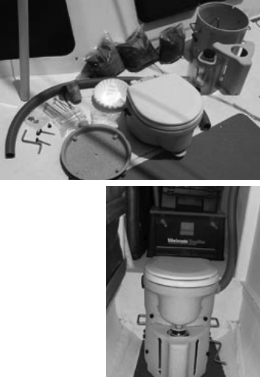
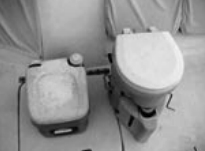
Competing composting toilet units are essentially too large for a small- to medium-sized boat, but my Air Head unit has the same footprint as my diminutive Porta Potti, though it is almost twice as tall. It is simplicity itself, having few moving parts and only a 45-milliamp muffin fan as current draw. It uses no water, thus has no seacocks or hoses. And it is of modest cost. The Air Head runs $300 less than a complex marine toilet installation with seacocks, Y-valves, siphon breaks, holding tanks, yards of costly pipe, macerator pumps, and deck pump-out connections. The only thing the two systems have in common is the vent pipe.
Coast Guard-approved
There are the usual concerns about odors. I figured that the odors could not possibly be greater than many of the liquid-based systems I have surveyed, which explains my reluctance to have such a system in my boat in the first place. The Air Head is USCG-approved under CFR 159.53.
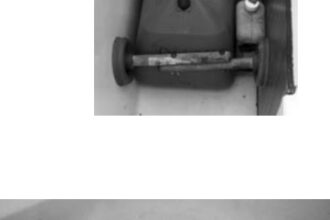
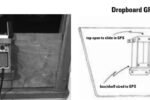
The unit bolts to the cabin sole with spring-loaded catches. I decided to use an unobtrusive side mount under the rubrail for the vent exit in lieu of a deck-mounted solar vent. The unit needs only the supplied initial feeding of ordinary peat moss, replaceable at any garden shop, and a modest amount of electric power for the fan that maintains airflow. After using the unit, a couple of turns of the crank handle mixes the “material” with the peat moss and natural decomposition takes place, thus returning it to its original state, which is plain soil! Simply put, it is similar to the way a cat buries it. The reason the unit is so small and simple is the method of separating liquids from solids.
Urine is separated into a quick-detach bottle. A teaspoonful of ordinary sugar in the bottle suppresses odor. The bottle is convenient to empty. Disposing of urine is seldom a problem. The operating capacity of the unit is based upon approximately 80 uses.
To empty the toilet, the bottom unit is detached, and the material either appropriately dumped or stored until completely degraded. Then it can be placed in flower beds. Any bacterial or viral contamination is destroyed by the natural processes. In our own case, it will most likely be several years before we need to empty it, based upon our lifestyle, which includes offshore and marina supplements.
Stay tuned, we will keep you posted.
Thank you to Sailrite Enterprises, Inc., for providing free access to back issues of Good Old Boat through intellectual property rights. Sailrite.com