Engine trouble, sail trouble, a repair stop, and a Celtic goddess
Issue 119: March/April 2018
“Lindora?”
“No. I don’t like it,” said my husband, Erik.
“It’s Lincoln’s and Isadora’s names put together. How can you not like that?”
“We should call it Red Dragon,” 10-year-old Isadora said, her dragon book cradled in her arms at the breakfast table.
“I don’t like any of those!” pouted 7-year-old Lincoln.
“What do you want to call it?” I asked
Lincoln, trying to be inclusive, even though clearly nobody had considered the brilliance of Lindora.
“Stormtrooper,” he said, shoveling a spoonful of cereal into his mouth.
“Ahhh — and there’s the winner,” Erik said with a laugh as he left the breakfast table.
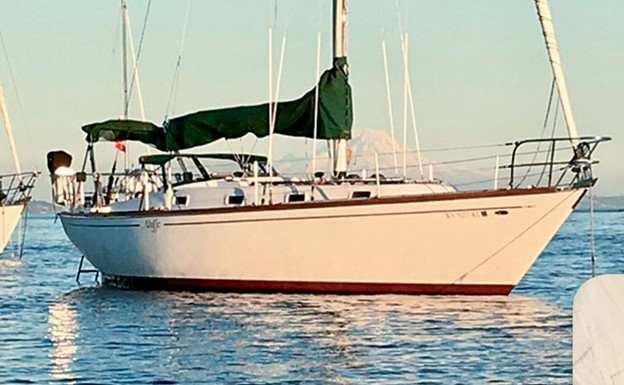
This discussion about boat names had been going on for weeks. A month before, we’d purchased a beautiful 1980 Tartan 37 that bore the unfortunate name of Aluffe. I know, I know. It’s a play on the sailing term luffing. It is witty. But said aloud, it was easily confused with “aloof” — like, unfriendly. Like, we aren’t going to talk to you if we see you in the harbor. We had to find another name for this boat that fit her and our family. We were having a hard time with it, though, as every suggestion was shot down before it had a chance to gain traction. In the meantime, she was just The Tartan.
That morning, we were aboard The Tartan, getting ready to drop off Isadora at her first weeklong summer camp, on Orcas Island in the Salish Sea. Considering we had owned The Tartan for only a few weeks, we felt quite accomplished: we had taken her from Seattle to Orcas Island — a two-day sail — without any mishaps. The fog was thick that morning, but we had moored near the camp, so we didn’t have to deal with it until after our drop-off. After saying our goodbyes, we turned around and headed back to Seattle with Lincoln.
I stood at the helm while Erik went below to turn on our radar for the first time. He soon returned with a frown. “Looks like the radar isn’t working. But we have 1 to 2 miles of visibility. We’ll just keep the shore in view and head into Friday Harbor to fuel up. It’ll clear by then.”
A little knot of doubt started in my stomach as I peered into the fog. This didn’t look like it would burn off in just an hour or two. But I dismissed the thought. We were on our way home; everything would be fine.
In Friday Harbor, the sun shone brightly and the situation seemed to be improving. Lincoln and I walked to Kings Market to get some chips and magazines while Erik filled the fuel tank and emptied the bilge.
“See how that fog cleared up?” he noted when we returned.
“Perfect day for a sail.”
Well, almost perfect. The wind was slack and we had to motor.
“Do you smell diesel?” Erik asked after we were under way.
“It’s probably because you just filled up.”
Erik nodded.
Thirty minutes after leaving Friday Harbor, we turned a corner to enter the Strait of Juan de Fuca and saw a bank of fog on the water.
“Keep a lookout!” Erik called to me over the motor.
I gave him a thumbs-up and climbed on deck, standing on the bow as we entered the misty brew. I wasn’t there for long when Erik called me back. As I took the wheel I could smell diesel. It was strong, too strong to be a few drips after filling up.
Lincoln looked up from his comic book as Erik returned below to look at the engine. “It stinks.”
I agreed, the smell was nauseating. I could hear Erik talking on the phone as he stared at the thrumming motor, while I focused on navigating through the fog using only GPS. When Erik came back up, his face was grim. “We have a small fuel leak, but according to the mechanic we can keep using the motor until we get to Port Townsend, where we can stop and get it repaired.”
“How long until we get to Port Townsend?”
“It won’t take long.” Seeing my furrowed brow he added, “We’ll be fine.”
Lincoln and I sat on deck, trying to escape the diesel fumes while watching for traffic as we crossed the strait. Gradually, the sun did poke through and a brisk wind began to push the remaining fog from our path. Things were looking up. Lincoln and I snuggled on the deck and kept watch for porpoises or seals that would occasionally swim beside us.
And then the engine stopped.
“It’s overheating,” Erik yelled. “We’ll sail.”
Something else amiss? I mentally ticked off the things that had gone wrong this morning: radar, fuel leak, overheating engine. Was our boat falling apart as we sailed it? However, the wind was brisk enough that once we hoisted the stiff sails, we were able to cruise along at 7 to 8 knots, faster than when we were motoring. The sound of the wind and water was beautiful, and with the sun beaming down on us, we soon dismissed our recent troubles as mere hiccups on an overall very successful trip. Indeed, four hours passed uneventfully until we saw land. A weight lifted from my shoulders — we were almost there.
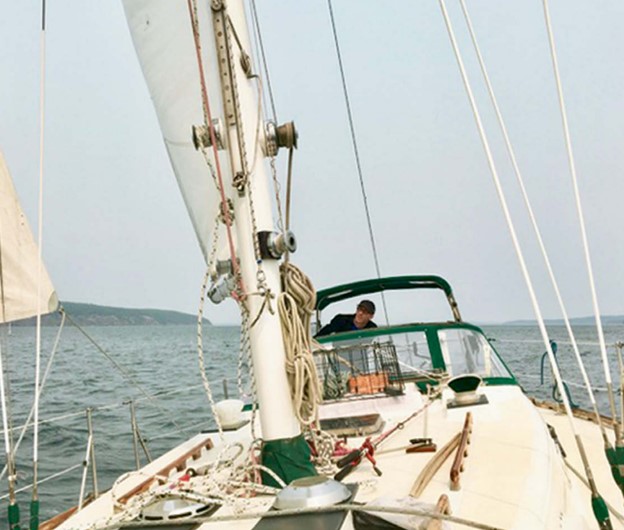
“We are going to sail as close to Port Townsend as we can and then pull in the sails quickly and start the engine. I want to run it as little as possible,” said Erik.
I agreed; a new motor was no small purchase.
As we edged closer to Port Townsend at a healthy clip, the 10-knot breeze suddenly began gusting to 20 knots and the boat’s heel increased.
“Pull in the sails,” barked Erik.
I pulled hard on the headsail furling line. It wouldn’t move. “I can’t do it!” I yelled, straining.
“Take the helm!” We quickly switched places and he began to tug on the line. It was stuck. Erik ran the line around a nearby winch and it stretched taut and squeaked, but it still didn’t budge.
As we sailed rapidly toward the marina, the lee rail dipped into the water. Erik let the sheet go and it snapped in the wind, whipping noisily. Things were happening quickly and I wasn’t sure what to do. I kept pointing the boat toward the marina. Lincoln sat near me at the helm, his eyes wide.
“Luff the sails!” Erik yelled. “We’ll let down the main.”
I turned us into the wind, away from the marina. The jib and its sheet began wildly shaking and the waves tossed the boat like a toy. “I’m going up on deck to pull the sail down,” Erik called out. “Start the engine and keep us heading straight into the wind.”
The boom was swinging back and forth in the chaos and it seemed like Erik would only be inviting disaster if he stepped on the deck. If he fell over, I didn’t feel like I would have enough control over the boat to turn around or maneuver.
“You’ll fall!” I yelled. But he was already up on the cabintop, crouching to avoid the boom and trying to steady himself on the rocking deck.
I watched him tug at the main, but it wasn’t coming down. The wind pushed the sail into him and I could see the outline of his body.
“Get the engine on!” he yelled. “You need to move faster!” Indeed, the momentum I had a few seconds ago was quickly dissipating and the wind was beginning to turn the boat and once again causing the sails to billow and the boat to heel. There was now too much tension on the sails for him to get them down.
I started the engine with shaky hands and then pushed the throttle forward as far as it would go. With water again passing over the rudder, I regained control at the helm and steered us back into the wind. The sails began to luff once more.
Erik clawed at the mainsail, pulling with everything he had, the wind still occasionally blasting him, threatening to push him over the side of the boat.
“Help me!” he shouted, not taking his eyes from the sail as he tried to keep his balance.
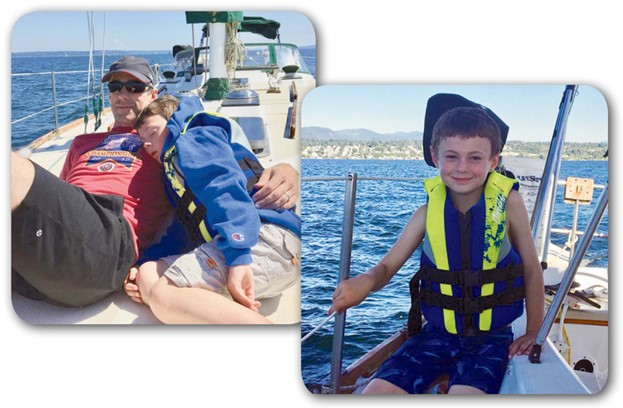
I turned to Lincoln. He’d been enjoying steering the boat throughout the trip and had been quietly watching all the events unfold. Because Erik and I were yelling into the wind, he was a bit nervous, but he slid over and grabbed the helm.
Together, Erik and I pulled the main down and the boat quickly righted herself. Erik jumped down to the cockpit and with tension now off the jib, he was able to winch it back in.
Then Erik took the helm back from Lincoln and we both sat in stunned silence. Lincoln sniffled and rubbed at his eyes. I hugged him. He had been scared; we had all been scared.
Erik and I stared at each other, both of us unsure how things had so quickly unraveled.
As we limped into Port Townsend, our sails spilling out untied, we took stock. The engine was functional but overheating, diesel fuel was still leaking, the radar wasn’t working, and our sails were sticking in high-wind situations.
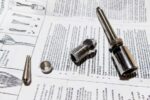
Given the strong diesel fumes below, we spent that night at a hotel in Port Townsend, Erik and I feeling melancholy. Our fun trip had become a humbling experience that exposed us as the keelboat newbies we were. The following morning, we strolled through cute gift shops while the local mechanic called with periodic updates. I overheard snatches of these conversations, learning that the overheated engine was a result of the fan belt, covered in leaking diesel fuel, slipping and failing to turn the water-pump pulley. The diesel leak was the result of an injector head breaking off, an easy fix. As for the sticking sails, we could take care of them with a few adjustments to the jib and a little more lubricant for the mainsail slides.
As Erik again chatted on the phone, Lincoln and I ducked into a small Celtic shop and browsed, my heart not really into shopping. Lincoln was excited at the display of glittery dragons in the window that he thought his sister might like. As he looked on, I made my way to a stand of necklaces and charms. A small sign caught my eye: “Protector of Travelers.” I read on. A small charm read, “Nehalennia, the steerswoman, is the Celtic goddess who protects travelers during their lives.”
The name Nehalennia had a lot in common with our newly acquired sailboat: it was old, strong, and resilient. I realized it was only because we were now getting to know our boat that we could find the name that suited both her and our family.
Our misadventure had been a result of not fully getting to understand the quirks and nuances of our new boat, of not understanding the limitations our own inexperience presented. Erik is an experienced sailor, an accomplished Thistle racer. But Thistles don’t have any of the complex systems of a family-sized sailboat. Sure, the fuel leak was something we couldn’t have anticipated, but the radar that didn’t work, the sticking sails — these things would have been addressed if we had spent as much time getting to know our boat as we had arguing about what to name her.
After making some minor sail adjustments and having an engine part replaced, we sailed Nehalennia back to Seattle. Lincoln had a wide grin as he said, “We have such a great story to tell everyone when we get back home.” Well, that is definitely one way of looking at it. Erik and I looked forward to taking our sailboat out on shorter sails around Lake Washington for as long as it would take to get to know her, and our sailing selves, a little better.
The Takeaway
After this adventure, we felt humbled on several fronts; we clearly needed to get to know our boat better and gain more experience sailing her. We did make some positive moves: we shut off the engine as soon as we knew it was overheating, we made a plan for entering the harbor at our destination, and we used our cell phone to call a mechanic for a diagnosis while under way. But we both underestimated the number of potential failure points and what that could mean for our mini cruise. Certainly, in a high-traffic area prone to fog, we should have tested the radar before setting out. Hot summer days in Seattle had lulled us into assuming that fog would not be an issue. If we had practiced reefing this new-to-us boat in high winds, we would have learned that, although the sails came down easily in light wind, they became sticky in stronger winds. Finally, Erik and I could have avoided some of the drama on board if we had discussed beforehand what to do in situations where we were both needed on deck.
Alethea Westover and her husband, Erik, live in Seattle, Washington, with their son, Lincoln, and daughter, Isadora. They own a 1980 Tartan 37 named Nehalennia.
Thank you to Sailrite Enterprises, Inc., for providing free access to back issues of Good Old Boat through intellectual property rights. Sailrite.com