A quick history
Issue 6 : May/Jun 1999
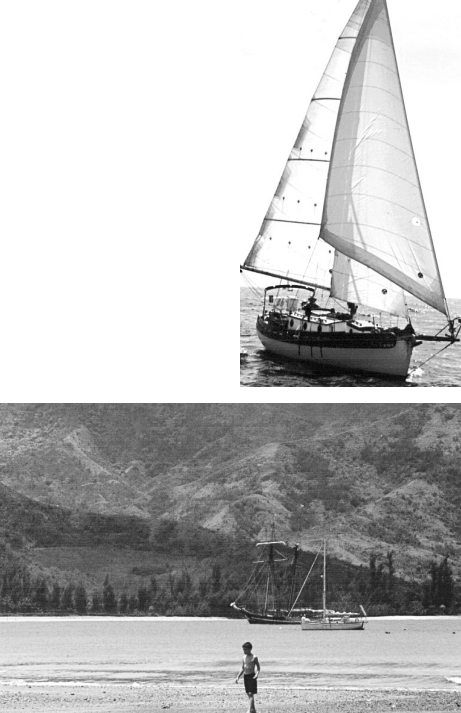
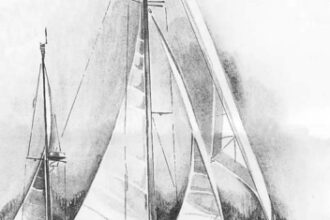
The seaworthy forebears to Lyle Hess’ designs are the legendary working boats of Great Britain’s western approaches, the Falmouth Quay Punt, the Bristol Channel Pilot Cutter, and the Itchen Ferry Smacks. Gathering their attributes, Lyle’s work enhanced the safety and swiftness of these small ships in harmony with their beauty. Along with the talents of sailor/designer Hale Field, Lyle created the 24-foot gaff cutter Renegade, which attracted much respect and admiration within the cruising and racing community.
The able Renegade inspired Canadian sailor Larry Pardey to request plans for a cruising-oriented version with a marconi rig for easy singlehanding. The resulting Seraffyn of Victoria explored the world for 11 years with Larry and his wife, Lin. The interest kindled by these voyagers led Lyle to creating another very handsome design, the Bristol Channel Cutter. Sam Morse and his wife, Betty, chose this design and began the tooling process for a bluewater cruiser.
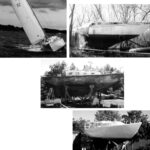
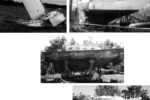
In April of 1976, their first fiberglass hull was crafted and thereafter Sam sold a few of these hulls to folks with the time, talents, and inclination to build their own custom vessels. Eventually, the Sam L. Morse Company took over the completion of shipbuilding: from hulls to semi-complete versions, then finished vessels. Sam also gave permission for a Vancouver company to produce boats for the Canadian market, of which approximately 35 hulls were built and finished with various shipwrights. In 1980, the Sam L. Morse Co. acquired the Lyle Hess Falmouth Cutter design from Heritage Marine. This trailerable bluewater cruiser became an option for those whose schedules don’t permit long-term cruising.
Sam Morse and company continued building and refining the BCC and Falmouth Cutter until 1991, when Sam and Betty retired and moved to the Pacific Northwest. It was then that George Hylkema purchased the company and continued to create the yachts with the same attention to detail from which Sam had built his reputation. Not long thereafter, Roger Olson, back from 13 years spent cruising in the South Pacific with his BCC, joined in partnership with George. Roger’s experience further enhanced the many details which make cruising enjoyable and safe. George retired in 1995 to spend more time with his own boat and other pursuits, while Roger continues to guide the Sam L. Morse company, along with the skillful long-term shipwrights Dick McComb and Tommie Whistler, each now with more than 20 years building the Bristol Channel Cutter and the Falmouth Cutter.
Thank you to Sailrite Enterprises, Inc., for providing free access to back issues of Good Old Boat through intellectual property rights. Sailrite.com