Stanchions: Safe, salty, sturdy
Issue 19 : Jul/Aug 2001
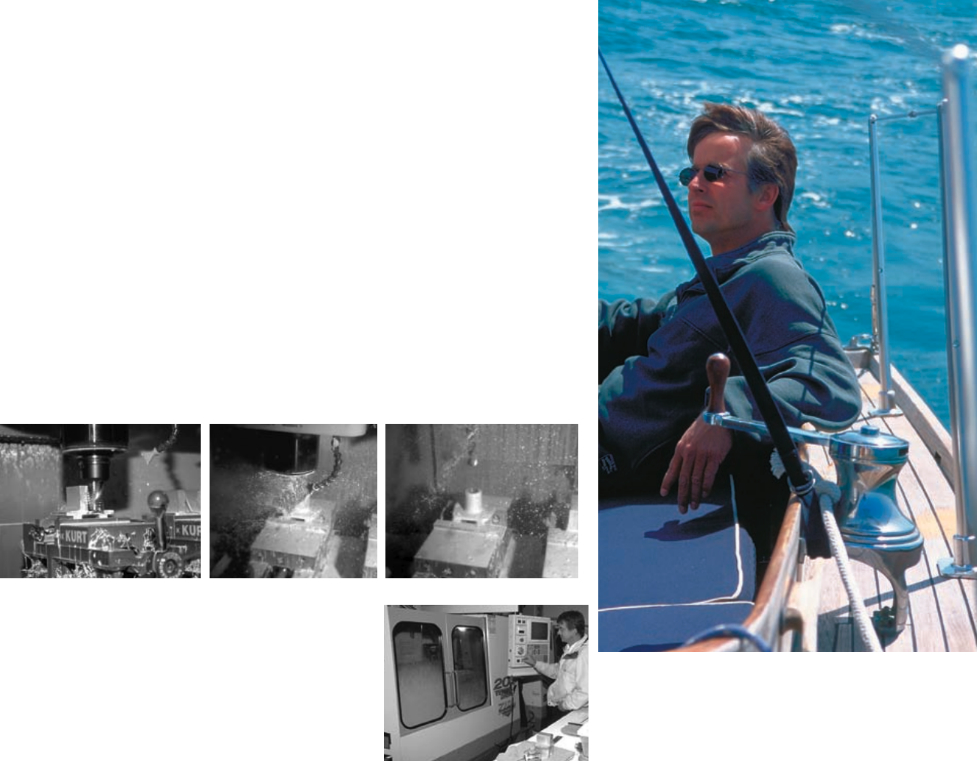
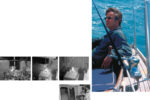
Sailor Ron Bohannon fell in love with a Phil Rhodes Chesapeake 32. As is often the case with older boats, she needed work. But he loved the lines and bought the boat before he came to his senses. Later, when he considered the extent of the project and the time he had available, Ron put the boat back on the market. But he owes this boat a debt of gratitude. She led to a new sideline for his business . . . one that is gradually becoming a major focus of Matella Manufacturing.
The Rhodes Chesapeake had aging cast-bronze stanchion bases and stainless steel stanchions. Reflecting on this setup, Ron was sure this vital safety equipment was not up to the job of keeping kids, dogs, and adults aboard. He notes, “People are spending their money on the wrong stuff: man-overboard systems, strobe lights, and so on. They should spend it staying on the boat in the first place.
“I wanted to replace the stanchions with something that was lightweight, low maintenance, and good looking,” Ron says. He didn’t see the solution he was looking for on the market. No matter. Ron had something most sailors don’t: a fully equipped machine shop and the skills to develop an alternate solution. That was in 1998. Soon afterward, Matella Manufacturing, a provider of intricate, high-quality parts exclusively for the aerospace industry, turned its attention toward the marine industry after comparing Ron’s high-tech solution with other products on the market.
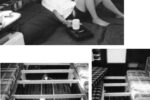
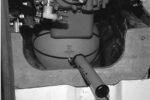
His solution? A solid aluminum stanchion and base, polished and heavily anodized, machined from solid blocks of metal, with large studs, full-sized backing plates and O-ring seals, capable of withstanding terrific forces. When Practical Sailor rated stanchions and bases in December 2000, it recognized this new addition to an already crowded market as the best of the lot. But then Ron and his partner, Jim Strain, already knew this. That’s why they agreed to introduce Ron’s development as a product in a market they had not yet entered.
In addition to withstanding greater forces, these stanchions are available in taller sizes (30 inches is the tallest), so sailors don’t have to experience that sneaking feeling that they would more likely be tripped and thrown overboard headlong than saved from falling by their boat’s lifelines.
A series of sailboats ran through Ron’s life. Before he turned 18 there were a Sabot and a Malibu outrigger owned by a friend. After high school he worked for Hobie Cat and sailed these boats extensively. Then there was an older lapstrake Folkboat, a 34-foot wooden Rhodes cutter, and a 24-foot boat of Swedish origin but otherwise unknown heritage. As life improved for Ron and family, he bought a Sparkman & Stephens Yankee Dolphin, which he loved and fussed over until selling it in pristine condition because it was a bit small for a family.
The Rhodes Chesapeake project boat came into his life as an attempt to replace the Dolphin. In late 2000, while looking once again for a replacement boat, Ron came upon a Cheoy Lee Offshore 31, which has Herreshoff 28 lines and is likely to remain in the family for many years to come. After only a few months in Ron’s care, this new boat, Minuet, is already decked out in Matella’s stanchions and a new super-strong aluminum lifeline Matella has just introduced.
Big Bear City, in the mountains of California, is a two-and-a-half-hour drive from the Redondo Beach (Los Angeles) marina where Ron keeps Minuet. It may seem an unlikely place for a business manufacturing sailboat stanchions. But Ron and his wife, Colleen, moved his aerospace parts business from Los Angeles to the mountains when the first of three children reached grade-school age. In their estimation, Big Bear City is a more wholesome place in which to grow up. Sailing was still just a hobby anyway. Ron moved his small shop next to another small company run by Jim Strain. Jim’s machining business was called Matella Manufacturing. These two eventually merged their companies and selected Matella Manufacturing as the joint name. Jim is not a sailor, but he may yet catch Ron’s enthusiasm.
While stanchions aren’t the sort of thing that wear out first on older boats, they can be broken or experience failures, particularly at the base. Jerry and I are not the only good old boaters who cringe when people grab our stanchions when offering docking assistance. We know these relics from 1976 are not mounted firmly from below. We know each stanchion is fastened to its base with one screw assisted by a tiny setscrew. And we’re aware that the stanchions themselves are thin-walled stainless steel tubes. That they have lasted as long as they have is testimony to the good care our boat has received over the years. To avoid the eventual replacement costs, we typically ask (even insist) that a shroud be used when others grab at something on our boat.
Perhaps now that the ultimate replacement is available, we’ll be less likely to shout, “Please don’t pull on that stanchion!” In fact, the cost of replacement is not as shocking as might be imagined for the quality of this product. A typical 26-inch Matella stanchion costs $80 as compared with $85 for another major brand available from one of the large marine catalog companies. And the Matella product comes complete with the base and all necessary hardware. There’s a good reason for the lower cost. Matella sells these stanchions directly to the consumer, rather than through a third party, since this would typically double the manufacturer’s price. Going it alone means that Matella depends, more than most, on word of mouth. Once the word’s out, however, it won’t be long before it will spread through dockside conversations and via email discussion lists.
Thank you to Sailrite Enterprises, Inc., for providing free access to back issues of Good Old Boat through intellectual property rights. Sailrite.com