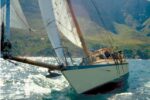
Famous California boats spawned many derivatives
Issue 20 : Sept/Oct 2001
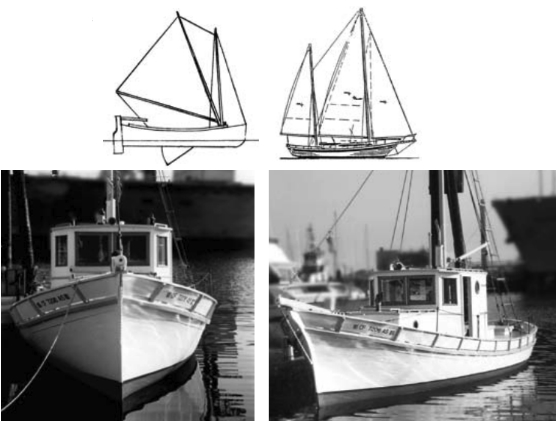
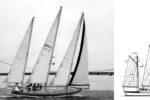
Reese Palley profiled the Cherubini 44, Hinckley 40, and Valiant 40 as classic American sailboats in the May 2000 issue of Good Old Boat. To this list might be added three groups of West Coast counterparts: the Pacific Seacraft Crealock 34, 37, 40, and 44; the Henry Morschladt DownEaster 32, 35, 38, 41, and 45; and the William Garden and Clair Oberly Mariner 32, 35, 40, 45, and 50. (The author notes that a group of Lockheed executives, inspired by his proposal for a fiberglass boat division similar to Grumman’s Pearson subsidiary, supported the production of Mariners at Kawasaki in Japan; the other boats were built in Southern California. -Ed.)
These West Coast boats are related to the East Coast group by W.I.B. Crealock’s and Robert Perry’s canoe sterns and by John Cherubini’s, Henry Morschladt’s, and William Garden’s clipper bows. Bob Perry has credited the North Sea boats for his inspiration, and the Cherubinis aspired to L.-Francis Herreshoff’s Ticonderoga.
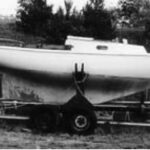
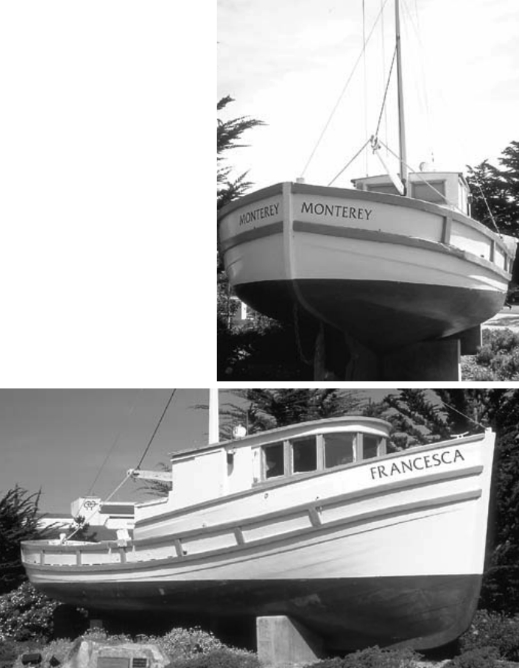
The West Coast boats were derivatives of the clipper-bow, double-ender California Monterey fishing boat, which itself was developed from the lateen-rigged Sicilian beach boat, which Howard Chapelle says was “politely called the San Francisco felucca.” Very few authentic Monterey fishing boats were built after 1941 due to the wartime relocation of their Italian builders away from the coastline and the consequent loss of their boatyards, skilled workers, and material sources.
Both Crealock and Garden made several attempts to produce these boats in quantity before achieving success with their better-known sailing derivatives. It is fitting that an Italian, Sam Filippo, produced a mold over a plug made from an authentic wooden boat. This mold was used by several boatbuilders to replace hundreds of aging commercial boats. Many of these replacements are still actively working the West Coast fisheries from Mexico to Alaska. Unfortunately, the appeal of the classic Monterey boat as a yacht was eclipsed by low-cost, glass-over-plywood, twin-screw boats that could reach Santa Catalina Island from Los Angeles in one hour instead of three.
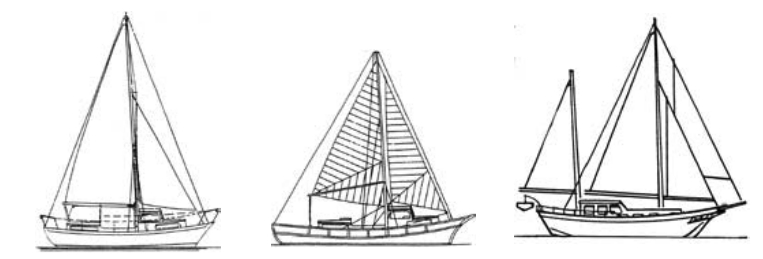
Credit for the first Monterey boat derivative goes to Annapolis-based Thomas Gilmer for the Sea Horse 30 motorsailer, which he designed around 1950. In his own words, “I always admired those little boats when I was stationed with the Navy in San Diego.”
Since 1942, hundreds of Monterey boat replicas and derivatives have been built. Primarily constructed from fiberglass over molds taken from original classic Monterey designs, many of these boats have retained the charm of those classics without the inevitable deterioration of wood. Only a few authentic wooden Monterey boats have survived and can still be found in fishing ports along the West Coast. The ingenuity of the Italian immigrant boatbuilders and the simple beauty of their design is still evident in many of today’s modern yachts. Their boats served as inspiration for many of the sailboats that followed.
Monterey boat enthusiast Charles Sweet began his lifelong passion for boats as a teenager working in the Wilmington, California, boatyards during the 1930s and throughout his 50-year career at Lockheed. Charles recently sold his fully restored Monterey boat, Mary Ann, to Universal Studios for use in a theme park in Japan recreating Fisherman’s Wharf in San Francisco. He is writing a book about Monterey boats.
Thank you to Sailrite Enterprises, Inc., for providing free access to back issues of Good Old Boat through intellectual property rights. Sailrite.com