All kinds of people doing all kinds of jobs for boaters
Issue 20 : Sept/Oct 2001
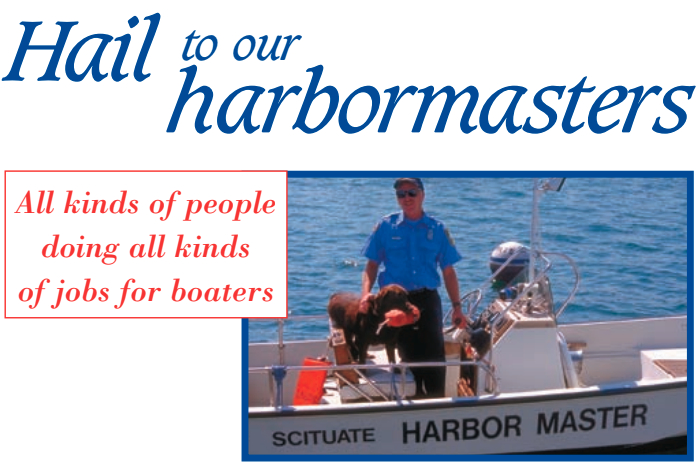
In most every port or harbor along the U.S. coastline, and on many inland lakes or river ports, there are harbormasters. A harbormaster may be a single soul with a badge and a Boston Whaler or the head of a team of men and women manning several craft and staffing a command center ashore of radiophones, landlines, and full office staff. The community might set aside a relatively modest $20,000 to $30,000 as a harbormaster’s budget, while in the ports of large yachting centers it can run into hundreds of thousands of dollars.
The harbormasters, generally appointed by their town governments, are retired Navy chiefs, Coast Guard bosun’s mates, ex-fishermen, retired airline pilots, and sometimes young salts right out of college or the military, searching for a way of life on the water. Almost always these keepers of our harbors are experienced boaters; they have “been there and done that,” they know the nautical rules of the road, and they often have EMT training and knowledge of marine mechanics.
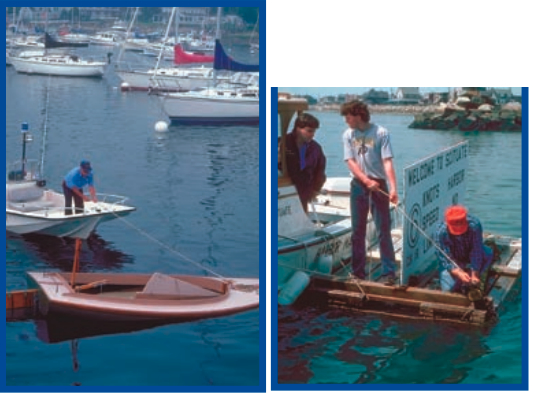
Welcome to Scituate Harbor, at right, but make no wake. Harbormaster staffmembers set the speed sign.
The harbormaster’s office may be a modest four-by-six-foot shack with a desk, chair, and handheld VHF; or it may be like the glass-and-frame edifice housing the harbormaster and his staff at Scituate Harbor, Mass. Their vessels vary from a 16-foot Boston Whaler to a 25-footer with enclosed pilothouse, radar, depthsounder, and radiophones. Most have towing bitts or chocks and carry portable pumps and extra fuel. Most are capable of near-harbor search and rescue activities and, given the shrinking budget and resources of the U.S. Coast Guard, are often the only source of near-at-hand help to the mariner in distress.
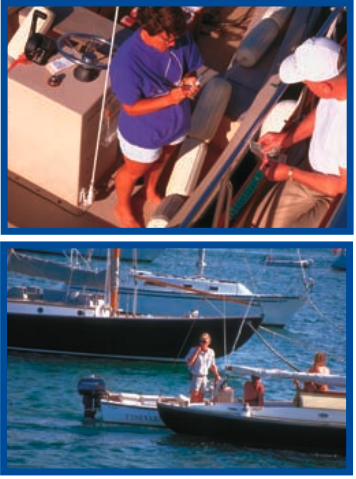
If the harbormasters are a varied group and divergent in their vessels, offices, and equipment, their duties are also a veritable smorgasbord. They assign moorings, collect fees, and maintain town moorings and slips at many town or municipal marinas. They police the waterways for speeders, those boating under the influence or transporting drugs, and they monitor discharge of sewage or holding tanks. Indeed, they offer town pumpout stations and boats, in many instances. They tow the stranded, fuel those with empty tanks, cite the offenders, check for chafing of mooring lines in gales, capture boats that have broken loose, save the sinking, answer the flood of VHF inquiries as to facilities available, and enforce the anchoring and no-anchoring areas. In other words, they keep their particular port or harbor as safe and orderly, yet pleasant and hospitable, as possible.
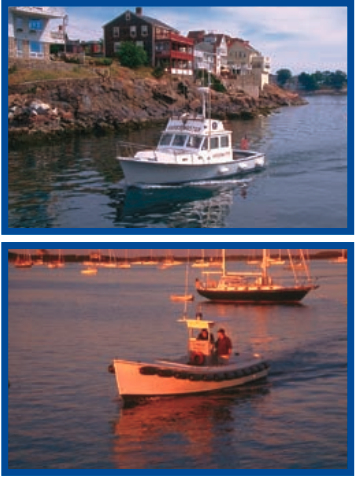
Harbormasters must combine the enthusiasm of a chamber of commerce with the strict enforcement of a nautical police department. They must at times be medics, mechanics, ambassadors, enforcers, communicators, police, or saviors. Most are now uniformed and badged, and many are armed with weapons and fully trained in their use. They are male, female, young, old, alone, or part of a staff. To a person, harbormasters are high up on the list of “People We Could Not Boat Without!”
Mary Jane and her husband, Warren, have been boating for more than 25 years. They sailed Serena, a Sabre 28, for seven years and now cruise the East Coast in a Grand Banks 36, Sea Story II. A freelance writer and photographer, Mary Jane has been widely published in boating magazines. Her latest book, Eye on the Sea, was featured in Good Old Boat.
Thank you to Sailrite Enterprises, Inc., for providing free access to back issues of Good Old Boat through intellectual property rights. Sailrite.com