It’s wise to keep a sextant aboard and to know how to use it
Issue 21 : Nov/Dec 2001
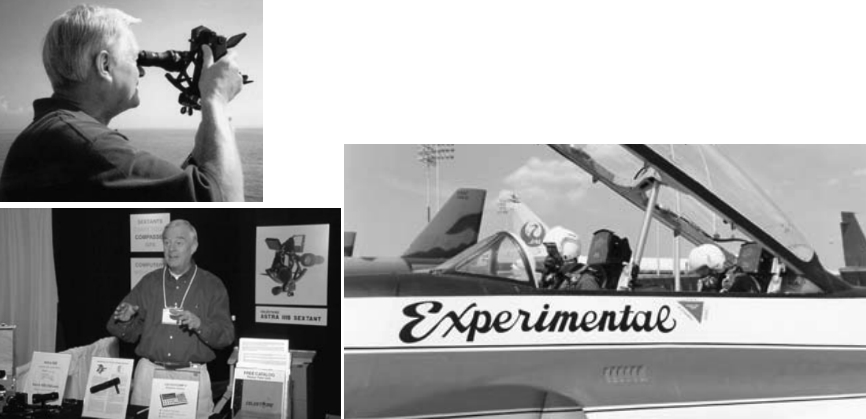
Nobody will argue that celestial navigation is simple. But Ken Gebhart is prepared to argue that the basics can be mastered with relative ease, and he’s converting others every day to his point of view. Ever since he first studied the concept, in fact, Ken has believed celestial navigation is fun.
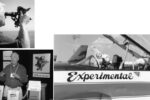
Founder and owner of Celestaire, Ken has spent much of his life in and around aircraft, often in the pilot’s seat, but given the chance he’d rather be the navigator. “It’s much more fun to navigate than to sit there with an autopilot,” he says. His enthusiasm for navigation done “on the fly” has led to the business of selling sextants and of training others in how to use them. These days, the business is primarily directed toward sailors, but the concepts have not changed. In fact, Ken points out, it’s easier these days. Current textbooks can throw out the chapter on time zones, and the accuracy of today’s quartz watches eliminates the need for a chapter on the care and use of chronometers.
But those who “paid their dues” at military academies studying navigation and others who’ve earned the right to call themselves Navigators with a capital N, would prefer that the club remain small. Ken believes many have a need to make navigation training, particularly celestial navigation training, into a “rite of passage.”
Ken is out to destroy this “small band of knowledgeable wizards theory” by presenting an understandable overview of the concept to as many as 1,000 grateful sailors each year, primarily at boat shows. “I’m trying to sell sextants,” he tells them, “I want this to be easy.” His position is that anyone can begin to play the game of golf in a day. It may take years to master all the nuances, but beginners can be golfing with a score of 160 right away. This applies to celestial navigation as well. Without any understanding of the heavenly bodies and triangles, any beginner can “score a 160” in the field of celestial navigation. Unlike the more ponderous courses, Ken doesn’t start with the complicated details. He begins at the beginning.
Buggy whips?
Is this good old vendor losing out to GPS as surely as the buggy whip manufacturers of yesteryear lost out to automotive suppliers? Not a chance. Celestaire also offers GPS products, and Ken drives around with a GPS in his car. Sextants surely aren’t going the way of dinosaurs as long as people are attending his seminars and showing up at his boat show booths for books, sextants, and advice.
Ken was graduated from the U.S. Naval Academy in 1958. His interest was in flying airplanes, and he flew Neptune P2V patrol planes based in Hawaii. At the time, since there was no Loran, navigation was done using a periscope sextant and traditional methods. As a junior pilot, Ken did the navigation, and he learned to love it. When he became patrol plane commander, he often switched seats so he could do the fun stuff while someone else flew the plane. He even earned his Flight Navigator License, something awarded by the Federal Aviation Administration, now part of the Department of Transportation. Since there is no marine counterpart to this, this makes Ken one of very few federally licensed navigators around.
Eventually, as a civilian, he earned a master’s degree in physics, but Ken says, “I missed flying.” When he learned that Boeing was looking for a junior test pilot in Wichita, Kansas, he got the job and has been in Wichita ever since, strategically located (as he puts it) closer to more oceans than anyone.
He left the naval reserves and joined the Air National Guard in order to fly F100s. About that time the USS Pueblo was captured in 1967. Overnight, Ken’s Air National Guard unit was made active, and he became a captain in the Air Force. “There I was,” he remembers, “with a uniform and a handful of insignia. I didn’t even know where to pin them.” This obligation to his country lasted a year and a half and involved more flying and navigation, of course.
Quirks of fate
In one of those quirks of fate, Ken, who does sail now but did not sail at the time, picked up a copy of Rudder magazine on a whim and learned that sailors were looking for used aircraft sextants, the sort with a horizon prism. He began running ads in the Trade-a-Plane publication to buy used sextants from surplus dealers while simultaneously running ads in yachting magazines and selling them to sailors. It was an interesting sideline while he continued to hold down a “real job” with Boeing.
“In 1972 I told my wife, Mary Lee, ‘Some day I’m going to be the biggest sextant seller in the world and give lectures at yacht clubs around the country,’ ” Ken recalls. Today, Celestaire is indeed the largest seller of sextants, and Ken lectures around the country at boat shows, rather than as a guest of yacht clubs. However, if your yacht club is willing to extend an invitation, it’s a bet that Ken will be there making celestial navigation fun and understandable.
To help his fledgling business grow, Ken visited sextant manufacturers around the world, made deals, bought booths at boat shows, and ran ads. He even flew both the Pacific and Atlantic oceans in single-engined Cessnas, with little but a sextant to guide him, proving the efficacy of this method. In 1986, a serendipitous letter to the editor of Ocean Navigator, written by a reader, claimed that the Astra III sextant was great and that everyone should have one. This lucky stroke more or less moved Celestaire, as the exclusive importer of these sextants at the time, to the next level. When Ken took an early retirement from Boeing in 1990, his business was growing steadily, and sailors continued to believe that it was wise to have a sextant aboard and to know how to use it no matter how sophisticated the rest of the boat’s electronic instruments were.
Big growth
That year, Celestaire outgrew its space in the Gebharts’ home, and Ken found 2,000 square feet of office and storage space to accommodate computers, three part-time workers, and inventory (books, sextants, barometers, other weather supplies, charting programs, GPS units, and much more). The company is selling 1,600 sextants worldwide per year, he says, and the trend is not diminishing. But sextants comprise only 20 to 30 percent of the total business. This is a businessman who was not caught off guard by a competing technology.
Ken’s interest in sailing started innocently. He bought a small sailboard-type boat from Kool cigarettes for $50 and a boxtop in the early 1970s. It arrived at his home in the U.S. mail, mast and all. He still believes that more sailors would be cultivated if only deals like this continued to be offered.
Eventually he bought a Clipper Marine 26 in partnership with another sailor. With busy careers, neither man had enough time to sail much, and the boat was sold. But Ken involved his wife and all six of their children in sailing on that boat. They remembered those days favorably, and a couple of years ago one of Ken’s sons said, “Dad, how about buying another sailboat? I’ll take care of it for you.” That encouraged Ken, and he now sails a water-ballasted Hunter 260 in the lakes near home.
“It’s been a fun life,” Ken says reflectively. “I’ve flown every kind of airplane ever built, had duty aboard Navy ships, and done a fair amount of sailing. Now I am enjoying worldwide travel to exhibit our products. How did I get so lucky?”
Thank you to Sailrite Enterprises, Inc., for providing free access to back issues of Good Old Boat through intellectual property rights. Sailrite.com