Fire on board is terrifying; here’s how to deal with it
Issue 31 : Jul/Aug 2003
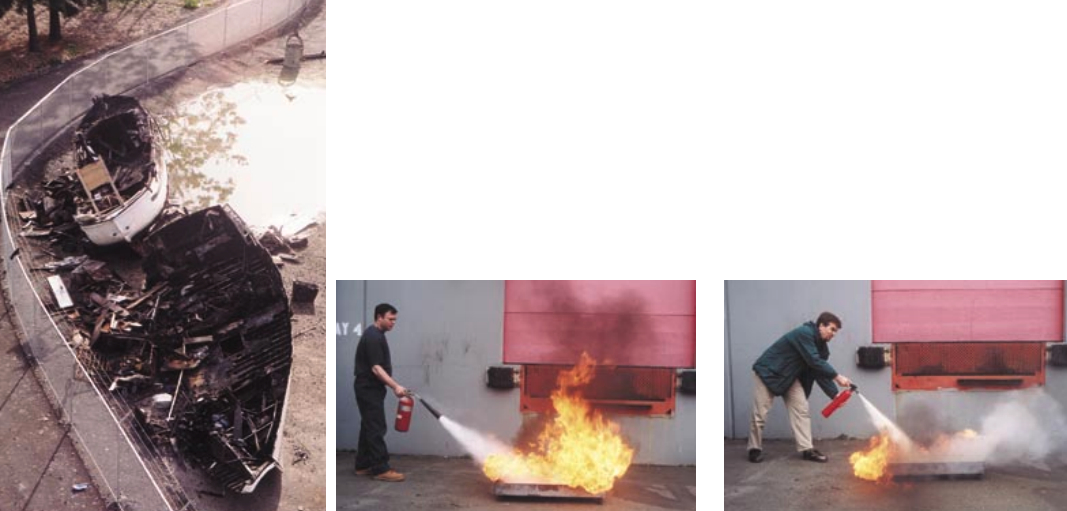
For a brief moment, there is a tense quiet — just the heady, dangerous stench of spilled gasoline wafting on the wind. Then the mixture ignites with a powerful whoosh that I feel as much as hear. I hoist my boat’s original, 17-year-old fire extinguisher. There’s no need to pull the pin, as it’s been missing for some time. I squeeze the handle and, almost surprisingly, the ancient, patient device spews out a powerful stream of yellowish powder.
Its effect on the seemingly invincible wall of flame is immediate and impressive. As I sweep back the flames, somewhere in the back of my mind it occurs to me that the extinguisher is tremendously reassuring in my hands, almost familiar feeling. But I worry that the powder will run out before the flames do.
Happily, my experience battling a gasoline fire took place under controlled circumstances, on the premises of DBC Marine Safety Systems, under the watchful eye (and backup fire extinguishers) of manager Keith Burke. I was at DBC for two reasons: first, to have my boat’s fire extinguishers inspected, and second, to find out everything I could about fire extinguishers and the law. What I learned (other than that my boat’s original extinguisher was due for retirement) was that there’s a whole lot more to fire extinguishers than first meets the eye.
Evaluation and selection
Chances are, if yours is like most good old boats, it already has at least one fire extinguisher aboard. But unless it has had proper, regular inspections it may be just plain old, and that’s no good.
For existing fire extinguishers, two factors are of primary importance: first, ensuring the extinguishers meet the Coast Guard’s minimum requirements for the vessel (see sidebar on Page 58) and second, ensuring the extinguishers are in good, working condition and up-to-date with any required inspections or service. Beyond these two factors, there are matters of personal preference and intended use. There are several types of extinguishers to choose from.
Dry chemical. These are probably the single most popular type of extinguisher used aboard recreational boats. The reasons are simple: they’re cheap, reliable, effective, and low-maintenance. Their limitations include a limited range (you have to get close to the fire to use them effectively), relatively narrow effective stream (you have to aim them well), and comparatively short discharge time (this is why it pays to take advantage of their economy and have several aboard). Also, they leave a messy residue after use. As Keith Burke points out, the mess isn’t anything like the damage caused by a fire, but it can be troublesome to clean up.
CO2 (carbon dioxide). Carbon dioxide units were at one time the standard for engine-compartment protection. They require less precise aim than dry chemical units and are very effective, simultaneously cooling a fire and depriving it of oxygen. They leave no residue and are nontoxic.
However, they aren’t safe in enclosed spaces because they’ll deprive occupants of oxygen as effectively as they deprive the fire. Principal disadvantages of carbon dioxide units include the greater size and weight of the bottle needed to store the compressed gas and the need for more frequent, expensive maintenance than dry chemical units. Furthermore, they aren’t suited to use in open, breezy locations because wind can quickly dissipate the CO2 gas.
FM-200 and FE-241. Developed as a replacement for Halon (which was a clean, nontoxic extinguishing agent but which is now banned because of its destructive effect on the earth’s ozone layer), FM-200 and FE-241 are inert-gas, flooding-type extinguishers, principally in use as fixed, automatic installations. Their advantages are that they are effective and safe to use in enclosed occupied spaces, plus they leave no residue. Their big disadvantage is cost, ranging from $271 upward. And for portable use they aren’t as effective as dry chemicals because any breeze will quickly dissipate the inert gas.
Aqueous foam. A relatively new technology, aqueous foam units can be highly effective for cooling and for smothering a fire. The foam sticks well to the surfaces involved in a fire (including vertical surfaces) making these extinguishers easy to use. The foam cleans up easily with water and doesn’t dissipate rapidly during use, which helps prevent re-ignition. But because the technology is new, it’s not yet easy to find U.S. Coast Guard-approved models.
When evaluating your existing fire protection, keep in mind that most original extinguishers on older sailboats are chosen by the boatbuilder primarily based on price. While economical and functional, these units aren’t necessarily what you want to rely on 20 years later . . . after you’ve spent countless hours refitting your classic. An inexpensive extinguisher tends to have a plastic nozzle head, with the gauge held in by a circlip. These units aren’t as robust as extinguishers with aluminum nozzle heads and screw-in gauges. According to Keith, it’s not unknown for the circlip holding the gauge on an inexpensive extinguisher to fail while stored aboard, shooting the gauge across the boat like a projectile and spraying extinguishing agent all over. If you’re buying a new extinguisher, check its date of manufacture — don’t buy one that’s already nearing its first mandated inspection.
Inspection and maintenance
Apart from providing you with peace of mind, fire extinguishers need regular inspections to satisfy the requirements of two agencies: your insurance company and the Coast Guard. Your insurance policy may have the strictest inspection requirements — commercial vessels must have all extinguishers professionally inspected on an annual basis, and many recreational boat policies require the same frequency. The Coast Guard doesn’t require yearly inspections of fire extinguishers aboard recreational boats, but it does expect that the required fire extinguishers be in good, serviceable condition.
According to Don Knesebeck, the U.S. Coast Guard’s Boating Safety Coordinator in Seattle, for extinguishers with a gauge this means that the gauge must be in the “fully-charged” zone, the tamper seals must not be broken, and the required 6- or 12-year inspections must have been performed. Extinguishers without gauges require annual inspection tags from a certified testing agency (Canadian requirements are similar). If you’re boarded, and your extinguishers aren’t in compliance, the Coast Guard will likely issue a citation and require you to prove subsequent compliance. At their discretion, they can terminate the voyage, forcing you to return immediately to the dock.
But according to Keith, there are several reasons beyond simple compliance to have regular certified inspections carried out:
- Over time, the gauge on an extinguisher can seize, so it’s possible for a unit to lose pressure and still show a charge. A reputable shop weighs the extinguisher to ensure that it contains the factory-specified charge.
- If a dry chemical extinguisher is bumped in such a way as to depress the pin and release even a tiny quantity of chemical, it can react with moisture in the air and block the nozzle, preventing the unit from discharging when you need it. The shop will check for signs of discharge.
- If you have your extinguishers inspected aboard your boat, the company will issue a full compliance report (detailing such site-specific things as correct placement and labeling and use of a correct Coast Guard-mandated bracket for the extinguisher). This shifts the onus of responsibility from you to the inspection company — handy if you ever do need to make a fire- based insurance claim.
If your extinguisher has a gauge and you elect to carry out your own annual inspections, check the following (to be truly safety conscious, perform these checks monthly):
- No obvious physical damage or corrosion.
- No leakage; neither hose nor nozzle is blocked.
- Pressure gauge within operable range.
- Seals, pins, or other tamper devices in place and unbroken.
- Operating instructions legible.
- Dry chemical not “caked.” (Shaking the extinguisher monthly will both test for and prevent caking. If the powder doesn’t slosh around freely inside the extinguisher, rap the extinguisher sharply into your hand to break up the cake.)
- Extinguisher not due for its 6- or 12-year inspection.
Never test fire an extinguisher; this will likely cause a slow leak and can cause the nozzle to become blocked with extinguishing agent residue.
One inescapable fact is that the small portable extinguishers used aboard our modestly sized cruising boats have a limited economical life. Dry chemical extinguishers require an internal visual inspection every six years and a hydrostatic (pressure) test every 12 years. While the visual inspection, with its attendant discharge and refill of the unit, is still significantly cheaper than a new extinguisher, the 12-year hydrostatic test simply doesn’t make economic sense for a small extinguisher — it’s almost the same cost as a new unit, and you run the risk that the unit will fail (and, yes, you typically have to pay for a hydro even if the unit fails).
You can rotate “stale” extinguishers into your house or car (on the grounds that it’s better than no extinguisher at all), but keep in mind that the hydro test is really a safety measure. The last thing you want is an aluminum canister, charged to 100 psi, rupturing under your car seat. Obsolete extinguishers should be disposed of at a reputable fire safety equipment shop, which will recover the extinguishing agent.
Approved technique
As I learned when I visited DBC Marine Safety Systems, using a fire extinguisher isn’t difficult, but there’s an approved technique. It’s the PASS method:
Pull the pin. (Mine didn’t even have a pin, something I hadn’t noticed until I took it in for service.)
Aim the nozzle (or hose or horn) at the fire’s base, keeping the extinguisher upright.
Squeeze or press the trigger to release the extinguishing agent.
Sweep from side to side at the base of the fire, or use a series of short blasts. As the flame front moves back from your extinguisher, adjust your aim to follow the fire’s base.
If your extinguisher runs out of juice before the fire is out, you have two choices: continue fighting the fire with water or abandon ship. If the fire is not too fierce and not fueled by flammable liquids, fighting it with water is a very real option. Your boat is floating in the stuff and, as with bailing, a frightened sailor with a bucket can move a surprising quantity of water.
Turn off the main battery switch if you can, and as long as you’re not pouring seawater on live 110-volt connections, low-voltage electricity from the batteries won’t usually hurt you. As John Poole at Vancouver’s Fire Prevention Office points out, it may be conceivably possible to kill yourself with low voltages, but it’s unlikely. On the other hand, unless rescue is close by, jumping into frigid northern waters is almost guaranteed to kill you within a few minutes due to hypothermia.
Effective prevention
As a final note, the most effective way to fight a fire is to ensure that it never starts. The major sources of fire on boats include engine fires, galley fires, fires started by heating appliances, fires started by carelessness with cigarettes, and electrical fires. A few safety guidelines can prevent many of these.
In the engine compartment, ensure that wiring is adequate for the load being carried and that all circuit breakers and fuses are properly sized and functional. Visually inspect insulation on a regular basis.
Diesel fuel is far safer than gasoline, but don’t let it lull you into a false sense of security. Regularly inspect high-pressure fuel lines and injector bodies for deterioration, leaks, or cracks.
Wet exhaust systems can become incredibly hot if the flow of seawater is interrupted, so install a seawater strainer, routinely check the hoses, and develop a habit of constantly listening for the telltale splash of water being discharged.
In the galley, exercise common sense. Don’t hang towels or curtains over the stove. All bottles of alcohol or kerosene should be closed and stowed before lighting the stove, and any spent matches should be doused in water before disposal. Periodically inspect the stove’s connecting hoses and fittings, especially for heavier-than-air propane or natural gas stoves.
Diesel heaters or stoves shouldn’t be left unattended, and electrical heaters should be placed where they can’t get knocked over or ignite flammable materials. In addition, they should only be plugged into circuits or extension cords capable of handling the load.
If you allow smoking aboard your vessel, be sure you stress to all smokers the safety rules regarding handling and disposal of matches, lighters, and cigarette butts. Don’t allow any smoking in sleeping quarters.
Finally, make sure everyone who boards your vessel is cautioned on the use of open flame, made aware of safe fueling procedures, and knows the locations of fire extinguishers. You have lots of them aboard, right?
Thank you to Sailrite Enterprises, Inc., for providing free access to back issues of Good Old Boat through intellectual property rights. Sailrite.com