Almost as good as a second pair of hands
Issue 53 : Mar/Apr 2007
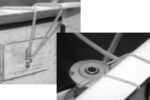
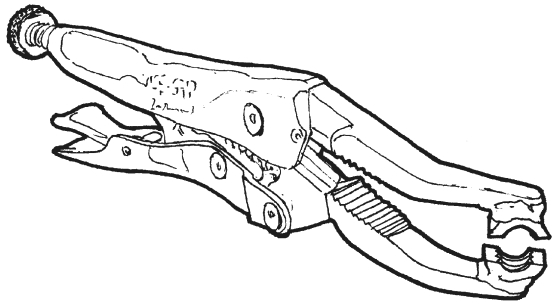
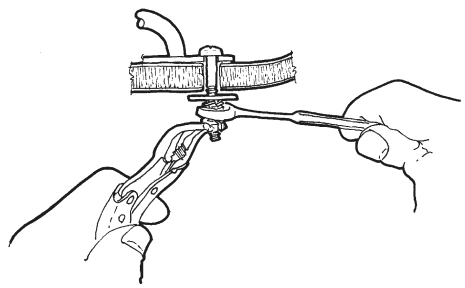
If your crew tends to abandon ship at the smell of an open tube of sealant, this tool might help you re-bed that deck fitting singlehanded. A modified pair of locking pliers with a half nut in each jaw allows you to grip the end of the fastener from below and hold it while tightening the nut, without damaging the fastener’s threads.
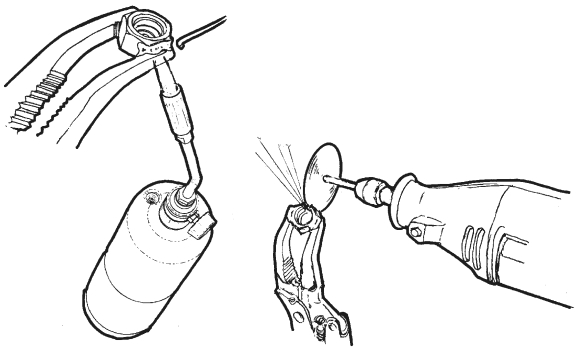
To make the tool, lock a nut in the pliers, silver-braze it in place and then cut it in half to produce the new threaded jaws.
The fasteners you’re tightening should be long enough to hold the required nut and washer(s) plus the thickness of an extra nut. Unless you prefer an absolute minimum of thread exposure or use acorn nuts, this extra length shouldn’t be a problem.
The restraining torque may not be as much as that provided by someone on deck with a wrench or screwdriver but, for most purposes, there is adequate holding strength. And for bedding jobs, the initial tightening should not be so much that the sealant is squeezed from the mating surfaces.
The parts
The nut would have to match the fasteners you are using. Stainless-steel nuts are my preference for their strength and corrosion resistance. I have made tools with 1⁄4-20 UNC and 5⁄16-18 UNC threads, which covers all the through-deck fasteners on my good old boat. Most nuts have a chamfered lead-in that results in a few incomplete threads next to the surface. If you only have a short length of exposed threads on the fastener, you can grind away this chamfered region of the nut to get gripping right up to the surface of the nut. It’s easier to do this after silver-brazing the nut to the pliers.
Locking pliers that work well for this tool have angled, needle-nosed jaws that give a good angle for holding and don’t block your view of what you’re doing. And the narrow tips fit within the thickness of a standard nut, which minimizes the need for grinding or filing. The tool shown above is a Vise-Grip Model 6BN by Irwin.
Before you start assembly, you might want to grip several fastener nuts in their location on your boat to get a feel for the optimum position of the nut and locking pliers’ jaws.
No great skill
I recommend silver-brazing to join the parts because it is well suited for dissimilar metals, including stainless steel, and doesn’t require great skill or elaborate equipment. It is often called “silver-soldering” because the process is very similar to ordinary electrical or plumbing soldering. Clean, close-fitting parts, proper flux, and enough heat to get the parts hot enough to melt the alloy filler are all that is needed. A propane gas torch can be used for smaller assemblies, such as this project, and the use of MAPP gas instead of propane will give you a higher temperature, if you need it.
If silver-brazing becomes part of your bag of tricks, the torch kits that use oxygen in combination with propane, MAPP, or propylene will allow you to join larger assemblies. For bigger jobs — or for parts whose shape quickly dissipates the heat — small oxyacetylene kits can be used. As the heat capacity goes up, so do the hazards involved, so make sure you learn the proper procedures and how to protect yourself and your property. The heated flux from even small jobs will create fumes that should be treated with caution.
The flux residue that remains should be completely removed to reduce corrosion. Some fluxes solidify with a clear residue and it may take some effort to find all of it. A little scraping and picking, along with a hot water wash, will usually remove it. The silver-brazing process can reduce the effectiveness of the corrosion-resistant passive surface of stainless- steel materials. To regain some passivity, you could treat the surfaces with a phosphoric acid-based product, such as Wichinox or Naval Jelly.
Cut the nut
The attached nut is cut using a cutoff wheel in a die grinder like the common Dremel tool. Make sure you release the pliers’ locking mechanism before cutting so there is no tendency for the tool to pinch the cutoff blade. The thinner, un-reinforced cutoff wheels are more fragile and prone to break if allowed to bind, but the smaller kerf will give you maximum material left for gripping. If noticeable burrs are left on the threads, you can remove them by lightly gripping a tap of the correct thread between the jaws and turning it back and forth. Small burrs probably won’t be a problem and may actually increase the grip strength.
More on silver-brazing
More details on silver-brazing can be obtained online and in most welding how-to books. I’ve had better results with supplies from a welding supplier or an industrial supplier than those from home or neighborhood hardware stores. Even if you are not convinced that half nuts in Vise-Grips would be a useful addition to your tool bag, silver-brazing can be useful in other ways. An idea for a boat project that ultimately will be a stainless-steel weldment can often be prototyped by silver-brazing components of more readily available and less expensive materials, such as mild steels or brasses and bronzes. These models or working prototypes can be repeated until the bugs are worked out. Then the final one will provide the exact dimensions for the specialty manufacturer, who will make the stainless part with proper welds and finishing. If the end result is easily provided to the specialty manufacturer, skip the drawings and dimensions and let an expert make a close copy of your prototype.
Although silver-brazing can give moderately strong joints and will often provide a good working prototype, highly loaded parts and those that are safety related should, of course, be made with suitable welding techniques by licensed welders.
Another use
Have you ever needed a fastener of a certain length when that bin in the ship’s store was empty? This tool will do a good job of holding a longer fastener without damaging the threads while you cut it to the desired length and file or grind away the sharp edges.
Thank you to Sailrite Enterprises, Inc., for providing free access to back issues of Good Old Boat through intellectual property rights. Sailrite.com