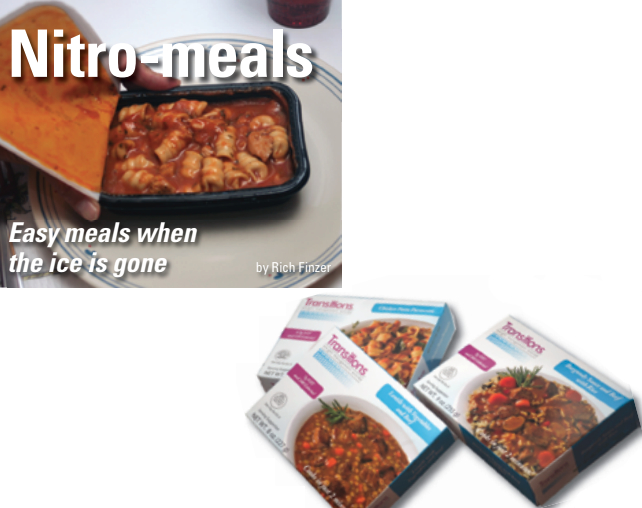
Easy meals when the ice is gone
Issue 58 : Jan/Feb 2008
There’s nothing quite as satisfying when cruising as reaching into the icebox for a frosty cold beverage of your choice. But what happens on a longer cruise when all those little pieces of ice begin to liquefy? You could hope that an ice machine will come bobbing by or you could reluctantly put into a harbor town for a refi ll. Let’s face it: unless you have onboard refrigeration, you will always be faced with a shortage of ice and a surplus of stuff you are trying to keep cold.
To solve this problem you could rely on the usual alternatives, including freeze-dried meals, dehydrated foods, and the contents of the ubiquitous tin can. But now, thanks to European ingenuity, you have another option: nitrogen-preserved food. In Europe, because of punishing electric rates and taxes, refrigerators are small. Nitrogen preservation is one of the tools our continental cousins use to conquer the “fridge gap,” since food preserved in this way can spend its shelf life literally on the shelf.
Nitrogen preservation works like this: prepackaged meals are manufactured in the same way that classic frozen dinners are. But after packaging, roughly 98 percent of the oxygen in the container is replaced with nitrogen. It is oxygen that keeps microbes alive and causes food to decay. But nitrogen-preserved foods can be stored without refrigeration for months.
Conventional heating
When it’s mealtime, you can heat these meals on your conventional galley stovetop or, if you’re back at a dock with your shorepower cord attached, you can heat up a meal with an onboard microwave. If your club is like mine and prohibits open flames while tied up at the pier, the “nuclear option” might just be the ticket. Best of all, you don’t have to reconstitute them with water or fumble with the can opener. And, like frozen meals, you can eat them right out of their own serving containers, so there are fewer dishes and less mess to contend with afterward.
Nitrogen-preserved food is marketed and sold under several names, but the brand I’m most familiar with is the Transitions line of products. Available in a variety of entrées, they are nutritious, low in fat, and taste good. When I need to order some, I go out to the website: and type “Transitions” in the search box.
These meals can be shipped to any location we choose: our home port or a cruising destination where we will meet up with them.
Rich Finzer earned his powerboat operator’s license at age 11 and began sailing six years later. He cruises Lake Ontario aboard his Hunter 34, Pleiades. He supports his sailing addiction as a technical writer and is a frequent contributor to boating magazines.
Thank you to Sailrite Enterprises, Inc., for providing free access to back issues of Good Old Boat through intellectual property rights. Sailrite.com