Be careful where you use these similar alloys
Issue 61: July/Aug 2008
In comparing bronze and brass, it is helpful to define two key terms before pointing out the differences, attributes, and deficiencies of these two materials:
Alloy – When metals combine with each other, along with certain other elements, and fuse together as mixtures, compounds, or solutions, these combinations are known as alloys. The resultant metallic substance often has substantially different properties from any of its individual components. These include strength and corrosion-resistance, which are considerably greater for the alloy than for any of its constituent elements.
Electrolyte – An electrolyte is a nonmetallic electrical conductor in which current is carried by the movement of ions. When two dissimilar metals are immersed in an electrolyte, they create an electrical cell. As current is drawn from this cell, the lesser metal on the galvanic table is sacrificed and goes into solution. Salt water is a strong electrolyte because of all the sodium and chlorine ions in the water. This property of salt water creates a hostile environment for many alloys.

Bronze
Bronze was first created around 3000 B.C. Although it is primarily an alloy of copper and tin, bronze has always included other elements. Modern bronze alloys may contain many other elements, such as phosphorus, aluminum, manganese, iron, or silicon. Within the wide spectrum of alloys that are called bronze, some also contain small percentages of zinc. Since copper and tin are adjacent to each other on the galvanic table, this mixture gives bronze the ability to withstand the harsh marine environment.
This is dramatically demonstrated by bronze artifacts that have been brought up from the depths after hundreds or even thousands of years and show little or no deterioration. Bronze melts at a relatively high temperature and is a very hard metal compared with brass, so it takes a toll on machining tools.
Brass
Brass is primarily an alloy of copper and zinc but may also contain other elements. Copper and zinc, metals widely separated on the galvanic scale, become highly interactive in the presence of an electrolyte such as salt water or in rain containing atmospheric contaminants. Under these conditions the zinc in the alloy becomes a “sacrificial anode” and is eaten up, leaving behind a soft, porous copper sponge. What is left retains the shape of the original part but has little mechanical strength. This process is known as dezincification.
Brass deck hardware, even though it is not normally immersed, can deteriorate in this way. Although such hardware is dry most of the time, saltwater splashes leave a residue of salt on the hardware’s surface. Then condensation (fog, light rain, or even an extremely humid atmosphere) supplies the water needed to create an electrolyte and subsequent dezincification of the brass. Although it is less common, dezincification can occur in freshwater environments when atmospheric contaminants initiate the process.
Since brass melts at a relatively low temperature, is an easy material to cast, machines like butter, and is therefore less expensive to work with, marine manufacturers often choose brass when they should select bronze. It is almost impossible for the consumer to differentiate between bronze alloys and brass alloys, so the reputation of the manufacturer will be the best indicator.

Electrical conductivity
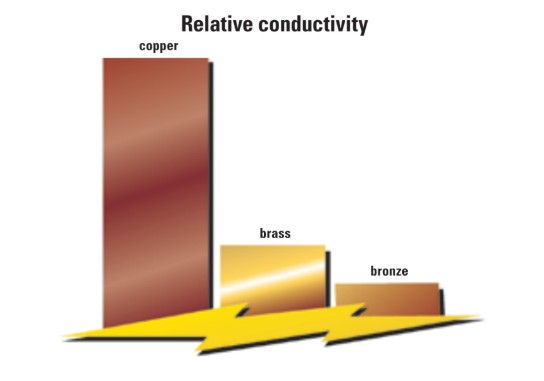
Alloys always have a higher resistance to electrical current than the resistance of the individual metallic elements that have been combined to create them. Copper is the standard conducting material for electrical wiring and bus bars. Unfortunately, however, brass and bronze are sometimes used. Brass has only about 28 percent of the conductivity of copper, and the conductivity of bronze can be as low as 7 percent as that of copper. That means that electrical components made from brass or bronze, such as bus bars, will offer electrical resistance and, when carrying high currents, can become hot enough to be a fire hazard.
Uses for brass and bronze
Bronze is the clear choice over brass for deck fittings and for anything that will be immersed in salt water. Brass is a practical and relatively inexpensive choice for items in the cabin that do not come in contact with environmental salts: candlesticks, paperweights, musical instruments, barometer and thermometer instrument cases, and cabinet hardware. For the harsh environment out side the cabin, however, bronze is the alloy of choice.
Many “bronze” products come to us from overseas. Even major marine-hardware distributors in the U.S. buy items manufactured outside of this country for economic reasons. Unfortunately, many of these items contain scrap alloys of unknown content, some of which may contain zinc or other unwanted elements.
It would be convenient if we could question the marine-hardware distributors about the content of the so-called bronze they are selling, but they often lack that information themselves. It’s up to each buyer to maintain a healthy skepticism and to keep an eye on all bronze in exterior use.
Don Launer, a Good Old Boat contributing editor, has held a USCG captain’s license for more than 20 years. He built his two-masted schooner, Delphinus, from a bare hull and sails her on Barnegat Bay in New Jersey.
Thank you to Sailrite Enterprises, Inc., for providing free access to back issues of Good Old Boat through intellectual property rights. Sailrite.com