Preparing for an extended coastal cruise

Issue 63 : Nov/Dec 2008
Tired of the same-old, same-old? Finding it hard to get enthusiastic about sailing territory that has, through long acquaintance, become familiar and mundane? Caught yourself fantasizing about some excitement, some spice, some challenge? An extended coastal cruise can re-ignite the entire family’s passion for sailing by offering new challenges and the opportunity to build your skills while creating unforgettable memories.
If you have gained your sailing experience in protected coastal waters and have come to know your home cruising ground well enough to dispense with charts and instruments most of the time, the idea of an extended coastal cruise to unfamiliar waters can seem daunting. While you may dream of taking a three- to four-week excursion up or down the coast, you may worry about whether you have the proper boat, equipment, skills, and crew for such an undertaking.
In fact, most experienced weekend sailors underestimate their abilities and knowledge and overestimate the boat, equipment, and skills necessary for an extended coastal cruise. So take a close look at the essential ingredients — adequate time, a reliable and properly prepared boat, and a willing and enthusiastic crew — and figure out how you can put each in place for your next sailing season.
Adequate time
Adequate time is the ingredient in shortest supply for busy families. If you’re planning an extended family adventure, don’t skimp here. As a rule of thumb, you won’t average more than what your boat can comfortably cover in a half day of sailing. Even this represents a moderate, not a relaxed, cruising pace. For 25- to 35-foot boats, that translates into something like 20 nautical miles a day or 140 to 150 miles per week. If your goal is to reach a new cruising ground, you’ll want at least three weeks — a week each there and back and a week to cruise the area. A month will make the pace more manageable and allow some time to sit out bad weather or to spend an extra day in a favorite spot.
To be sure you have allowed enough time, agree on goals and priorities before setting off. This reduces the likelihood of conflict under way and prevents disappointments. Will everyone be happy if you just putter up the coast, or is there a specific place someone has his or her heart set on reaching? Do you want to sail every day or do you want to spend every few days ashore hiking or sightseeing? While you definitely don’t want to end up constrained by a to-the-minute itinerary, agreeing on major priorities and understanding each person’s preferences will help to ensure that everyone will return satisfied.
A month is a great deal of time for most families to commit, but the following suggestions can extend your range while maximizing the time cruising, as opposed to getting there.
- Take advantage of prevailing winds. Wherever possible, make miles downwind and plan short hops to windward. For example, if you’re heading downwind to Maine from Long Island Sound, sail as quickly as you can to the farthest point you intend to reach on your trip, then turn around and cruise slowly homeward, stopping at all the places you passed by on the way.
- Sail overnight to increase your range. Most boats can cover 100 miles in 24 hours of sailing, though the crew will then need a lay day to rest and recover. That increases a 25- to 35-foot boat’s weekly range, bringing a more distant cruising ground within reach while increasing the skills of the entire crew.
- Use the engine to maximize your range. When cruising to a deadline, motoring in calm weather or motorsailing upwind will allow you to efficiently reach or return from a distant cruising ground, giving you more time to explore the new area.
- Make contingency plans. Locate marinas along your route where you could leave the boat if you run into bad weather, and figure out how to get home from those places. Having a friend or family member willing to pick you up somewhere will reduce the chance you’ll try to keep going when you shouldn’t.
- Don’t depend on non-family members for crew. Too often, plans change and your vacation ends up the casualty. Invite crew along, especially experienced crew, and be glad if it all works out, but be ready in case it doesn’t. Either be prepared to manage with your regular crew or know where you can leave the boat.
- Cruise over two seasons. Schedule your extended cruises for the end of one season and the beginning of the next to effectively double your range. It might be cheaper to leave the boat for the winter somewhere other than in your home waters.
A properly prepared boat
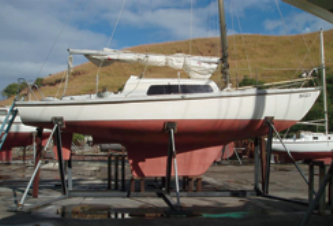
Assuming you have a boat you know and trust — one whose basic comfort level suits you for weekend cruising, one capable of carrying and accommodating your regular crew overnight, one with a reliable engine, and one you and your crew have the confidence and skills to handle under sail and power — you have a boat that can take you for an extended coastal cruise. An engine need not be considered an essential requirement for those with flexible schedules who have sailed extensively without one. However, a reliable engine offers an added margin of safety in unfamiliar waters and allows you to cruise to a schedule, which most people will have to do when trying to fit an extended coastal cruise into limited vacation time.

If your weekend sailboat meets these basic requirements, what do you need to do to thoroughly prepare it for a successful three- to four-week coastal cruise?
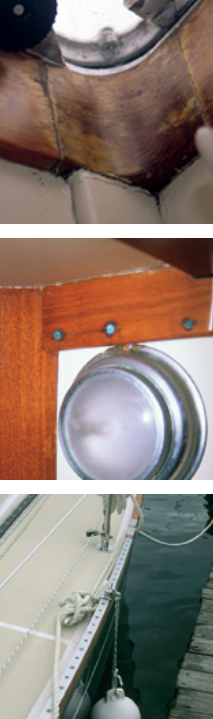
- Make the boat watertight. Boats that spend most of their lives tied to a dock, or daysailing in protected waters, often seem perfectly dry until they get out in open water in a hard rain and moderate seas. The most positive and good-natured crew will find it difficult to enjoy a month spent among wet bedding, mildewed clothes, and moldy books. Find and fix any leaks before you go! Assume you have a leak wherever you see any sign of weathered or rotting wood, green corrosion, rust, or drip marks. Dirt leaching out from under portlight surrounds or rusty bolts on deck fittings almost always signal leaks. Spend time aboard during a severe downpour and look for even a single drop of water. Underway in a moderate sea with the hull flexing, that drip will become an annoying leak.
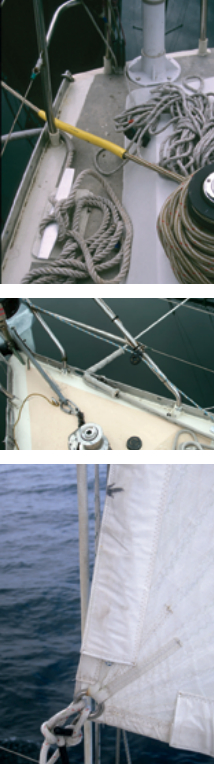
- Chafe-proof the boat. Almost all boats have areas prone to chafe, but these rarely cause problems when a boat is sailed for an hour or two at a time or anchored only occasionally. But sail for a day at a time or anchor every night for a couple of weeks and those chafe-prone areas can lead to a parted halyard or anchor rode. Go over every line on your boat — all running rigging, halyards, sheets, docklines, anchor rodes — and look for signs of chafe. Reinforced water hose prevents chafe on docklines. Fire hose stows better for use on anchor rodes or snubbers. Split hose fitted around shrouds will prevent sheet chafe. Creating a fairlead by changing the angle of entry or exit for a line, or by adding a turning block in a strategic location, will end chafe on running rigging. Simple fixes can eliminate most chafe on most boats, and the small investment of time and money before you head off will be rewarded with fewer dramas.
- Upgrade temperature control. If you’ve sailed your boat extensively on weekends, you already know if you have adequate ventilation aboard. Now’s the time to install that fan in the galley or buy that wind- scoop for the forepeak. A dodger will protect you in wet weather, provide shade on hot summer days, and give you a “room with a view” for cocktail hour. If you’re considering a month in Maine or British Columbia, a heater will change the experience from roughing it to cruising in comfort on a damp, cold day.
In addition to reviewing the basics, take a look at the equipment aboard. Quite likely your boat already carries most or all of this gear. Where you have gaps, you may be able to buy used or borrow. With the exception of a dinghy or an autopilot, none of these items costs more than a couple hundred dollars.
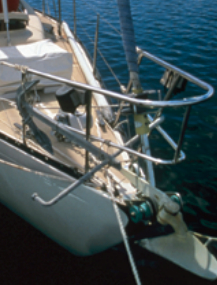
- Safety. On any well-found boat, the safety of its crew depends first and foremost on keeping them aboard. To ensure crew-overboard equipment and procedures never have to be used in earnest, every boat should be equipped with jacklines and with a preventer for the boom so an accidental jibe does not result in a crewmember going overboard. Jacklines and harnesses should be used by everyone when overnight sailing and at all times by kids, pets, or anyone with balance problems. Netting inside the lifelines will also help keep kids and pets aboard. An accidental jibe can happen anywhere, anytime, and crew lost during a jibe may end up injured or unconscious. A simple, safe, easy-to-use boom preventer offers the best insurance against both the jibe and its consequences. On boats up to 35 feet or so, a vang to the toerail is easy, effective, and simple enough that it will be used.
- Ground tackle. Many weekend boats spend most of their time tied to docks or moorings and don’t carry ground tackle on the bow. But for an extended coastal cruise, marinas and moorings won’t be options all of the time. From a safety perspective, the crew needs to be able to deploy an anchor quickly in case the engine dies while entering a harbor, or for use as a kedge if the boat goes aground. If the boat can carry the weight on the bow, the stemhead can often be retrofitted with a bow roller upon which an anchor can be mounted. Alternatively, lightweight Fortress or Danforth anchors stow almost anywhere; the stern pulpit or coachroof are two common choices. A 10- to 12-foot chain can be stowed in a bucket, 100 feet of nylon rode can be stowed in a mesh bag, and both can be carried in a cockpit locker. With the addition of a couple of shackles and a bit of practice, the whole arrangement can be put together and deployed in less than five minutes.
- Sail handling. Sail-handling arrangements must reflect the number of crew who will regularly sail the boat while coastal cruising. For most couples and families, that means setting the boat up for singlehanding in case one adult gets seasick or has to pay attention to the kids. Boats that have been set up for racing with a full crew will need to be modified to make sail handling safe and effective for one or two people. If you don’t have one, consider investing in an autopilot. A simple lazy-jack solution for the mainsail will make dousing the main straight-forward for one person with the boat on autopilot. Finally, proper-sized, self-tailing winches make shorthanded sailing safer and easier. Some non-self-tailing winches can be retrofitted with tailers purchased from marine stores, or a rope clutch can be used to control the line and effectively act as a self-tailer.
- Navigation. Most boats will already be equipped with a hand-bearing compass, binoculars, and a VHF. Crews without GPS should purchase an inexpensive hand-held model, as well as the relevant charts, tide tables, and cruising guides to the area they wish to cruise.
- Comforts and conveniences. The galley on most boats under 30 feet can best be described as Spartan. That doesn’t mean you must subsist on sandwiches and canned soups for a month. A grill mounted on the stern can be used to cook meat, vegetables, and even pizza. A two-burner butane unit can double the stovetop capacity below. Insulated cooler bags stow more easily than rigid coolers for extending limited icebox capacity. Large thermoses keep water hot for use when washing up after the meal. With a little ingenuity and some split-second timing, the humblest of galleys can produce gourmet meals.
- Transportation. One other thing your weekend sailboat absolutely requires, which it may not already have, is transportation for taking the crew ashore. If your boat lacks a tender, the acquisition of something suitable need not be expensive if you can forego purchasing an outboard. Some yacht clubs allow members to borrow dinghies. Roto-molded hard dinghies can be purchased new for less than $500. Used inflatables can often be found for bargain prices. It must be possible to stow the dinghy aboard during those times when weather or waves make it dangerous to tow.
Willing, enthusiastic crew
When contemplating an extended coastal cruise, most people’s thoughts turn first to the boat. In reality, whether cruising for a month or sailing around the world, the boat matters far less than the crew’s interactions, expectations, and attitudes. Most deficiencies in the boat can be made up for with a smile, some laughter, and a dose of good cheer; but no boat or equipment can make up for a negative attitude aboard.
Whatever interactions and attitudes exist between crewmembers during a daysail or a weekend cruise, they’ll be the same — but more so — on an extended cruise. Your first step in preparing for three or four weeks aboard consists of honestly evaluating those interactions and talking about them with your crew. The following rules ensure clear communication, which in turn facilitates good interactions (though Evans and I often find them easier to articulate than to implement).
- Use words well. Anyone with any sailing experience appreciates the need for proper terminology. Halyards, sheets, vangs, outhauls, downhauls, rodes, and docklines all have different names because we need to quickly and clearly distinguish between them. But using words well extends beyond using the proper terms for things aboard. When there are 25 white boats in the harbor, “We’ll anchor behind the white boat” does nothing to clarify the situation. Words like “no” and “go” can be easily confused, with disastrous results. Evans and I both tend to say “OK” too frequently and in too many different situations. When coming into a harbor to anchor, an “OK?” that means “Is that fishing boat heading for the pier and, if so, are we OK or are we about to be run over?” sounds exactly like “OK, we’re in the perfect spot; go ahead and drop the anchor.”
- Develop a shared action plan. Before any maneuver, no matter how routine, take a few minutes to agree on a plan of action. This can be as simple as “We’ll drop the anchor between the black ketch and the sloop with the blue sailcover and fall back into the gap behind them.” In other situations, like entering an unfamiliar harbor with unmarked hazards, it may take 10 or 15 minutes to agree on a plan and some contingencies. Knowing which crewmember will drop the anchor if you can’t find the church steeple that acts as a leading mark reduces the tension, increases your safety, and increases your self-confidence and enjoyment.
- Know when not to say anything. For some reason, boats seem to remove a certain inhibition that we naturally assume on land. Yet on a boat, one person’s bad attitude quickly infects everyone. So a major part of clear communications aboard lies in not commenting on the irrelevant, uncontrollable, or annoying — unless you can do so humorously. If you’re wet and miserable, chances are everyone else is as well. If a crewmember overreacts to something, just let it go! If it still bothers you an hour or a day later, then sit down and go over it calmly and rationally and agree on how you will avoid similar situations in the future.
Finally, talk through everyone’s expectations with respect to life aboard. Some people find it easier to “rough it” on a small, simple boat than others do. But rather than buying a new boat or not going at all, find ways to compromise by putting money into pampering yourself once in a while. If your galley is cramped and difficult to work in, plan on eating out several nights a week. If you don’t have a shower aboard or the necessary water tankage, arrange to stay in a bed and breakfast once or twice during the cruise.
In addition to a positive attitude on board, you also need a complement of basic sailing skills. Your crew needs to have mastered sail handling (raising, reefing, and dousing); coastal navigation, using traditional aids to navigation (not just the GPS!); boat handling, including maneuvering under sail and power, anchoring, and docking; and crew-overboard procedures. Most weekend sailors don’t realize the range and depth of skills they have acquired, but can easily identify where they lack experience. In those areas, take a bit of time to practice before you head off on your longer cruise. Anchor out instead of staying in the marina; sail in winds strong enough to require a reef; use the hand-bearing compass to locate your position on the chart during a daysail; and practice crew-overboard techniques. By the time you get ready to leave your home waters, your crew does not need to have mastered all of these skills, but all should know what’s expected of them and be willing to do their best.
If you and your family enjoy sailing, but have found that you’re using your boat less and less, planning and preparing for several weeks or a month aboard just may re-ignite your interest and remind you why you bought that lovely sailboat in the first place. The first step — leaving your home waters and mastering the skills necessary to enter strange harbors with confidence and handle new challenges like tides and currents — is the hardest one. From there, it’s only another small step to six months or a year spent cruising down to Baja or out to the Bahamas.
Beth Leonard started out as a weekend sailor on the Great Lakes but her range now extends to the bottom of South America, where she and her husband, Evans Starzinger, spent the Southern Hemisphere winter of ’07–’08 aboard Hawk, their 47-foot Van De Stadt Samoa sloop.
Thank you to Sailrite Enterprises, Inc., for providing free access to back issues of Good Old Boat through intellectual property rights. Sailrite.com