Tie ’em fore and aft
Issue 101 : Mar/Apr 2015
If you have external halyards on your boat, no doubt you’ve been awakened at night by the annoying clanging of a loose halyard rapping against the mast. Try as you might to tie things off, if the wind shifts or increases, what was once a well-silenced rig starts drumming, banging, tapping, and clanging . . . making sleep impossible.
Preventing this noise requires that you stop all lines from hitting the mast. You can tighten them, pull them out to the shrouds, or wrap one around the mast to secure the others, but invariably one or more will get loose and start tapping. The only way to silence your rig is to move the lines so they cannot possibly come in contact with the mast. After trying all the techniques noted, I adopted a method that’s easy to rig and actually works.
First, move the halyards that can be conveniently moved. Clip the the mainsail-halyard shackle to the end of the boom. (One down!)
If you have a hanked-on jib, clip the halyard shackle to something at the bow or way forward on a lifeline. (Two down!)
If you have a furling jib, you probably won’t want to move the halyard return, but you’ll need to loosen it so you have about 2 feet of extra line.
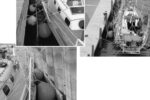
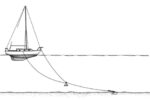
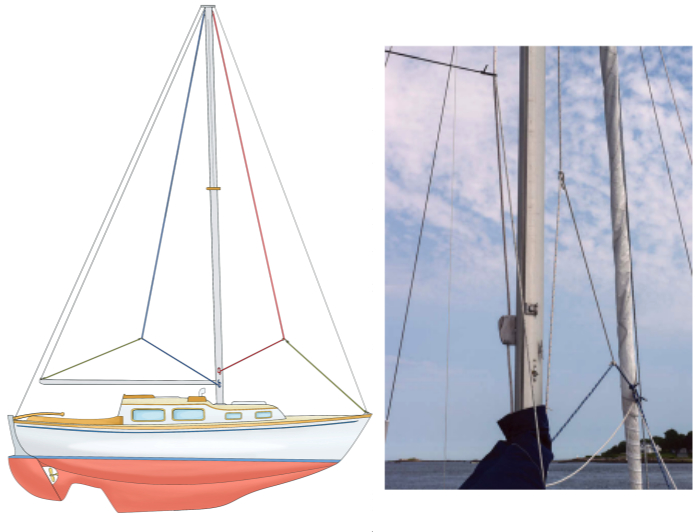
Find or make up a line that’s about 3 feet longer than your boom. Tie a loose bowline around all the halyards that are aft of the spreaders (working and return ends as well as the topping-lift return) and take the other end of this line to the end of the boom. Adjust the halyards so they all have enough slack to stretch out 2 or 3 feet from the mast. Pull them all taut with the line and secure the end of the line to the end of the boom. (Half the rest done!)
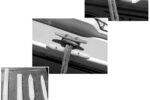
Take a second line about the length from your mast to the bow and tie a loose bowline around all the halyards forward of the spreaders. Tie the forward end of this line onto one of your jibsheets with a rolling hitch. Leave enough room on the sheet so you can slide the hitch forward to pull the halyards away from the mast. If you have a hanked-on jib, tie the line onto the forestay with a rolling hitch and slide it down the forestay to tighten it. (All are now secured!)
Use a boathook to push the bowlines as high up as practical. This will pull the halyards farther from the mast and reduce any chance of their slapping. Adjust the tension in the securing lines and halyards as necessary. (Silence!)
Takedown is ultra-easy. Untie the knots or hitches at the ends of the two tensioning lines and the bowline ends will drop down to where you can easily untie them. Re-tension your halyards as necessary and you’re done.
Once you do this a couple of times and get a sense of how much each line needs to be tensioned, you can set the system up in a few minutes. If you have two lines to dedicate to this job, keep them handy in a locker so you can find them when you need them.
This system works, does not look too odd, and is easy to do. Silence is golden!
Homer Shannon has been sailing the New England coast since his youth in Hingham and Manchester-by-the-Sea, Massachusetts. He presently sails a Bristol 29.9 out of the American Yacht Club in Newburyport, Massachusetts.
Thank you to Sailrite Enterprises, Inc., for providing free access to back issues of Good Old Boat through intellectual property rights. Sailrite.com