A cardboard box is an instant spray-painting booth
Issue 106 : Jan/Feb 2016
Proper anchoring depends on knowing how much rode is out. Fiber rode can be measured by arm span (fathoms) and chain can be measured by counting time if it’s being powered down by the windlass, but a backup method helps when we lose track or forget.
Chain or rope can be marked by inserting bits of cloth or other materials, but my windlass, a Lewmar V700, hates them all, jamming or shearing them off. It is said the strips can be felt in the dark, but the notion of running my hand along the chain in the dark, on a heaving deck, and in close proximity to a chain gypsy is unacceptable; a wave once threw me against a turning gypsy and only a tough leather glove prevented the loss of a finger. Plastic pop-in markers work, but they also pop out if enough mud comes up with the chain.
Paint seemed the most obvious choice to me. But how could I mark 100 feet of chain on deck without making a mess?
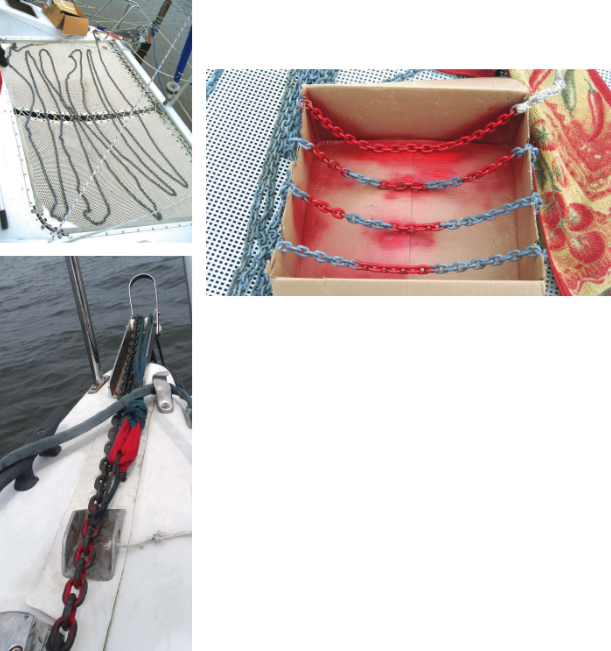
- Flake out the chain in even loops. In my case, 10-foot lengths fit neatly across the trampoline on my catamaran.
- Pick marking points and temporarily mark them with tape. I chose 25, 50, 75, and 100 feet.
- Collect a box from the Dumpster, notch it as needed, and paint away. Two coats of Rustoleum Stops Rust spray hold up nicely.
- Leave the chain hanging in the box until the paint is completely dry.
I painted the chain on the deck in a light breeze with little risk of creating a mess with overspray. I was told it would wear off in no time, but I get a few hundred nights (more in mud, fewer in sand) out of each coating and, when renewing it is so simple, I’m satisfied with the trade-off.
Drew Frye cruises Chesapeake Bay and the mid-Atlantic coast aboard his 34-foot catamaran, Shoal Survivor, searching for out-of-the-way corners known only by locals. A chemical engineer by training, 40-year climber and 30-year sailor by inclination, he brings a mix of experiences to solving and writing about boating problems.
Thank you to Sailrite Enterprises, Inc., for providing free access to back issues of Good Old Boat through intellectual property rights. Sailrite.com