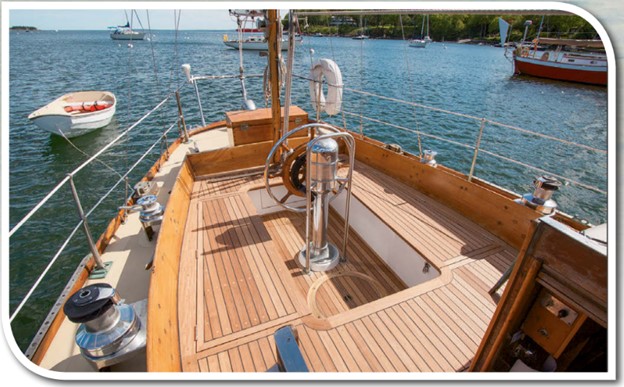
A beloved family member receives a whole new cockpit
Issue 116: Sept/Oct 2017
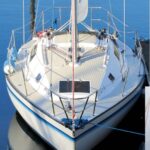
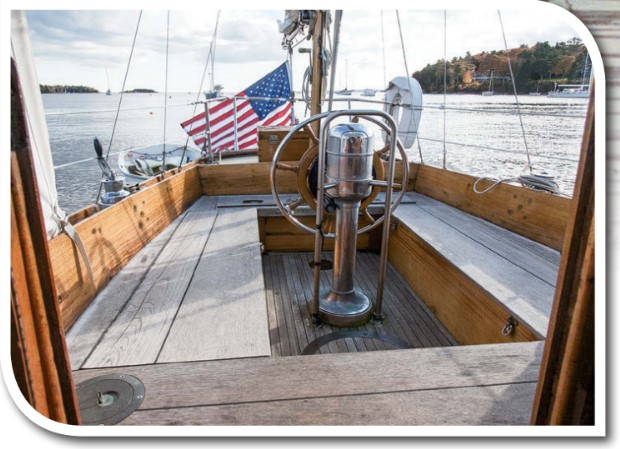
Our 1961 Alden Challenger yawl, Christmas, has brought us joy season after season for many years. She is one of 53 Alden Challengers built in the early 1960s. Her hull and deck are fiberglass, but the remainder of the boat, including the cockpit, was hand-crafted in wood. After 54 years, her cockpit was used up. I’d made repairs, added patches, and built supports under the sagging sole, but wooden plugs were falling out of thinning decking and nearly every inch underfoot was spongy. A good rainstorm would soak the insides of the cockpit lockers, drip through the bridge deck into the engine compartment and galley, and often fill the deep bilge.
In the spring of 2016, just weeks before launch, I started ripping the old cockpit out of the boat. However, this drastic step wasn’t the beginning. I had started this project months before. While Christmas sat under a snow-covered tarp on the coast of Maine, I planned to build a new cockpit for her — off the boat.
The new cockpit had to be strong enough to stand alone while it was being built and also when it was later transported and installed in the boat. It had to be stronger than the original that had been “stick built” in place.
After many seasons of use, I had some changes to make. Among them, I would fiberglass and paint the sides of the cockpit well to make maintenance easier.
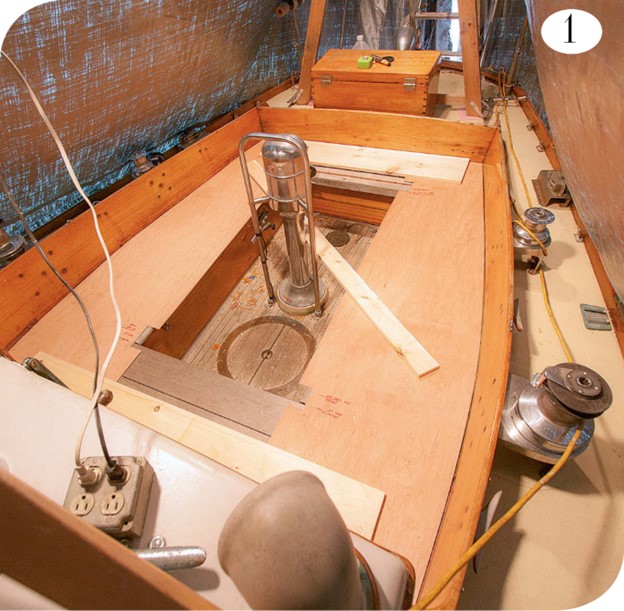
The first step was to create a pattern from the old cockpit and accurately record all the dimensions (photo 1). As snow was flying outside, I started building the new cockpit well in my warm shop (photo 2). Using 3⁄4-inch marine-grade fir plywood, I constructed the well to the same dimensions as the original.

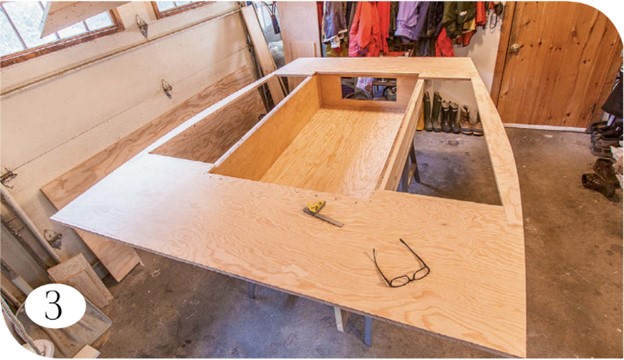
Next, I built the seat/bridge deck level to the exact dimensions of the pattern (photo 3).
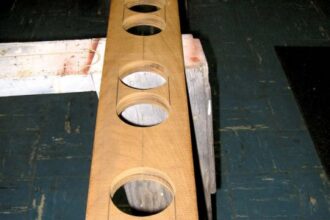
I changed the shape of the locker openings, making them wider at the forward end to allow easier access to the huge lockers, and made the perimeter drain channels wider and deeper (photo 4), to improve drainage, and encapsulated them in epoxy. These channels also provide solid support for the hatch lids, which are working platforms when sailing.

For the trim and the decking, I used ipe, an extremely hard, rot-resistant tropical hardwood. It’s a bit more difficult to work with than teak, but is one-third the price.
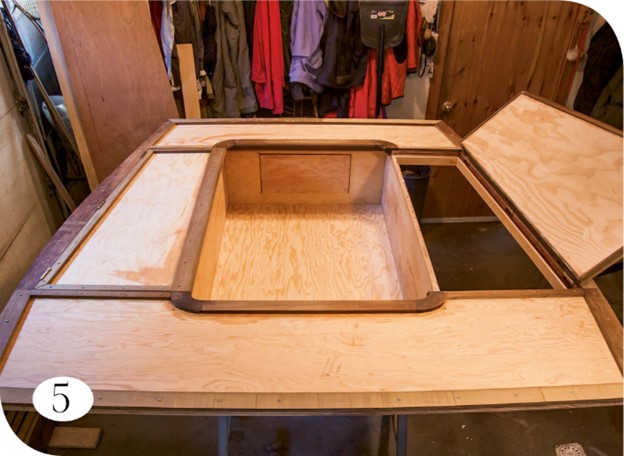
To frame the decking, I milled a wide bullnose for the inboard trim around the well and a wide decking board to go around the outside margin (photo 5).
Making a real wood-strip deck was a lengthy process, but its unique qualities and appearance were worth the effort. I milled 1 1⁄2 x 1⁄2-inch stock for the decking. The narrow strips contrast with the wider frame and will be more stable with less movement than heavier stock.
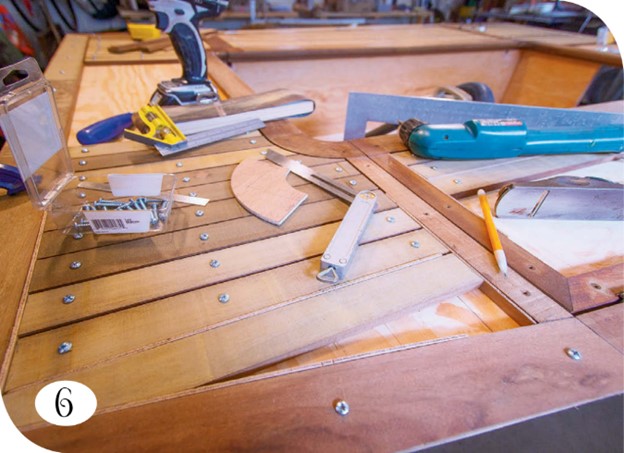
I spaced the decking strips 1/8 inch apart and fixed them in position with pan head screws (photo 6). I then removed the screws, brushed slightly thickened epoxy liberally on both the plywood and the decking, and refastened the decking to “clamp” it while the epoxy cured.
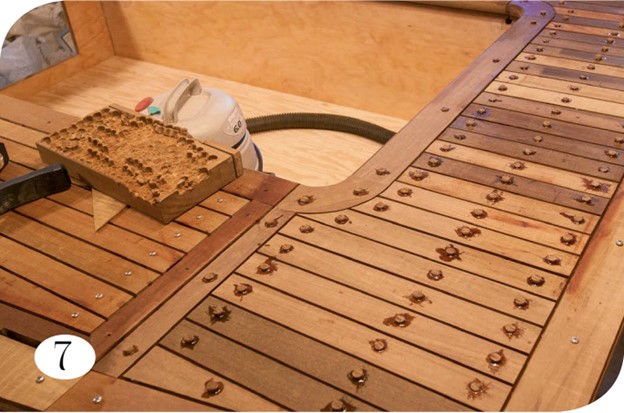
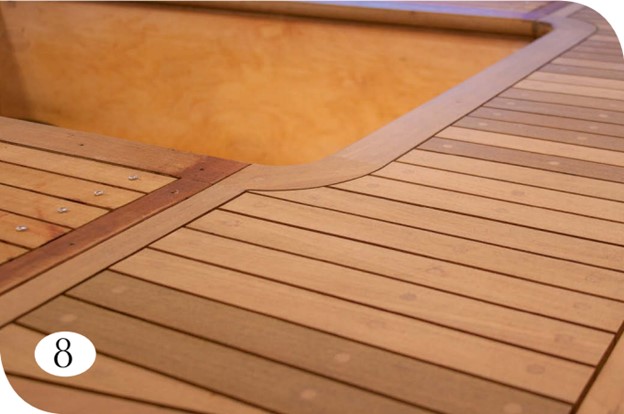
When the epoxy had set, I removed the screws, counterbored their pilot holes the full depth of the decking, and set solid wooden plugs into the holes with epoxy (photo 7). This left no fasteners in the deck (photo 8), so the cockpit will require little maintenance and should last a long, long time.
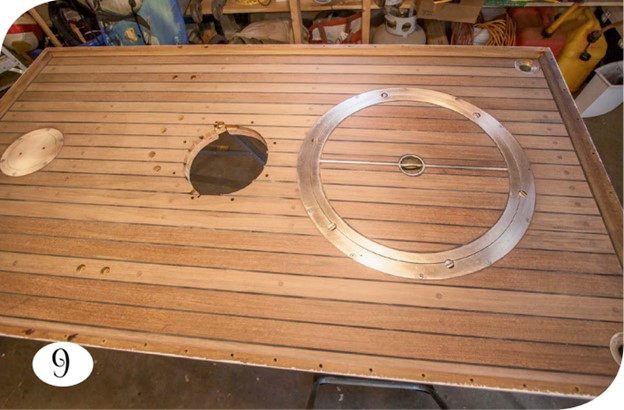
After finishing the decking on the seats and bridge deck, I took out the plywood subsole to deck and caulk it (photo 9). While the cockpit sole was on the sawhorses, I installed the steering and linkage, the original bronze access hatch, and the scuppers.
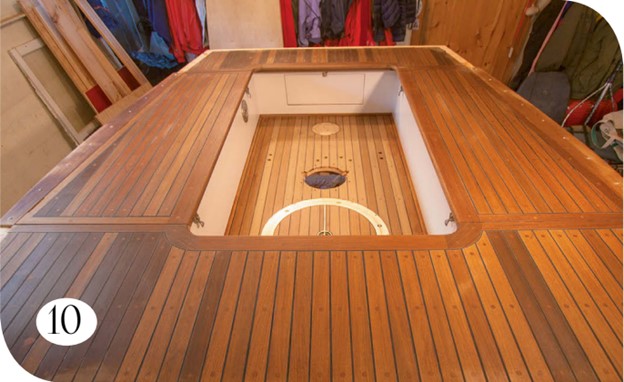
I bonded the completed sole, now stronger than the original, into the cockpit well with epoxy (photo 10).
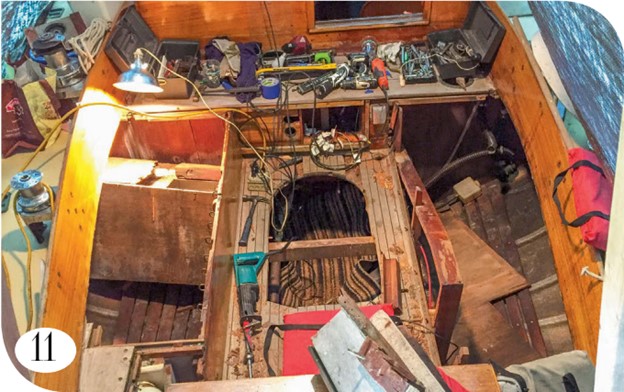
By the time the new cockpit was ready to go into the boat, spring had arrived and, with it, warmer temperatures. It was now time to demolish the old cockpit (photo 11).
Removing the old cockpit gave me access to paint the hull interior and reglass and refasten the support posts and beams for the cockpit well (photo 12).
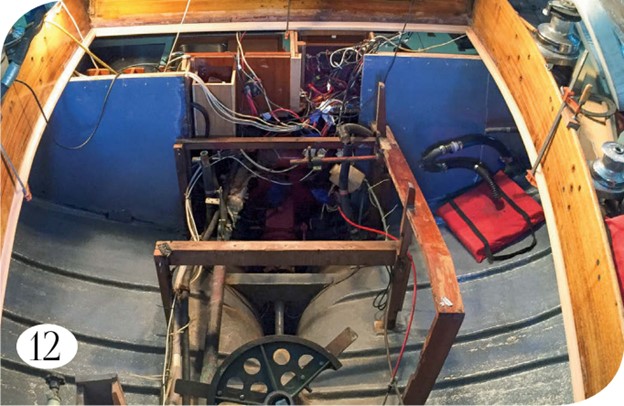
The new cockpit, like the original, would be fastened to the coamings, which are through-bolted to the deck, and to the aft end of the cabin trunk. The well is also supported by six posts and three beams.
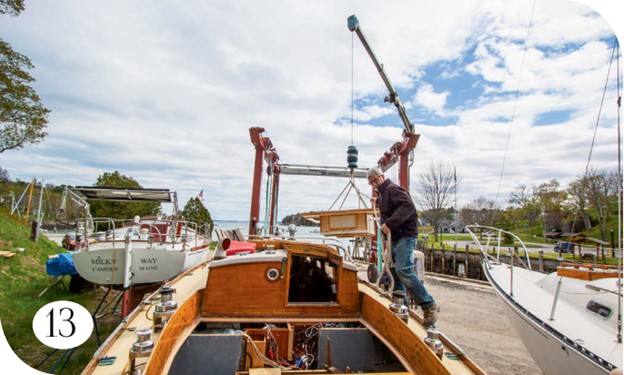
Now came the day of reckoning — installation day! As the travel lift maneuvered the cockpit toward Christmas, a good (and trusted) friend guided it in for the landing while I snapped photos (photo 13).
A perfect fit! I was pleased to see the well resting exactly on the support beams beneath the sole (photo 14). An hour later, I had fastened the exposed cockpit flange with screws and epoxy to the laminated mating flange. Every inch was as solid underfoot as Maine granite. I was now ready to install the deck margin boards and caulk the perimeter.

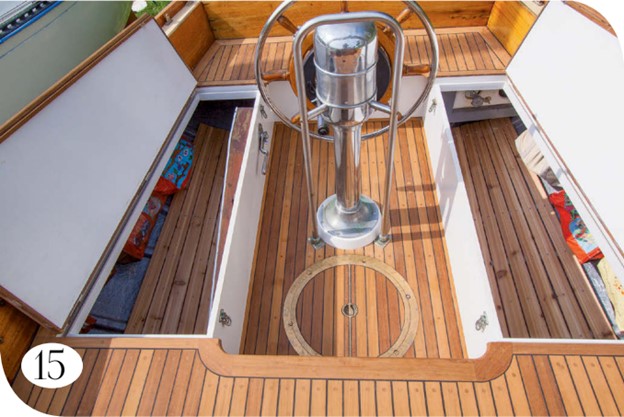
Then the details . . . I installed new cedar ceiling in the lockers (photo 15). The larger lids made that job easier and give me better access to the engine.
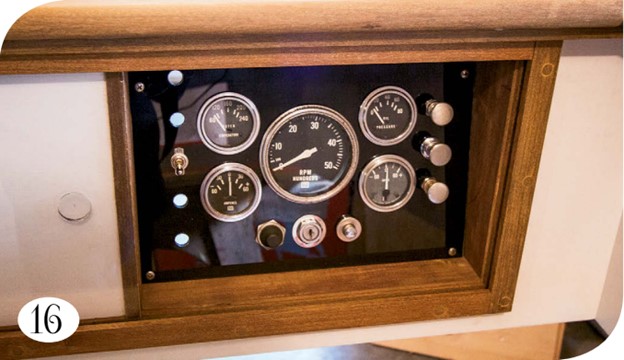
I reinstalled the old gauges — a nice detail from a bygone era — in a newly built engine panel of 1⁄4-inch Lexan that I back-painted black (photo 16).
Classic and comfortable
The Alden Challenger’s design, like that of many CCA-era boats, has proven to be timeless. That’s not due solely to its beautiful form but to its time-tested function as well. Alden’s cockpit is brilliant, as my family can attest after 15 years of coastal sailing in Christmas. It’s huge. Everyone can find a comfortable spot whether we’re sailing down the coast or anchored in a quiet cove, and cavernous storage beneath the cockpit accommodates all the gear a family needs, with room to spare. That’s a simple formula that isn’t easy to find in newer boats.
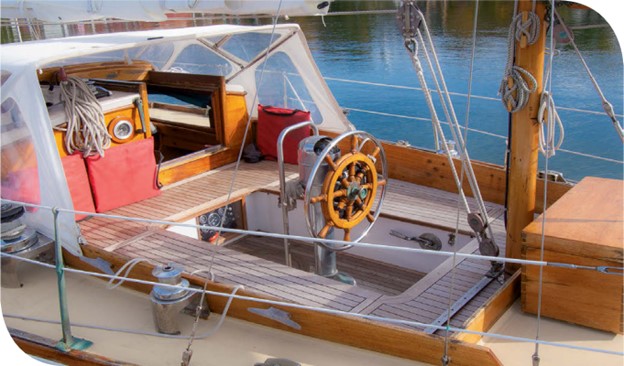
When it came time to replace the cockpit, I studied hundreds of boats (it’s my hobby) for cockpit details, and borrowed some contemporary design ideas that I hope make the new cockpit a lttle more stylish than the original. Using modern materials and construction methods not available 50 years ago, I was able to build a stronger, drier cockpit while updating our Challenger’s looks in the process. Wood, with its unique qualities, will never go out of style.
After a full season’s use, the new cockpit is turning a pleasing silver-gray. Sitting in it at dawn with a cup of coffee, I reflect on how pleasing it is to my eye and how our use of Christmas has been enhanced. I think this new cockpit is going to work out very well.
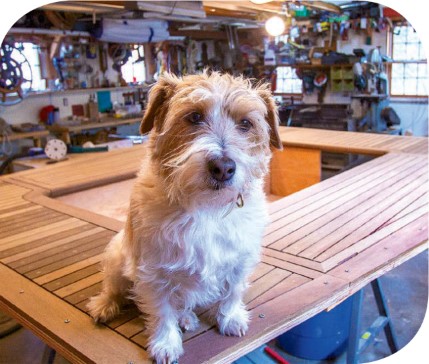
Tom Young, a lifelong sailor, is a design-builder. When not restoring old homes on the coast of Maine, Tom and his family — wife, Mary Anne; now-adult children, Mary Jane and Thomas; and a couple of dogs — sail the world-class coast of Maine and New England every season. Tom cares for their 1961 Alden Challenger, Christmas, with a passion.
Thank you to Sailrite Enterprises, Inc., for providing free access to back issues of Good Old Boat through intellectual property rights. Sailrite.com