No more huffing and puffing when stuffing
Issue 112: Jan/Feb 2017
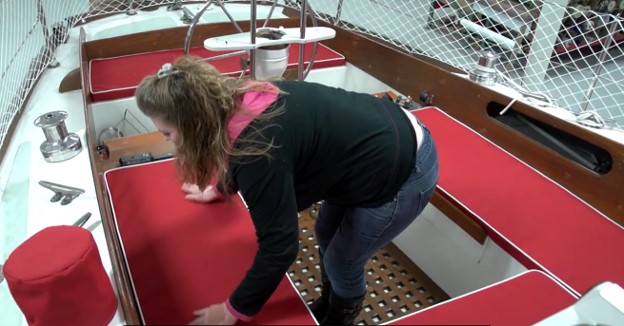
As an amateur cushion-maker for multiple sailboats, I enjoyed Connie McBride’s article in the March 2016 issue, “Building Settee Cushions.” I also like the look of an overstuffed cushion with no cover wrinkles and, like Connie and Dave McBride, I have struggled to stuff an oversized foam piece and accompanying batting into a finished cushion cover. Recently, I discovered a neat trick to simplify the job.
I took great pride in having come up with this trick and was excited to share my accomplishment with others. However, as with other aspects of sailboat restoration, something always comes along to keep me humble. While watching a how-to video on the Sailrite website, I was amazed to see this very technique being used . . . and deflated to discover I was not its sole inventor. But if Connie McBride has not yet discovered the method, I think it must still be worth sharing.
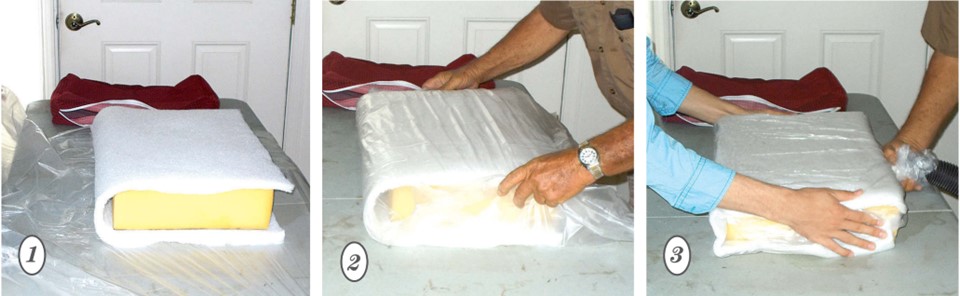
To perform this trick, you’ll need a vacuum cleaner with a hose attachment and a sheet of thin plastic large enough to completely wrap around and cover the foam and batting about one and a half times, with extra plastic overhanging the sides. I use a 6-horsepower shop vac and a 3-mil plastic painter’s dropcloth.
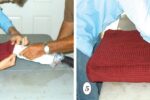
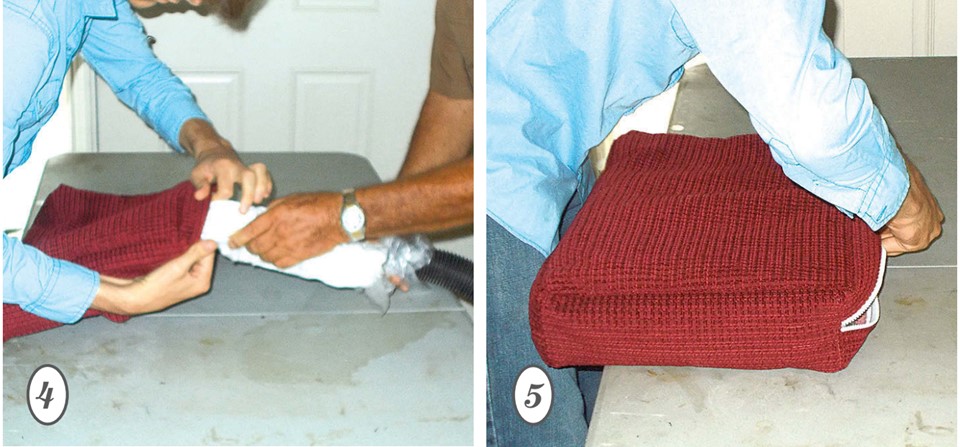
Start by wrapping the foam and batting in the plastic, like a taco, leaving the zipper side open and with lots of extra plastic on that side. Fold the sides of the plastic under, as when making a bed with hospital corners, to make an airtight seal on each end. Place the vacuum cleaner suction hose directly on the foam at the open zipper side and gather the plastic tightly around the hose. Turn on the vacuum. The foam and batting will quickly shrink to a pancake.
While the vacuum is still running, slip the compressed foam and batting bundle into the cushion cover. (A helper makes this part of the task easier.) Turn off the vacuum and adjust the cover as necessary. You may then remove the plastic or leave it in the cover. Zip up the zipper and you’re done!
Richard Silver built an 8-foot pram dinghy 56 years ago. Properly initiated, he has since sailed a couple of S2s, a Hunter 27, a Watkins 33, a Morgan 321, and is currently rebuilding an Offshore 33. His mother taught him to sew, and it has paid off.
Thank you to Sailrite Enterprises, Inc., for providing free access to back issues of Good Old Boat through intellectual property rights. Sailrite.com