What to do with used boat gear; where to find “good old stuff”
Issue 10 : Jan/Feb 2000
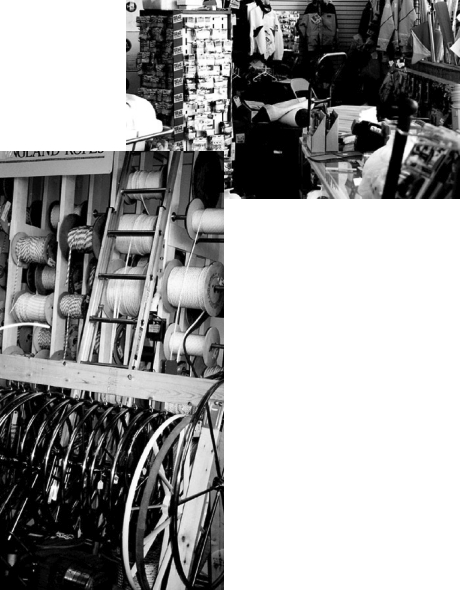
Bingham & Associates
Ray Bingham says being the match-maker for sailors and used gear is “a lifestyle.” He spent a lot of time prowling the shelves at a friend’s marine consignment shop in Virginia. Later, when he and Donna moved to Pensacola, Fla., they opened their own shop. “It’s a way of giving back to the cruising community,” he says.
The name Bingham & Associates may be a bit misleading, since the business is a mom-and-pop shop, but “associates” are the customers who buy and sell there. Since opening day in October 1997, the shop has been in the black, Ray says. They told fellow boaters they were opening a consignment shop and needed their support. “In the true spirit of boating,” Ray notes, “folks pointed and said, ‘There’s the dock box. Help yourself.’” He adds that he and Donna are “the sellers’ friends and the buyers’ friends, because otherwise this stuff sits in dock boxes.”
Bingham & Associates takes all marine equipment on consignment. It fills two buildings, and large items such as masts, dinghies, and small sailboats (primarily trailer sailers up to 30 feet) overflow into a fenced compound outside. Most items come from boaters, with the remainder coming from stores that have closed out inventories. The consignment fee is usually 30 percent of the selling price (10 percent for boats), and the seller can name either the final price or what he wants to get out of the item. In either case, Ray and Donna are there to offer advice on market demand and to help suggest a fair price. This is normally 50 percent of the original cost, depending on condition.
“We’ve got the odd and the unusual,” Ray says, “antiques, books, recent charts, and sails.” The store is also a Seven Seas Cruising Association cruising station, offering special help for cruisers who need a lift, advice, or directions. And it offers an equipment loan service for those things sailors need occasionally — swaging tools or bosun’s chairs for example. Ray echoes the sentiment expressed by those at Marine Exchange when he says that if Bingham & Associates doesn’t have it, he’ll suggest alternative shops that might. In fact, he welcomes new shops in his area. From the looks of it, the community of consignment retailers seems to be as friendly as the community of sailors. That makes marine consignment work a nice business to be in.
The best thing about the business would have to be the customers,” Ray says. “Boat folks are great people. We have made a lot of new friends. We get some great discussions going on nautical trivia, and at 4:30 p.m. we open the ‘spirit locker.’ And having someone come back with ‘That worked great’ is all we need.”
Ray pauses for a moment and continues, “Of course, we would trade it all for a good cruising boat or $50,000 cash.”
Popeye’s Marine Exchange
Dean Sevon bought a struggling marine exchange shop in the Seattle, Wash., area in June 1997 and turned it into Popeye’s Marine Exchange, a flourishing consignment shop.
“I began immediately bringing in maintenance products, due to the close proximity of the only haulout yard in town,” Dean says. “Consignment gear kept coming in, and I had no intention of getting out of that market. I’d like to say that we specialize in hard-to-find items, but we sell everything from used anchors to VHF radios. I try to avoid other types of electronics because of the rapid changes in models and technology, and there is no way I can guarantee them.”
Popeye’s has grown to include a full line of marine equipment, Dean notes, excluding clothing. Books are popular sellers, especially how-to books. He says the store is getting more and more new sailing hardware and gear, winches, blocks, and deck hardware. And they stock electric windlasses and a bow-thruster or two. Popeye’s even has a few marine gift items — one thing Dean swore he would never handle.
Popeye’s operates strictly on consignment, Dean notes. “The owner sets his own price — sometimes I help; we try to keep it low, hoping that someone else can put the item to a good use. My theory is that good-working, well-made equipment should be in use and not left sitting on a shelf or in a garage.”
It should be noted that in all cases, a consignment or used-equipment store should be browsed early and often. Inventory is fluid and fleeting — here today and gone tomorrow. Persistent shoppers find what they’re looking for; other shoppers are simply lucky.
Like the Binghams, Dean says Popeye’s offers rentals and loans of items that are difficult to justify purchasing for use once or twice. “These include a moisture meter, rigging tension gauges, bearing pullers, hand swaging tools, and the like,” Dean says. “I don’t know if it will ever pay for the investment, but the good will sure seems to help!”
The best part? “Other than being around people who have the same love for boating and the water that I have and helping them make their boating experience more enjoyable,” Dean says, “I get to lock up the store and walk about a hundred yards to the marina and my home that I am restoring, my Cal 39, Mistral!”
Thank you to Sailrite Enterprises, Inc., for providing free access to back issues of Good Old Boat through intellectual property rights. Sailrite.com