Issue 24 : May/June 2002
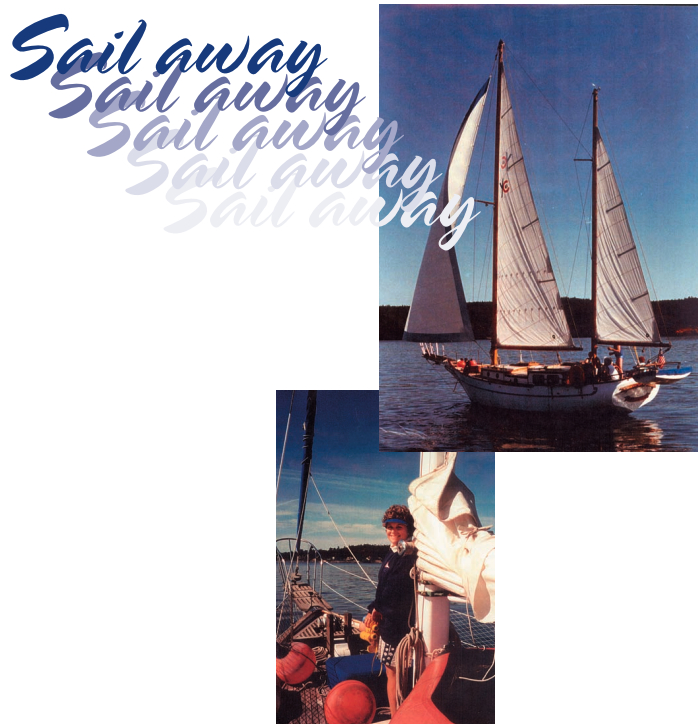
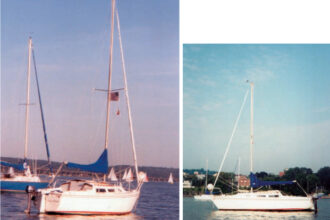
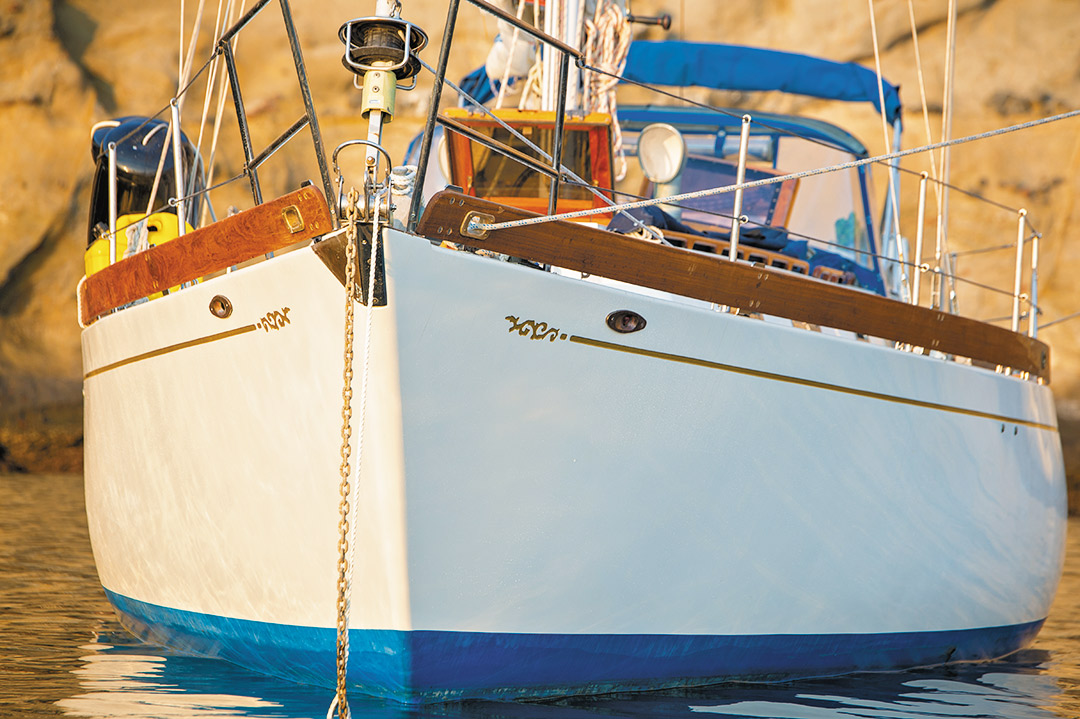
The harbor is still this morning; the water smooth as a mirror. At the top of the ramp I stop for a long look at our 41-foot ketch, moored just beyond the oil skimmer boat . . . the white parallel masts, the seductive curve of the hull, the blue sailcovers against the booms, the bowsprit straining forward, a plank suspended over the water. Even at anchor she looks poised for motion, sleek as a swan.
I lean over to grip the grabrail on the cabintop and hoist myself onto the deck, glossy from last night’s rain. The teak on the cabin doors glistens a deep cinnamon color. I slide open the hatch.
I can step down the companionway ladder with my eyes closed if I want to . . . just lean back into the wood and my foot finds each familiar rung. I breathe in the briny mustiness of the closed cabin. These womblike quarters, sheltered and cozy, all teak and white vinyl and brass fittings, were where the four of us lived every summer without television and telephone, without electricity or the sprawling comfort of our big house in Anchorage.
Last week we sold our sailboat; today I’ve come to say goodbye.
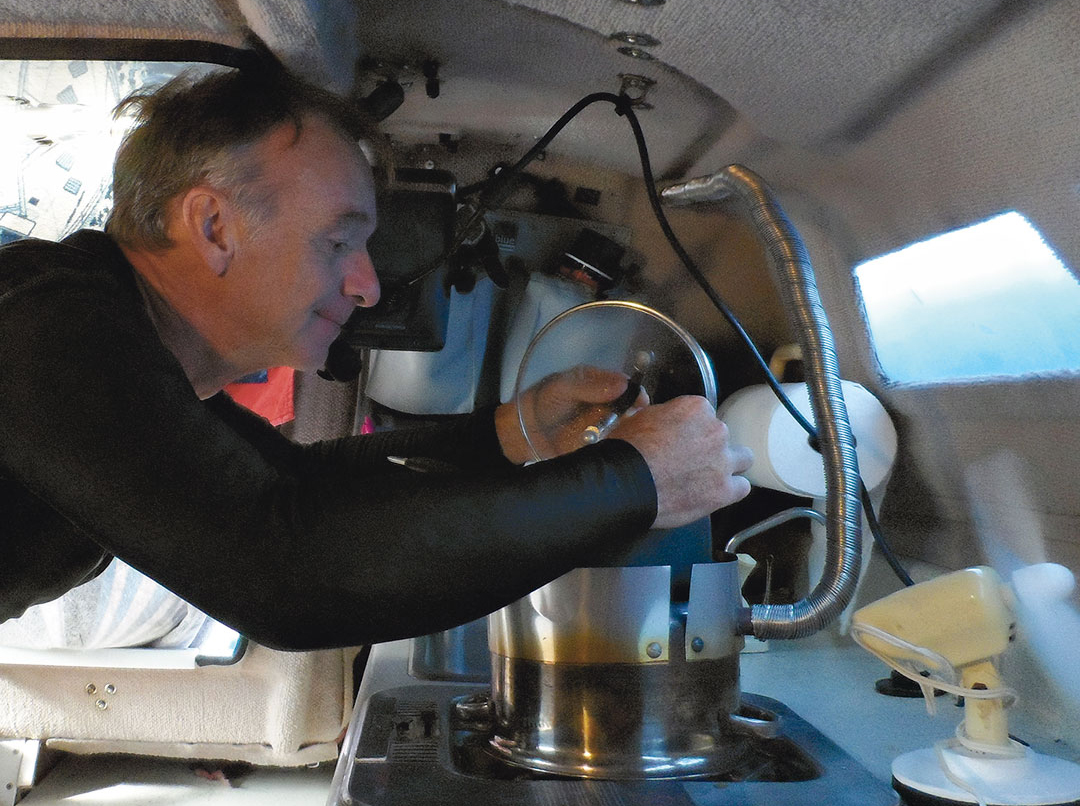
The galley is just to starboard of the companionway: three-burner alcohol stove, gimbaled so it moves with the pitch of the boat under sail, a stainless-steel sink, and refrigeration under the countertop. Just three feet to port is the dinette table. All four of us — Ed, Brad, Betsy, and I — squeezed around the cushioned benches for meals and talks and card games played in the orange glow of oil lamps. This spot, which doubles as a chart table, folds down to a bed where Ed and I slept.
A step down from this area is the main saloon under curved teak ceiling beams with a carving of an elaborate dragon. Cookbooks, paperback novels, cruising stories, a Bible, photo albums, medical emergency texts, how-to manuals about diesel engines, sailboat maintenance, navigation, knot tying, points of sail, and rigging cram teak bookshelves above port and starboard settees piled with colorful pillows. Four panels: sculpted wood reliefs of the boat under sail, a crouching tiger frozen in pounce, strange seabirds perched on a boat’s bow, and a bird of prey, talons open, at a rookery, decorate the teak doors to the head and captain’s cabin.
There were times when the wind howled and the seas kicked, and the roll and pitch and heel of Consolation turned this safe haven into a frenzied heap of books and pillows. Today it’s peaceful: the rhythm of the boat at dock is like breathing, barely perceptible, but steady in the up-and-down motion.
Forward of the doors is the head to port and the captain’s cabin to starboard, and still forward, snugged in the bow, the fo’c’s’le, a small cavelike space where Betsy bunked, the straps for her viola still in place under the teak ledge. Sometimes she and Brad would slide open their hatches and crawl up to the deck with their sleeping bags and fall asleep trying to count the stars.
I hear small waves lapping at the hull. Somebody’s rigging clangs against metal masts. Must be a little wind.
I’ll miss this . . . the way the world looks through a porthole: racing water, tilted landscapes, the swift passing of it all; the feel of the wheel, teak finish worn gray by so much handling; the sails, huge white triangles catching wind, the genoa like an enormous cupped wing, powering 14 tons through the seas; the language of sailing (close-hauled, tack, jibe, luff, halyard); the waves spinning off the hull, spilling over the rails and out the scuppers, bubbling like tiny chimes; the constant motion, the comfort, and the dreams that water brings us.
I stand in the wheelwell for the last time. I learned to navigate, read charts, and plot courses. I learned to helm and trim the sails. I learned to adjust to the rhythms of winds, tides, currents, and weather. I learned you don’t always get from here to there in a straight course. I learned to bring aboard only enough to serve my needs; there’s not enough stowage for extra baggage. I learned to pay attention to exactly where I am right now. Constant and forgiving, this boat was my schoolhouse and my teacher. Her lessons are a part of how I live.
She tugs at her dock lines, “Let me go. Let me go.”
Bon voyage, Consolation. You sail with my heart as a stowaway.
Thank you to Sailrite Enterprises, Inc., for providing free access to back issues of Good Old Boat through intellectual property rights. Sailrite.com