When less than perfect is bright enough
Issue 114: May/June 2017
About an hour after I put what I hoped was the last layer of varnish on some of Nurdle’s brightwork, it started to rain. The rain was forecast, but I had hoped it would hold off until later. I had taken a chance but, although I was disappointed, I was not distressed. That’s where I am in my relationship with brightwork.
While I like the look of varnished wood, I long ago gave up on trying to make my varnishing fit for display in fancy boating magazines. Instead, I have made use of shortcuts to free me from being a slave to my brightwork.
My approach to varnishing evolved while I owned a boat with mahogany exterior woodwork. Teak may be left natural, oiled or sealed (with a product like Semco), protected with a hybrid finish (such as Cetol), or varnished. Mahogany blackens when moisture gets into it, which meant I had two choices for protecting it: paint or varnish. Because the woodwork on that boat was extensive, maintaining it was quite a task. Being lazy at heart, and because I’d rather sail than varnish, I found some tricks to ease the time and effort required to keep it bright.
First, I had to develop a proper attitude toward brightwork. The perfectionist in me seeks a flawless finish. But realizing that maintaining brightwork is a journey with no completed-project destination allowed me to accept some imperfections — a flawed coat of varnish still looks better to me than most alternatives. I threw out the idea of a “final layer” in favor of a “current topcoat” that would, in time, be sanded and coated again. Once I accepted this approach, bugs, dust, and brush hairs bothered me less. I also allowed myself to varnish in less-than-ideal weather conditions, so I didn’t stress as much over timing the work. I came to understand that there are very few varnish errors that cannot be fixed with a little sanding and another coat.
A technique evolves
Prior to adopting my new brightwork mindset, and still in search of that perfect “final layer,” I once bought a very expensive brush. If I’d used it every week, it might have been worth the outlay, but cleaning it thoroughly was a nuisance and eventually I did not get it quite clean enough and it was ruined. I now buy a 36-count box of 1-inch chip brushes at Harbor Freight for less than a quarter of the cost of one fancy brush and pitch them when I’m done with them. I pluck loose hairs prior to using them, and they lose a few more bristles along the way, but I no longer worry about ruining an heirloom brush (and I’m not sure the end result looks any different).
Regardless of the brush, brushing technique is important: I go from wet to dry, apply thin coats, and resist the temptation to touch up missed spots. I don’t try to apply a thick coat of varnish as doing so only creates drips and sags.
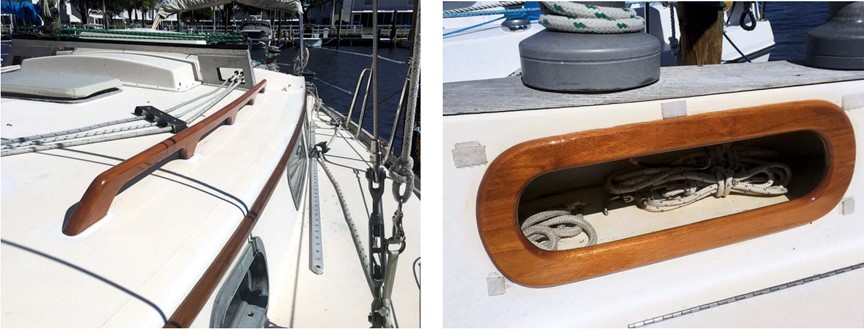
Brightwork mounted on non-skid creates a significant nuisance when masking. It’s impossible to effectively mask an uneven surface as tiny gaps are inevitable and allow varnish to wick beneath the tape, making a mess. I’ve used a 3/16-inch-wide screwdriver to scrape off the non-skid pattern at the base of the woodwork, leaving a smooth gelcoat perimeter for the tape to adhere to and prevent wicking. Whether or not I mask when I varnish, I try to lay a millimeter or so of varnish right onto the fiberglass. I think this helps with edge adhesion and slightly deters water intrusion under the piece.
As my brushing technique has improved, I find myself masking off adjacent areas less often. I weigh the time that must be spent masking to allow for quicker brushwork against the extra time I would spend brushing more carefully without the masking.
To strip or not to strip
If varnish is maintained, it shouldn’t have to be removed. Only rarely should it need to be stripped to bare wood, but when that does become necessary, many people think the only way is to sand it off. When someone showed me how effective heat is, I lamented the many hours I had spent sanding old varnish off wood. Once softened, varnish is easy to scrape off. The trick is to maintain a sharp edge on the scraper. In the days before gelcoat, heat was used to remove old layers of paint from wooden boats. Blowtorches have caused many a boatyard fire, so I use a cheap electric heat gun.
When it does become necessary to strip the varnish, I remove the piece from the boat if I can. That makes the work easier. If the wood itself is badly deteriorated, I might fabricate a new piece rather than waste time trying to sand it smooth.
Brightwork is a common topic of conversation around the docks and I’m often asked, “How many coats of varnish did you apply?” I think that if a finish is protected from the sun, just a few coats are all that’s needed. If I apply the layers within a couple of days of each other and the surface still smells like varnish, I typically do not sand between coats unless a coat was rained on while wet or there is another unacceptable defect. Otherwise, the new layers seem to bond acceptably.
If the piece I’m varnishing is off the boat, I apply three coats and then plan to follow with a topcoat to fix the inevitable scratches that result from reinstalling it. I find that the durability of three to four coats is fine, and that any improvement in the finish appearance after the third or fourth coat is minimal. After only a few years of maintenance, I eventually wind up with the seven to 15 coats recommended by the perfectionists.
Protection
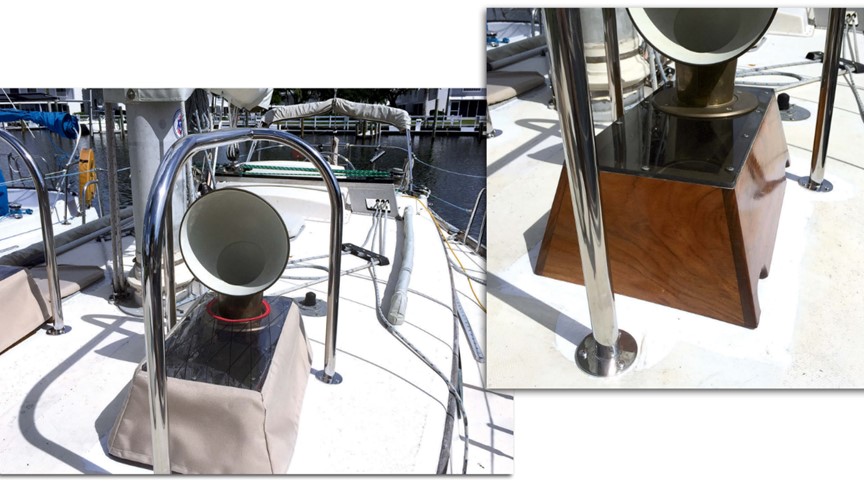
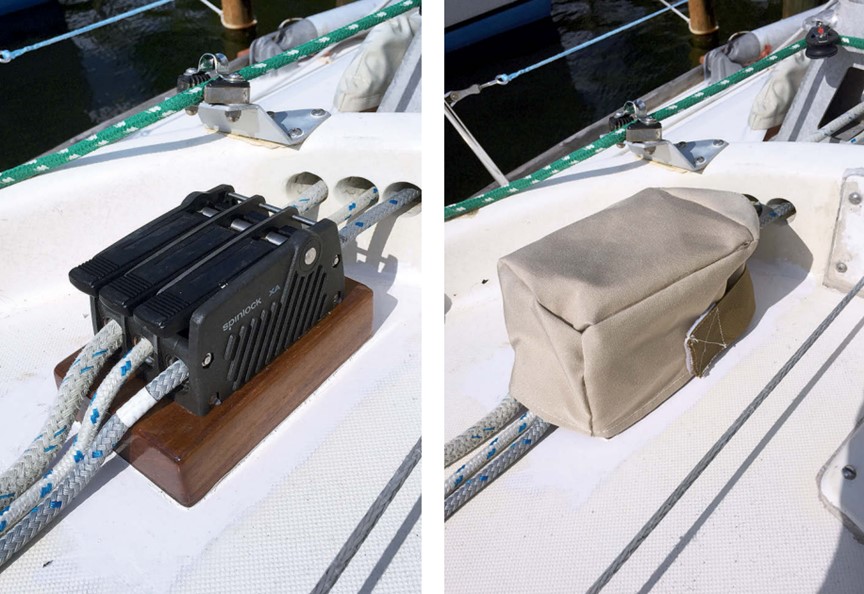
A key part of my varnishing program is minimizing the deterioration of the finish. Besides being pretty, varnish is there to protect the wood from moisture and sunlight. The main enemy of varnish is ultraviolet rays. With good UV protection, the finish will last several years before it needs recoating. Even before beginning a brightwork project, I make a sun cover. I own a Sailrite sewing machine and have found helpful ideas and products in the company’s catalog and on its website.
While I try to make my sun covers attractive, my only requirement is UV protection, so the occasional crooked seam is acceptable. Most covers are very simple to make, like sewn cuboids for Dorade boxes or a folded strip for handrail covers (see “Grabrail Guardians,” January 2017). Because I do not like making holes in my boat for snaps, I use self-adhering Velcro pads.
With effective sun covers, even in South Florida, varnish can last several years without recoating. But for sun-exposed brightwork, a close look will show that the gloss is gone usually within six months or so. But when the time comes, recoating is easy. It starts with a quick sanding with 120- to 180-grit paper to remove the bugs, brush hairs, and other blemishes from the previous coat and give some adhesion to the new layer. While I do my best to remove sanding dust before recoating, it is not too objectionable if some winds up in the finish. I apply two coats in quick succession and things are beautiful again. Since setup and cleanup are the same for a big or a small project, I try to do all the brightwork at once.
Going against dogma
Another dockside conversation starter is, “Your brightwork looks nice. What brand of varnish do you use?” I have used most of the major brands and find them to be compatible and reasonably equivalent. Brightwork problems can rarely be blamed on the product. Tending to be frugal, I buy whatever is on sale, but I do stick to marine varnishes. Trying to save money on a non-marine product is unwise.
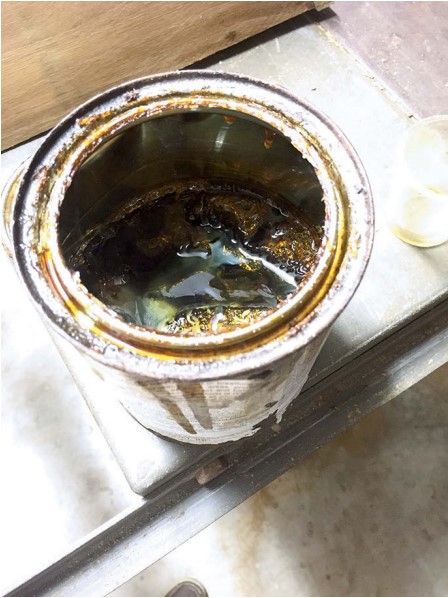
I will even use varnish after it has skinned over in the can. Many perfectionists would throw it out, but I find it works satisfactorily after I peel away the skin, thin the varnish, and let any debris settle.
By lowering my standards a bit, keeping things covered, and adjusting my attitude, I have made peace with varnish. My brightwork is acceptable to me — and it is pretty enough that dock walkers often ask me how I keep it up.
John Churchill grew up a boat-crazy kid in Indiana. He built a raft at age 6, sailed Snipes as a teenager, and worked his way toward salt water and bigger boats as an adult. He has sailed a Cape Dory 26 singlehanded to Bermuda and back, and a Bristol Channel Cutter transatlantic with his father. Now in Florida, John races and daysails Nurdle, a Bristol 35.5 (and former repo) that he’s rehabbing for extended post-retirement cruising.
Thank you to Sailrite Enterprises, Inc., for providing free access to back issues of Good Old Boat through intellectual property rights. Sailrite.com