Posting Preface
Jim and Connie Grant started Sailrite at a young age, driven by a deep passion for boating and sailing. Beginnings is Jim’s personal recounting of how it all began. The Sailrite story is often told starting with the Cal 20 racing days in California, where success at the Nationals—using homemade sails—led Jim to write about sailmaking and eventually launch the business. But before that chapter, there was an important period in Chicago, where the Grants learned boat restoration on a shoestring budget. It’s a journey familiar to many Good Old Boat owners. Enjoy!
Beginnings
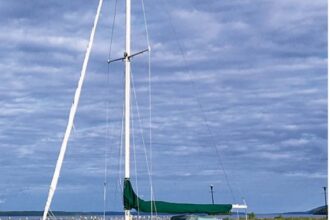
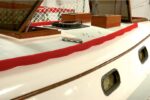
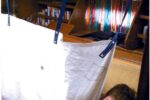
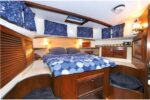
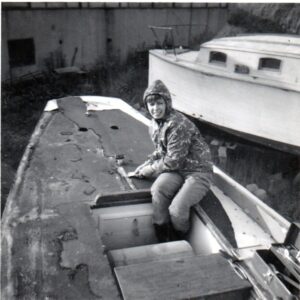
All the Sailrite literature places its founding in 1969 and there are good arguments to make that case. But you could argue that the REAL founding occurred in 1965. Connie and I bought “Ulysses” at the beginning of our second year of graduate school at the University of Chicago. Ulysses was an old International One Design modified with a cabin and partially covered with poorly applied fiberglass. The Rieck Brothers, owners of the Ship and Boatyard at 5600 W. 41st Street in Cicero, Illinois, let us have her for yard fees ($600). I was supposed to be studying political philosophy but much of my time was spent in boat restoration. Since we could not afford professionally made sails, we were forced to make our own. A large open floor was needed. We used the dance hall on the third floor of the City Hall building in Columbia City – the same dance hall where Connie and I had our first date!
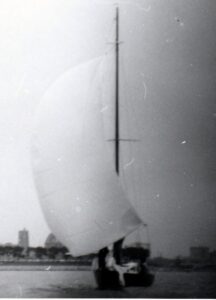
We raced Ulysses as part of the Chicago MORC fleet with “some” success and great fun (by handicap rating we were the scratch boat – we surely were the longest). My brother John, in medical school at Chicago, and his wife, Lucy, were often on board as crew. Ulysses sported our first spinnaker — that was a leap of faith to rival anything Kierkegaard imagined!
The description of the International One Design in the Good Old Boat SailData listing indicates that the first boats built from 1936 to the 1960s used mahogany planking on oak frames. Ulysses was one of these. It is important to note that “true mahogany” from Central America (sometimes called Honduras mahogany) is a far different thing than African mahogany or Philippine mahogany in common use today. True mahogany is the wood prized by European and American builders with excellent rot resistance and durability in the marine environment. It also has very good strength to weight and it is dimensionally quite stable and, perhaps most important, its grain is very fine and consistent so it is easily worked. We had to source replacement planks for Ulysses from specialty hardwood suppliers to match her original timbers.
The original oak frames were steam bent. Many showed cracks accumulated over years of use. We sister ribbed these cracked frames using glued laminations of 1/8 inch thick white oak. Of course we had no access to the original cut copper nails that had been driven through the planks and ribs then bent over copper washers. Brass screws had to do. Many were broken in those white oak frames until special bits were purchased that matched the screw dimensions except for threads.
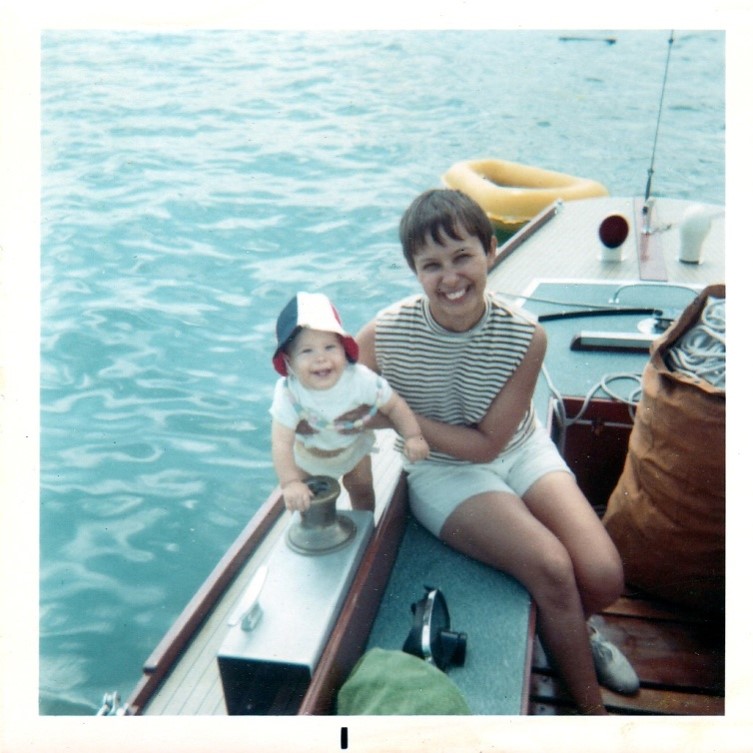
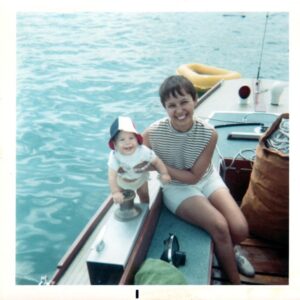
Ulysses served us well over the course of two summers moored out 200 yards or so in Grant Park Harbor. Each summer we would sublet our apartment and live on the boat. The first summer Connie was pregnant with Eric (yes, the “Project Guy”). He was born in December. I would leave each day in our homemade kayak for my job as a graduate research assistant leaving Connie alone aboard without any good way to get to shore (she could, we hoped, hail a water taxi in an emergency – fortunately there was no emergency).
All good things end! By 1968 I was off to a teaching position in California and the purchase of Cal 20, hull number 209. We sold Ulysses for $5000 and used the money as a down payment for a house in Pomona.