Fulfilling dreams with boats once destined for landfills.
Issue 124: Jan/Feb 2019
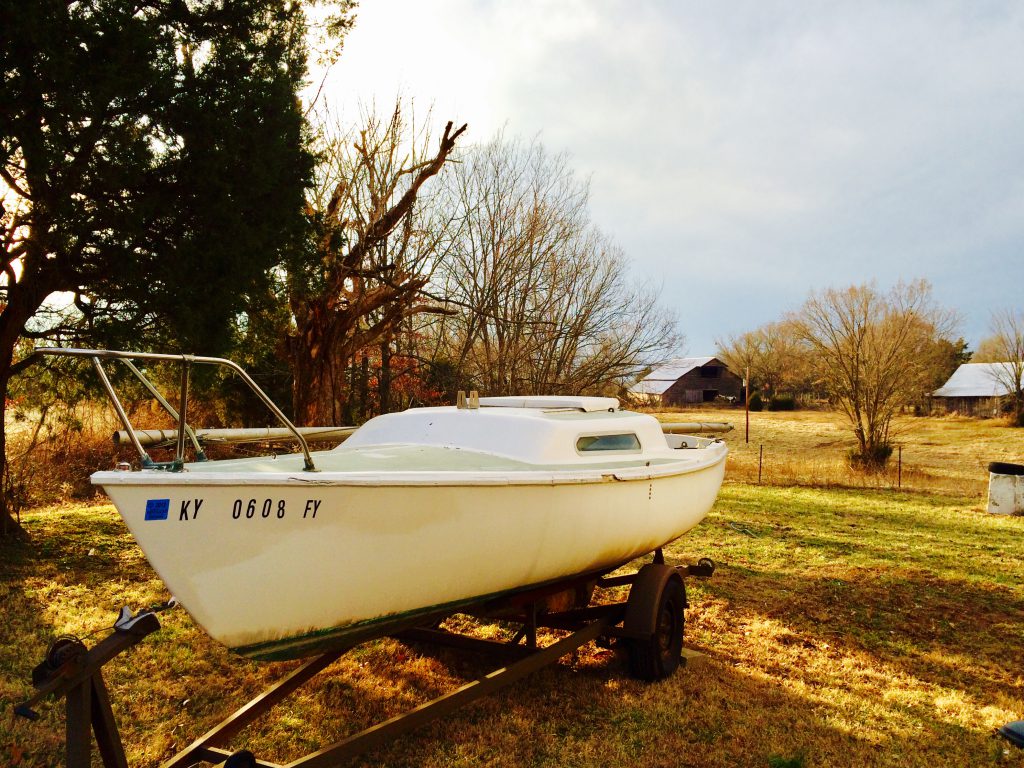
In an age where the norm is to throw away the old and buy something new, I have learned that thrown-away sailboats can provide tremendous value. I found my first boat, a 1979 Venture 21, sitting behind a driveway in southern Kentucky covered in dead leaves, mold, and moss. This was the boat of my dreams. The owner had used her simply for fishing and had no advice to give me about how to sail her. I made a lowball offer, he accepted, and on a cold afternoon in November I pulled my new pride and joy home.
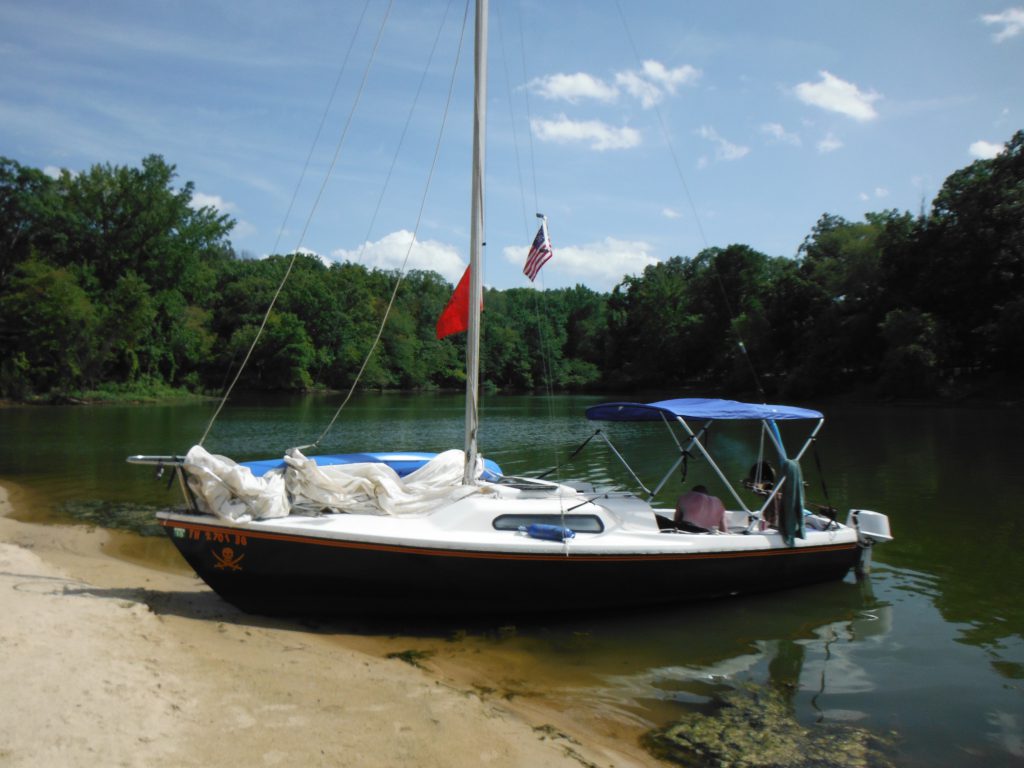
I began cleaning her up and arranging the inside, all the while imagining the adventures to come. I practiced raising the mast and rigging her. The Seahorse motor she came with was from an ancient time. When I pulled the cord wrapped around the flywheel, it sounded like tin cans banging together. My excitement grew as the time neared to splash her into the fresh waters of Tennessee’s Big Sandy River.
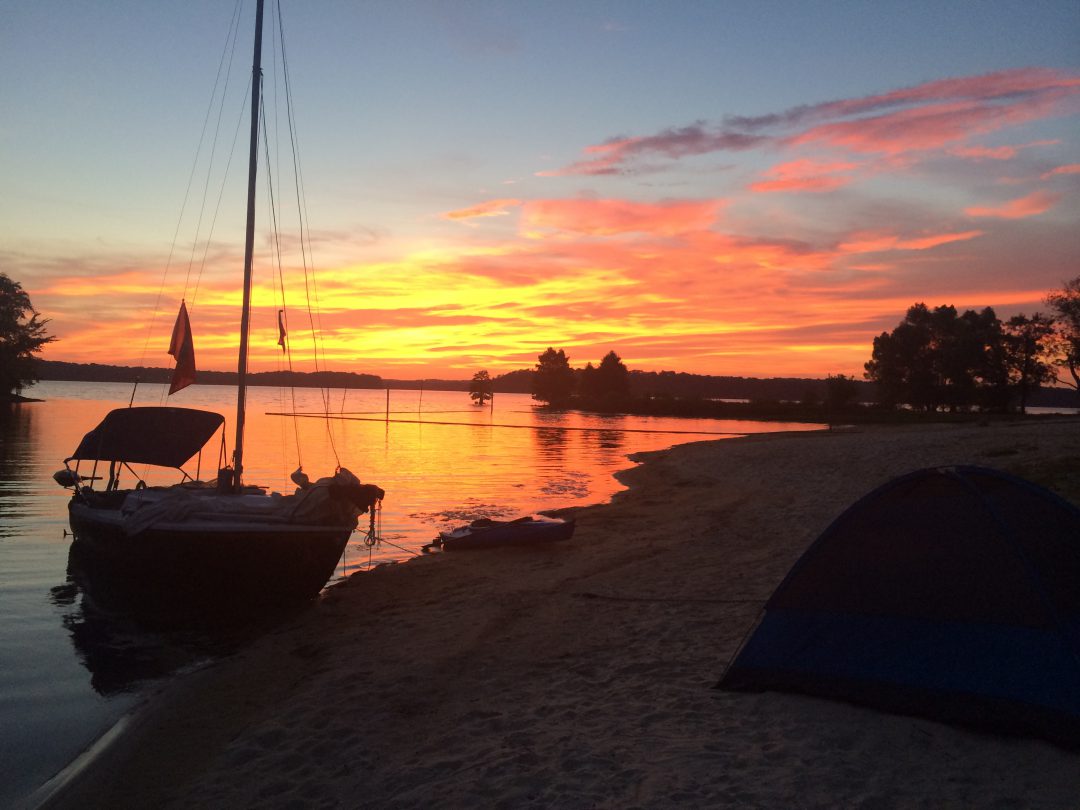
That summer, once I’d discovered the purpose of the main- sheet and made my first uphill run, the world unfolded and a sense of newfound freedom came over me. I could go anywhere and I could accomplish anything. I occasionally beached my boat, camped out, slept in coves, and sometimes woke to find my hook dragging into the main channel of the Tennessee River. It was the greatest summer of my life, and I knew I was ready to step up to a bigger boat.
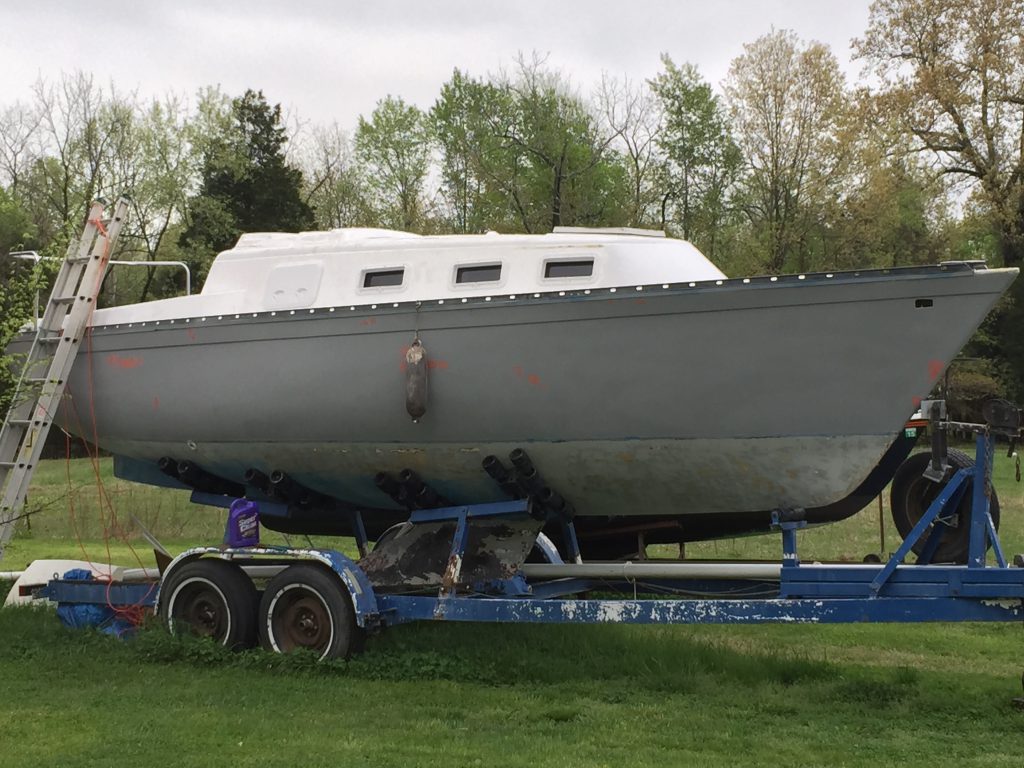
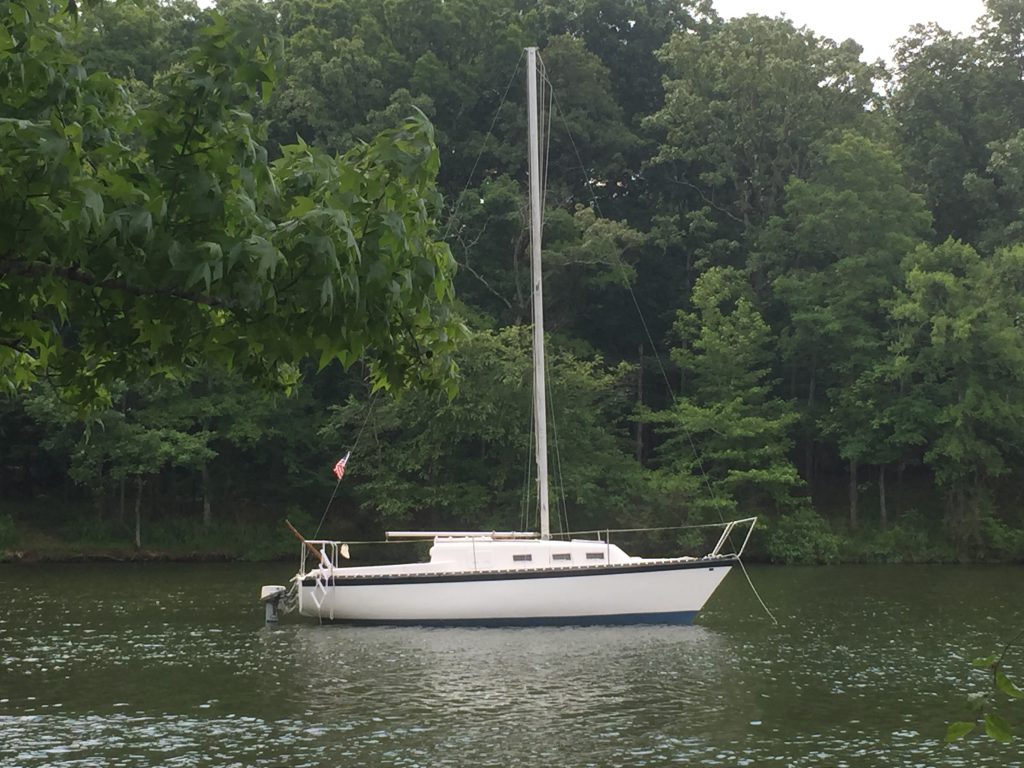
Once again, I returned to Kentucky in November, this time to save a 1981 Hunter 25 from certain burial. The boat sat on a heavy- duty roll-on trailer that had seen better days but seemed fully functional. She needed new portlights because she had none, only holes, and the thousand blisters that covered her hull just below the waterline demanded attention. I spent the winter playing with epoxy and paint, grinding and sanding, and wiring and installing the various instruments for the bigger adventures ahead. I named her Spray, and splashed her into the Tennessee River that spring.
Spray didn’t provide full standing headroom, but two people could share the cabin quite comfortably in comparison to the Venture 21. She sailed reasonably high on the wind and broke through waves with commanding weight. I soon began to look farther and farther south. That fall, I took Spray some 600 miles to Perdido Bay via the Tenn-Tom Waterway. I spent six weeks living aboard her and always felt safe, even after entering the much bigger waters of Mobile Bay. Spray seemed to be more at home with the wider rolling waves of the bay than the choppy waves of Kentucky Lake.
 I parked her in Roberts Bayou, and on a sad day in December I sold her on the docks of Pirates Cove. But I did so knowing exactly what kind of boat I needed for continuing my journey south.
At 3½ feet, the draft of the Hunter 25 inhibited me. In the Venture 21, I had become accustomed to running up onto soft beaches and exploring the river fully, as opposed to simply floating down it. The shoals of southern Alabama extend beyond the beaches. Spray would have to stay farther out in deeper waters, and a dinghy would not satisfy my longing to get in close. This trend promised to continue along Florida’s west coast. I needed a different boat.
In Perdido Bay, I had taken a short morning sail on a Wharram-designed Tahiti 21 built by a local adventurer. It was a great experience. This was a boat I could beach-camp in and that didn’t need the heavy 9.9-horsepower outboard I had on the Hunter, the same motor that nearly killed me when I had to make repairs on the water. I envied Shawn, the owner of the Tahiti catamaran, for his ability to simply paddle his boat around the docks and beach. I began scrolling through the ads of every boat-selling website I could find. My search proved to be more challenging than I’d imagined.
That winter I was boatless and my soul was empty. All I could think of was the great winter sailing I was missing back home. Driving out to visit friends one cold day, I passed a boat graveyard of sorts. I knew the place and had scanned it many times before, a collection of old fiberglass fishing boats, pontoon boats, and other powerboats. This time, I noticed something in the middle of the yard. I tapped the brakes and turned into the semi-frozen mud of the graveyard. I walked in disbelief past the fishing boats, through the weeds, and right up to her. She was a Com-Pac 16, and she was intact. She sat on an old rusty trailer sporting a pair of flat tires. I walked up the hill to a square metal building that served as the office and maintenance shop. Inside sat a man who seemed delighted to see me. All the Com-Pac’s sails were there in the corner of the room, along with a pile of boxes containing various components of the critical kind. Looking through the inventory, I asked the price. He said he would take $300 cash for everything. I nearly dropped my wallet fumbling to extract the sum. He signed all the paperwork, and I grabbed the sails, boom, and hardware.
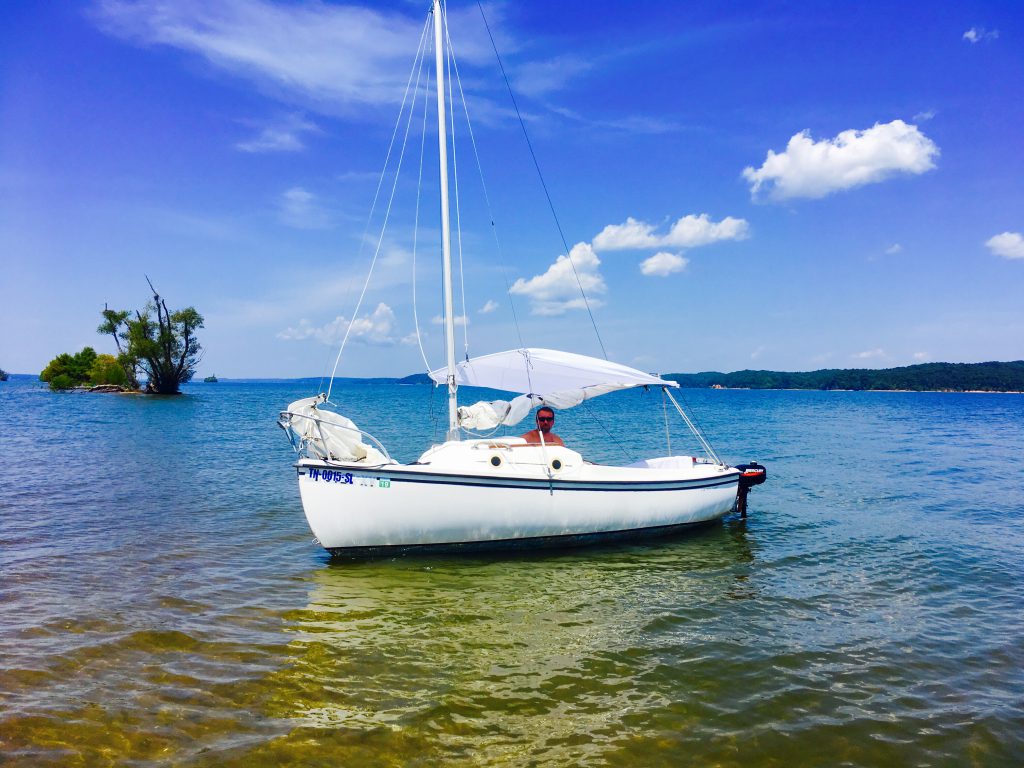
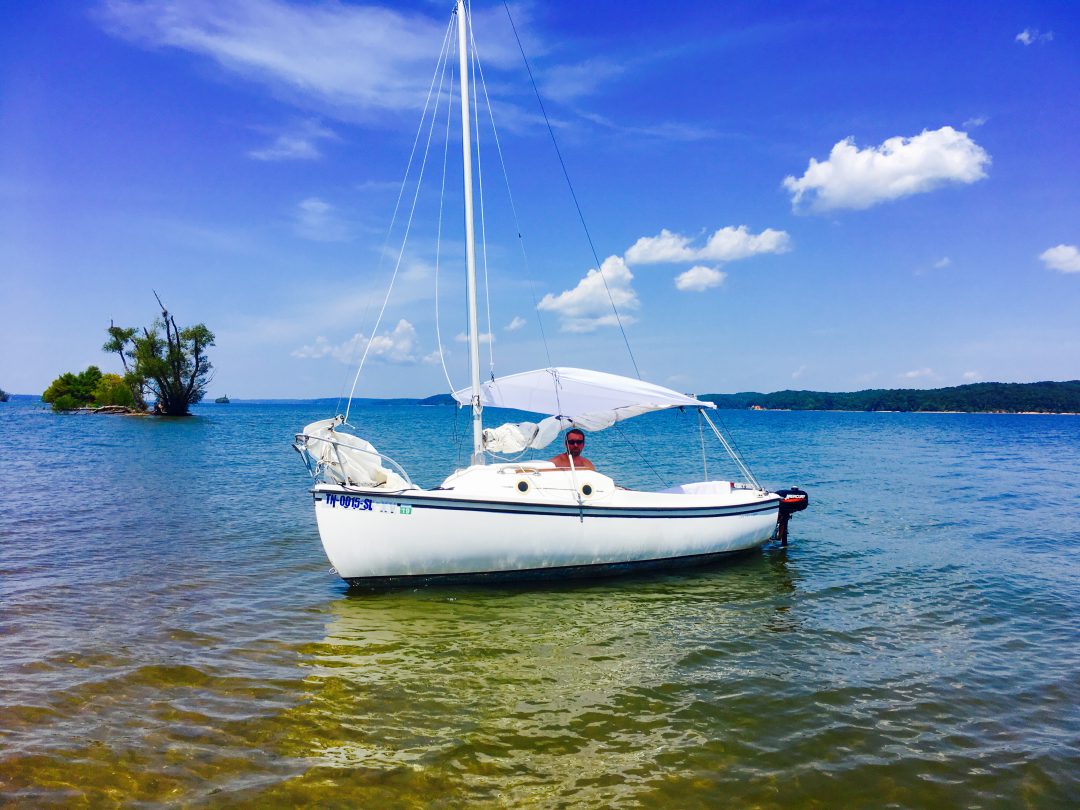
Later that afternoon, I aired up the dry-rotted tires and slowly pulled the Com-Pac home, where I immediately began cleaning her up. After a short time with a dish scrubber and some tub-and-tile cleaner, I discovered that the gelcoat, hull, and deck were in great shape — I wouldn’t even need to paint her topsides. Using oven cleaner, I removed the name Black Pearl painted sloppily on one side of the transom. Her original name, Messing About, was still visible in the gelcoat. Sticking to tradition, I decided to keep that name.
Down below, I scraped off peeling mint-green latex paint and repainted with a white topside paint from TotalBoat. I fitted the berths with new padding and added homey effects here and there.
After equipping her with a 3.3-horsepower outboard and a bimini fashioned from a white twin bedsheet and PVC pipe, I splashed Messing About in March and began learning her sailing capabilities. It was love at first sail. While the Com-Pac does get pushed around by waves, there is never a time when I feel like it’s more than she can handle. For her 18-inch draft, she points rather well, and can really get going when the wind is steady and moderate. She’s able to sail close into coves and beaches very nicely. Her flat-bottomed concrete-filled keel settles nicely in the sand and mud of the riverbed, steadying her when she’s aground.
Spending two weeks on a 16-foot sailboat may not appeal to some, but it’s how I sailed 147 miles to Pickwick Lake along the Tennessee River and back again. I find her accommodations very comfortable. The berths are wider than the Hunter’s and the cockpit is surprisingly roomy. When motoring against current, the 3.3-horsepower outboard pushes the Com-Pac with ease.
Some might call me a boat Dumpster diver, but that falls short of insulting when I pull up on the beaches of Big Lagoon, or when I’m sitting in a cove by a waterfall soaking up the free air-conditioning. The pleasure these boats have brought me reminds me that things that have been thrown away are not always lost. Granted these boats all have their scars and imperfections, but I think accepting them helps me to accept my own imperfections, as well as those of others.
And maybe, just maybe, I get that much closer to being a better person and a better sailor. Isn’t that the journey we’re all taking?
Edward Hubbard is a farmer, sailor, philosopher, artist, and troubadour, with a passion for cold beer and hot sauce. He draws his inspiration from the natural world around him and the living organisms he devours. Edward writes in an attempt to communicate his strange existence while at the same time challenging his readers to question their own.
Thank you to Sailrite Enterprises, Inc., for providing free access to back issues of Good Old Boat through intellectual property rights. Sailrite.com