Issue 5 : Mar/Apr 1999
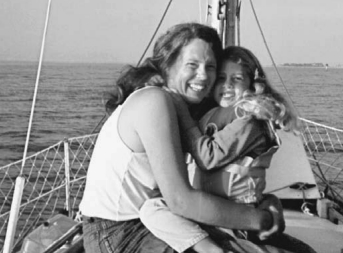
Ah, sailing! A time for relaxation: no alarm clocks, phones, or deadlines to meet. That’s the perspective of dreamers, perhaps, but it’s not quite the way we’ve experienced our cruising lifestyle. Instead, it’s a life of short sleep cycles and watch duty and of abrupt, unplanned awakenings at anchor. It’s a life of “shift work” at sea and of being “on call” at anchor.
The shift work occurs on long passages. Of course we knew there would be the inevitable overnighters as we ventured offshore. This didn’t worry us because our time would be divided into watches during which the off-watch crew could sleep (more or less) soundly. Once we arrived, however, we expected to experience tranquility. We should have known how it would really be after our experiences on Lake Superior where the charter boat that anchored off our bow wound up bearing down on our beam at 0200 as the wind changed our swing radius, and where storms came up suddenly and that secure anchorage changed to a lee shore. Somehow, these seemed like the exceptions. But we eventually realized, once we began living aboard, that life at anchor would cause us to be on call each night.
Just because cruisers live aboard does not mean they are experienced in setting a foolproof anchor. We have to be continually aware of our own situation and that of our neighbors. Storm fronts moving through, even in the Bahamas, are always a cause for being awake and alert. In Nassau, we kept an anchor watch for over 48 hours as fierce 60-knot winds blew the length of the poor-holding harbor. We were on a rare mooring, luckily, but we needed to watch for runaway boats whose anchors might break loose allowing them to suddenly veer down on their neighbors. Their anchors could then tangle on other anchor lines, creating a domino effect.
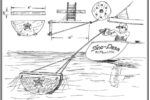
But there’s more to the cruising lifestyle than windshifts and anchor-dragging incidents. An anchor down in a new anchorage always means “first-night jitters.” Is there a current that changes with the tide? The current flowing through Nassau Harbor is swift and changes direction every six hours. After a while you can become aware of your boat’s direction and position changes even while sleeping. Is there enough scope for the amount of tidal change or enough depth beneath the boat for a low tide? What is the bottom like? Did you dive to ensure good holding? When we arrived in a familiar Bahamian anchorage in the dark after a long day, we were unsure of the state of the tide. The “bump, bump” of our keel on the sandy bottom awakened us at 0300. Because the engine wouldn’t budge us, an “all-hands fire drill” followed with the launching of our dinghy off the foredeck, then paying out anchor and rode to kedge ourselves forward to deeper water. Off the southern Bahamian island of Mayaguana, the guidebook’s recommended anchorage turned out to have a bottom made of rock-hard coral scoured of all sand and not secure enough for a much-needed sleep after a 30-hour passage from Rum Cay.
There are other dynamics to take into account. Are you too close to a neighboring boat that has stretchy nylon rode which allows it to swing freely while your heavy chain keeps you in one place? Another thump awoke us in the pre-dawn stillness in Luperon, Dominican Republic. After a windshift laid our chain out differently, our neighbor’s boat stretched on its nylon rode into our chain’s radius. There was no damage, thankfully, except to egos.
Living aboard in the Caribbean also means being on call to close ports and hatches when it rains — even if it’s a brief shower — then opening them again for every breath of cooling breeze. If you use a wind scoop, this can extend the time before your head hits the pillow again. If we’re lucky and get a good amount of rain, we are immediately up gathering water, even at night.
Being on call while living aboard, also means being alert to those strange noises that can occur anytime. The rhythmic clink of objects that have outwitted their padding always seems to occur when we are tucked snugly in the V-berth. Then there were the cracks and booms of impromptu fireworks that awakened us in Miami, Nassau, and Puerto Rican harbors. And we’ve experienced haunting, throaty sounds echoing in our bilge. That time we were up checking for leaks without and within until we learned that those bizarre sounds were made by aptly named “grunts,” small fish that feast in warm waters on many boats’ bottom growth.
And finally, our daughter, Mara, and I know we are all on call anytime my husband, Dan, hears the loathsome drone of a mosquito in the dark. When that happens we know the word is, “No one sleeps in this boat until it’s dead!”
Come to think of it, it’s a good thing the cruising life has no alarm clocks, phones, or deadlines to meet, since life aboard offers so many unplanned interruptions and nighttime “emergencies” to contend with. A life of relaxation? Well, yes and no.
Thank you to Sailrite Enterprises, Inc., for providing free access to back issues of Good Old Boat through intellectual property rights. Sailrite.com