This sailing school combines gourmet dining with solid sailing skills
Issue 21 : Nov/Dec 2001
“Imagine Joshua Slocum as a patient tutor and Martha Stewart preparing delicious meals on deck, and you have the beginnings of an appreciation for shipping out on the Samana.” That’s what one of the email testimonials said when I checked out the Web site for The School of Ocean Sailing as I searched for the “right” sailing school to meet my needs.
I was introduced to sailing by my husband a few months before we married 10 years ago. Each of us survived divorces and was eager to develop a new and better life. Fortunately, Ken had sailed for years, so a better life included the purchase of a 25-foot Columbia. After a few years, we bought a 30-foot Baba and made serious plans to move aboard. As we sold our house and spent a summer preparing for living aboard, it occurred to us that, while Ken had obtained his bareboat certificate via a sailing course on the Great Lakes, I had never attended any formal sailing school. We decided it would be prudent for me to develop my navigation skills. Ken encouraged me to take a course simply to bolster my confidence.
Since the purpose of this instruction was to prepare me for coastal cruising along the Atlantic seaboard, it seemed appropriate to consider courses set on the coast. On the Internet I found a long list of sailing schools offering a bewildering array of course schedules and levels of instruction. Some were ASA-certified courses, meaning their content was approved by the American Sailing Association. Most of the sailing schools offered day instruction only, with three- to seven-day courses available. Only a few offered live-aboard courses, and they were relatively expensive. I whittled the list down to a handful of schools offering live-aboard classes focused on coastal cruising.
A stand-out
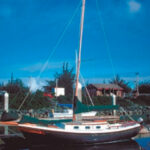
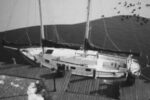
One sailing school stood out from the rest: The School of Ocean Sailing in Portland, Maine. Their Website was well organized and provided information on the course offerings, instructors, and daily schedule. I learned that the school has been in operation since 1975. Students live aboard the Samana, a 52-foot steel ketch. Larry Wheeler is the captain and a Coast Guard-licensed merchant marine officer holding a 100-ton sail auxiliary and unlimited radar endorsements. He retired not long ago after more than 20 years as a mathematician and professional teacher. His wife, Letty, is a Dutch citizen and experienced sailor who came to the U.S. in 1976. Together, they offer classes in ocean sailing, advanced coastal navigation, and celestial navigation. They also offer an introduction to offshore passagemaking. Larry and Letty are both certified by the National Association of Sail Instructors and Sailing Schools (NASISS).
I read about the skills taught in each course and the landfalls for each passage. Some of the skills included in the coastal navigation class were coastal piloting, dead reckoning, sail handling, reaching, running, tacking, and docking techniques, along with using radar, GPS, electronic chart plotting, weatherfax, and single-sideband equipment. The class size appealed to me: six students with two instructors. Two things really cinched the decision. First, the course focuses on preparing students for navigating through fog (with fog likely during the training). I reasoned that real-life instruction navigating along the rocky coast of Maine in fog with 15-foot tides would be far more useful to me than a sunny Florida setting.
Gourmet cuisine
The second clincher was Letty’s cooking. The menu for the week is posted on the Web site: ginger chicken over basmati rice, vegetable lasagna, chicken à l’orange. Sailing instruction and gourmet cuisine as well? I was hooked. Accommodations aboard were included in the price, which was under $1,000, so I sent my check to reserve a spot on Samana for the first week of August. Then I waited anxiously for the months to pass.
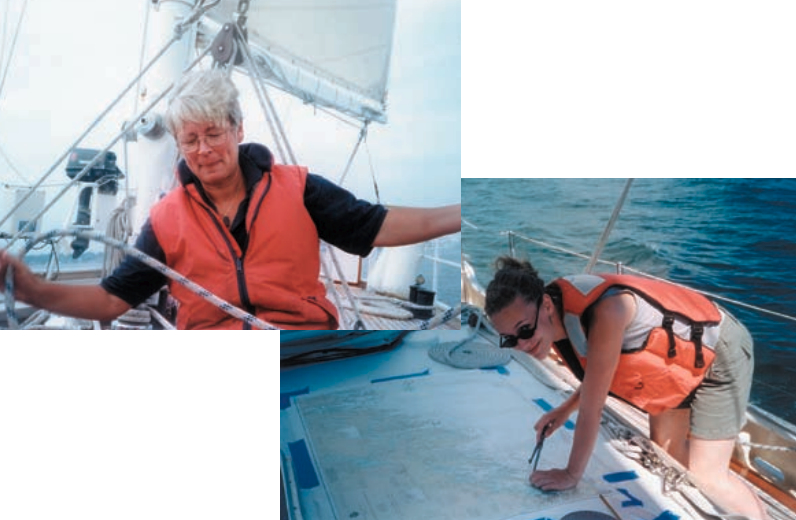
I arrived in Portland at the end of July and explored the charming waterfront area while waiting for the start of my sailing school adventure. The next day I was welcomed aboard. Students ranged in age from a high school senior to 40- or 50-something, and our skill ranged from complete novice to experienced sailor. Right away we gathered on deck for our first lesson in coastal navigation. Larry guided us as we developed a compass rose and chart, writing directly on the cabintop! (Larry removes the marks after every class.)
We learned about charts by making one, focusing on the most critical parts of the chart without the confusion of numerous markings. We learned how to measure for the appropriate placement of latitude and longitude lines. We charted several practice routes. On our first sail we kept track of our location using a taffrail log and charted our progress on our cabintop chart, as well as on a real chart. Larry’s experience as a math teacher helped us to quickly grasp the concept of dead reckoning.
Following our “classroom” instruction and a delicious lunch served in the cockpit, Larry directed Kate, the high school senior, to steer as we set off on our first sail. He calmly gave her instructions as she motored the 52- footer away from the dock and out of the harbor. I doubt I would have been that calm turning over the wheel of our boat to a novice. We could hear the tension in Kate’s voice when she said, “I don’t even know how to drive a car,” but Larry calmly gave her step-by-step directions, assuring her she could do it. Larry taught sailing terms and points of sail, while assigning each person tasks to raise sails and navigate our course. Letty quietly assisted students, reinforcing Larry’s instruction.
Peaceful landfall
After a short afternoon sail we made landfall at Diamond Cove on Diamond Island, a peaceful and picturesque little harbor. It was good that this was a short sail. Three of five students were seasick due to the substantial ocean swell. Letty passed the designated bucket around to those in need, and Larry emptied it overboard without missing a beat in his instruction. There was no swell on subsequent days, and no one was seasick again, though some of us used our scopolamine patches just in case.
After making the boat shipshape, we explored Diamond Island, which was the site of an old military outpost and prison used in World War II. Many of the buildings had been renovated to become an art gallery and a few condos. The setting was picturesque. We returned to a delicious dinner. The Wheelers pampered us, making it clear there was no galley duty allowed for students.
Letty’s gourmet cooking was something we looked forward to each day, and it transformed an excellent sailing school experience into a real vacation. Even our simple noon meals, eaten while underway, were delicious: homemade soups with interesting spices and fresh bread made the previous night kept the crew quite content. Wonderful Dutch-East Indian spices, which flavored our dinners, were a real treat.
After dinner, we wandered ashore again or remained onboard reading or visiting. There is a strict no-alcohol and no-tobacco rule on Samana. We all were a bit surprised when Larry and Letty turned in at 8 p.m. that first night, but none of us stayed up too much after sunset.
Each day, after a shower ashore, we walked back to Samana to find muffins, cereal, juice, and yogurt in the cockpit for breakfast. After breakfast, Larry taught us additional navigation skills, tailoring instruction to meet the needs of the students aboard. His flexibility in addressing the experience level and needs of the students was appreciated. For example, I asked about heaving to in a storm, and Larry readily included heaving to in the day’s sail plan. Another student was having some difficulty getting a line to lie right for coiling, which led to a brief lesson on handling rope. Whatever the skill or level of difficulty, Larry and Letty were ready with instruction.
Movie site
Over the course of five days, we sailed to Diamond Island, East Boothbay Harbor, Boothbay Harbor, and Mackerel Cove at Bailey Island. We also sailed to Monhegan Island and jibed around the rock just off the coast. The Wheelers informed us that East Boothbay Harbor was the site of the filming of the movie Message in a Bottle. We also got to see a whale, several dolphins, and harbor seals. I particularly enjoyed the seals, which look like puppies when they pop their heads out of the water and look at you with big eyes.
As our instruction continued, Larry taught us a variety of navigation methods so we would never be dependent on a single method, which might fail. As if to emphasize Larry’s point, the taffrail log we were using broke on the second day, presenting a real-life opportunity to use a back-up method requiring time and speed checks to track our position. We also used radar and, later, Nobeltec, a computerized navigation program. Letty’s experience as a computer consultant was evident as she guided us through the program. Thus, by the end of the course we felt comfortable using everything from very low- to high-tech instruments.
Unfortunately, we had beautiful weather with clear blue skies and lovely winds, which was most unusual for Maine in the month of August, so we weren’t able to navigate through fog. However, Larry insisted we navigate as if we were in fog so we would know how to do it. He taught collision-avoidance techniques, and we learned how to make a collision-avoidance plot chart. We put this knowledge to use when we encountered three tankers in a row.
We later practiced simulated calls to the Coast Guard, giving our position as if in an emergency situation. It is quite one thing to read about navigating on the ocean, but it is another to experience the necessity of frequently checking your position and scanning for ships, which can approach with surprising swiftness. We learned that dead reckoning is not difficult, but it is a demanding job. Good navigators are always navigating, always checking their position.
Changed course
When under sail, Larry gave brief, individual instruction to each of us on a variety of skills. One day I sat at the bow talking with Larry as we served as lookouts. Tim and Jim were our navigators for the day. Larry called back to them and asked for the recommended compass heading. They responded, “285 degrees.” Larry said, “Check that again, just to be sure. There are some shoals we need to be careful of.” Larry turned to me and said, “Should be 305 degrees.” I laughed and commented on how he knew the proper course for each destination by heart. Larry then told me the compass headings for many islands in Maine, for Bermuda, and so on. The navigators called forward that they were correcting the course to 300 degrees. Larry nodded approval. “That’ll do for now,” he told me.
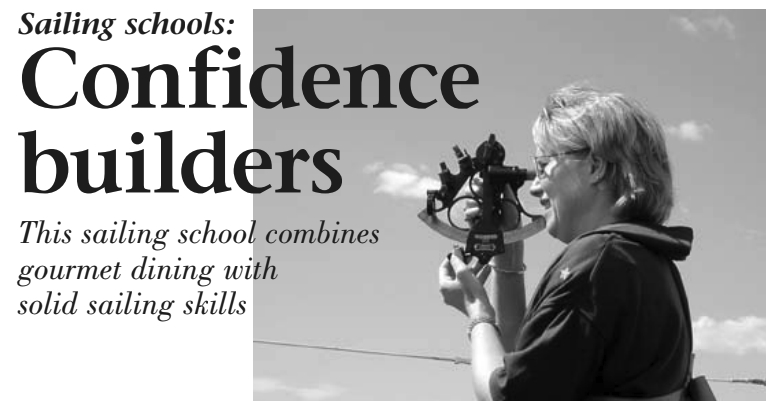
In addition to navigation instruction, Larry and Letty gave us each an opportunity to take a sight with a sextant to get an idea of how celestial navigation works. Their readiness to address all questions seriously, giving thorough answers, was extremely helpful. I’ve heard tales of frustration from a friend whose sailing instructor at another school gave each of the men an opportunity to practice skills but brushed her off when it was her turn. I noted no such bias at this school. In addition, while Larry sometimes assigned us to work in pairs while we were learning, he then made us do the task individually to be sure each person had fully grasped the concept. While Larry did the bulk of the teaching, Letty was available to provide assistance to individuals. Letty was also ready with a variety of suggestions on everything from computers to waterproof socks!
Conquer fear
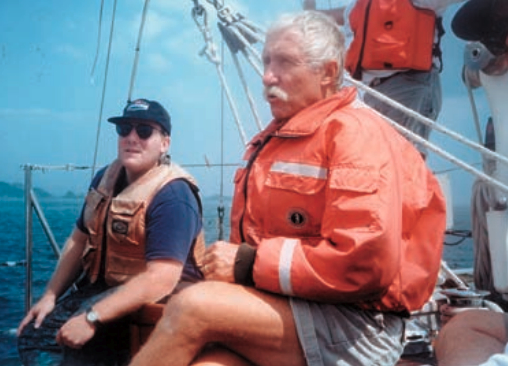
Throughout the course I was surprised at how calmly Larry and Letty handed over the wheel of Samana, which is not only a floating classroom but also their home. In teaching us docking techniques and methods of slipping a line to leave a dock, Larry told us we needed to get over our fear of hitting the dock. He revealed that he had hit the dock and put “dings” in his hull when he was learning. He said it’s important to be able to “gun it” in forward or reverse when docking in order to quickly get the boat moving in the desired direction. You can’t do that if you’re timid about it. It was a joy to watch Larry demonstrate how to dock Samana in close quarters. He drove her in perpendicular to the dock, and we tossed a bow line to a person on the dock. Then Larry used the prop walk in reverse to swing the stern around to the dock, neatly fitting Samana in a tight spot just ahead of a beautiful boat tied up to the dock. When I got home, Ken commented on my new, more assertive style of docking our boat.
Interestingly, Larry and Letty weren’t overly concerned with having us memorize a variety of knots. I had practiced my knots for weeks before the course, worrying that I might not pass if I couldn’t tie them fast enough. While he showed us how to tie several useful knots, Larry indicated that he relied on a few basic ones for most situations. And the Wheelers have certainly experienced some challenging situations! In addition to a circumnavigation and many years of sailing, Larry and Letty also had the unexpected experience of going through the eye of Hurricane Mitch when it altered course as they cruised to Bermuda. They have tremendous respect for the power of the ocean and storms at sea, but both have solid skills and experience, which enabled them to survive 50-foot seas. Their willingness to talk about their experiences is part of what makes their school so helpful.
Choosing a sailing school is a personal decision, based on individual strengths and weaknesses, the type of sailor we wish to be, the time and money we have to spend, and the manner in which we learn best. Clearly, there are many reputable sailing schools to choose from. No course can bring every student to mastery of every aspect of sailing in a week. There are skills we learned which will require additional practice.
I earned my bareboat certificate while enjoying a wonderful vacation at a reasonable price. In the winter of 2000 the Wheelers began offering winter courses in the British Virgin Islands. I just may have to take another course!
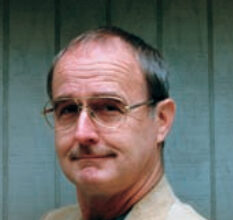
Cathy was featured in the March 1999 issue of Good Old Boat, along with her husband, Ken, and their Baba 30, Kahlua. For the past two years the McIntires have been following their dream: living aboard Kahlua while transiting the inland waters between Minnesota and the Gulf of Mexico and along the Atlantic seaboard.
Thank you to Sailrite Enterprises, Inc., for providing free access to back issues of Good Old Boat through intellectual property rights. Sailrite.com