Issue 21 : Nov/Dec 2001
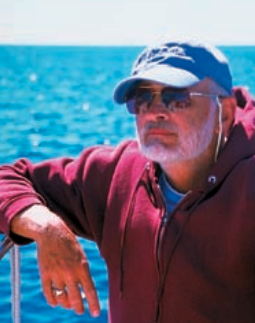
I missed that piece of American popular culture. I was out of town. Still, I bought a record in a Navy exchange somewhere that had Marianne Faithful wailing that well-known Mamas and Papas tune about Monday in a voice that could break a sailor’s heart and make him wish he was home.
I’m sitting in the marina right now on a Monday morning in early September. The editor said, “Leave me alone with this issue, and come back with an editorial.” When she wants to work 14 hours a day, I get in the way. I don’t argue with the editor; somebody has to be in charge. And . . . the boat needs some work.
There is no one else in the marina right now. It’s Monday. The boats wait patiently for their crews at least until Friday night.
Some people think the “real sailors” are doubling the Horn in a gale at this moment or perhaps taking the sun in a hammock strung between the foremast and the inner jibstay just off a gleaming tropical beach. Certainly some are doing that, but the owners of the boats in this marina are at work. It’s Monday.
I don’t think the current times will be remembered as a high point in American culture. We’ve seen better times, and I like to think we will again. But these may be remembered as times when the average person had many options . . . could make many choices. As the population of the earth increases, we will lose options. Look at crowded places elsewhere and see our future . . . more people, more laws, more regulations. This may be the best of times for choices, perhaps as much freedom as we will ever have.
The thing about choices is that they are stuck together in sets. Rarely can you pick individual elements out of their sets. You pick this, you get those, too. It has nothing to do with freedom, it is just the way the world works. Complex.
The common choices of love and family and career do not necessarily even include a boat in the set. It is only an add-on option. So it’s Monday, and the marina is empty. The sailors are at their posts in offices and factories and clinics and schools and suchlike. Perhaps there is a picture of their boat on a wall for them to steal a quick glance at, but the rest of the time they are mentally and physically at work. Marianne did not mention this problem specifically in her lament, and at the time I was listening to her sing I personally had all the on-the-water time a young fellow could want, but I see the meaning of her lyrics clearly now.
A lot of the “real sailors” are not getting as much sailing time as they want. They are not sailing around the world or even around in the world. They are not going to Tahiti. They are going to work today. In my opinion, they are not diminished for this in any way. They had options; they made choices. The lives they have chosen require skill, determination, and courage. They have duties to serve and obligations to meet. Not so different from the sailor rounding the Horn.
I like these “real sailors,” most of them anyway. I’ve learned that each has a story that will claim my respect. Each has a life . . . probably centered on things more important than boats and sailing. This hobby seems to collect good people.
They will be back on Friday night. I will too.
Thank you to Sailrite Enterprises, Inc., for providing free access to back issues of Good Old Boat through intellectual property rights. Sailrite.com