Rewards on the ocean deep are earned in shallows alongshore

Issue 33 : Nov/Dec 2003
Days of nepenthe on the blue seas do not come easily. The spiritual gifts of the great oceans are made possible by the hard work and learning that can be accomplished only in the shallow and challenging waters just outside your own home port.
In excursions alongshore, close to home, we pass enchanting and rewarding days honing our sailorly skills. Roaring powerboats, shallows that reach for your keel, eddies and currents that move you in unwanted directions, winds that are twisted and magnified by the land off which they blow, lee shores, and big scary freighters traversing narrow waterways all conspire to etch the skills of sailing indelibly into your psyche.
Alongshore is where you delight in the knowledge of exactly where you are at every moment, compared to bluewater sailing where “approximately” is plenty good enough. An error of a foot or two can complicate life in shallow waters, while an oops! of a handful of miles in the deep results in little more than a moment of embarrassment.
After two decades of wandering the globe, Unlikely needed a refit. Since we had aged more quickly than she, we needed a vessel that was smaller, more nimble, and of shallower draft. We could hardly refit our own bodies to new circumstances as well as we could refit our vessel. Unlikely would have to give way to the exigencies of age, and since we weren’t planning to cross too many more serious oceans, we prepared Unlikely, like a bride, for her new master.
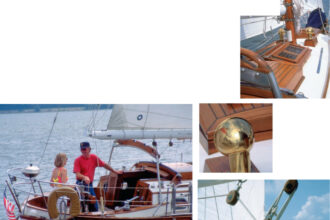
For the 12 months it took us to rebuild and restore her for sale, we were without a sailboat. As we labored on Unlikely, we watched a nifty 38-foot sloop slip by us every day for some daysailing off the Keys. At the helm was a weathered old sea dog, and on the foredeck was his lively, octogenarian wife, both hale and happy. They passed us with a wave, beaming with that special, anticipatory smile that wreathes the faces of sailors as they reach eagerly for a day at sea. Each evening they returned, anticipation fulfilled. It became a special sort of torture for us, as we yearned to be off for our own day at sea, freed from the tasks and confrontations and shackles of land.
Thing of the past
As I jealously watched the salty grande dame and grandsire take to the sea each day, I realized that the deep seas for me were a thing of the past, as are the deep seas for most old sailors. Times change, bodies and capabilities change, and now, in my ninth decade, I still wanted my life at sea. From my new perspective of great age, a week along a pleasant shore, or even a day, looked just as delicious as a 40-day passage to the French Marquesas once had.
On an ocean passage, the first navlight you are likely to see may be a month away, and navigational marks defining depths and dangers are encountered only after you raise your first lighthouse. Sailing a great ocean misses much of the high excitement of keeping your vessel safe from the hazards of shallows and lee shores. Close alongshore, the physical senses are galvanized, and sailing skills are honed for the pleasing reward of bringing your vessel safely and elegantly home.
While coastal sailing is demanding and difficult, there is, in even the shortest sail in familiar waters, the continuing exaltation of problems solved. Coasting is like a crossword puzzle in which every action, every decision, becomes part of the mosaic of the entire experience.
Coastal sailing is the quicksilver, instant, heart-pounding delight of contest. It grants those moments when puzzles and challenges flash clear, and you sense growth in yourself as a sailor. Ocean sailing is contemplative, slow, and introspective, requiring minimal skill and strength but deeply challenging the spirit and emotions. Passing across a great ocean is a precious reward, the goal of the sailorly life for many. Coastal sailing is process, and some would argue that process itself is reward aplenty.
Two kinds of sailing
One of these two kinds of sailing looks to Eastern thought and the other to Western. Ocean passagemaking is essentially Zen, timeless, passive, placid, and thoughtful. Alongshore sailing is essentially Western, dynamic, momentary, active, outward-seeking. They are obverse and reverse of the same coin. If you miss one experience, you diminish the other. The irony for sailors young and old who seek far horizons is that there is no choice at all, since without the exigent lessons of coastal sailing we would either never get out to sea or, if we did, we might well not survive.
Young sailors must hone their inshore skills so they’re prepared for the landfalls in their future. Old sailors, both those who’ve sailed the blue oceans and those who’ve found their dreams closer to home, can, in the lengthened lives now granted, ease their sheets and have instant and delicious escape from the noxious congregants and regimentations of our crowded land.
To call yourself sailor, all you need do is cast off your docklines. Whether you’re seeking the far shores or a marina just around the point, you need the same sailorly skills for both, and for both the dreamy mindset of the adventurer.
Excerpted from Call of the Ancient Mariner: Reese Palley’s Guide to a Long Sailing Life, 2004, International Marine. All rights reserved.
Thank you to Sailrite Enterprises, Inc., for providing free access to back issues of Good Old Boat through intellectual property rights. Sailrite.com