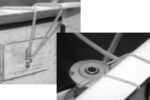
How to stop noise at night
Issue 49 : Jul/Aug 2006
Here’s a pair of halyard chocks I made and tried out this summer. They go a long way toward silencing those Dacron alarm clocks that can interrupt a good night’s sleep. For years I’ve lashed flapping halyards to shrouds with odd bits of rope, sail ties, or whatever else was handy. It was a make-shift routine at best, often forgotten until the banging woke me up. I didn’t like the misplaced ropes and aggressive tiedowns that didn’t get the halyards far enough away from the mast anyway, but somehow I never got around to something better.
Then I remembered admiring a British friend’s solution one windy morning long ago when we anchored together in the Dee Estuary. As nearly as I can recall, this was how it was done:
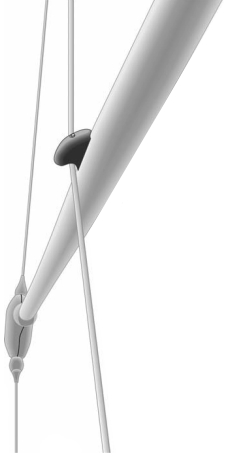
Take some scrap teak and cut two pieces about 1 1⁄2 x 3 or 4 inches; my chocks were cut from the remnants of a 1 1⁄8-inch board. For each chock, shape the end to make a well-rounded mouth to hold the loose halyard against the spreader before winching it tight. There’s nothing critical about the dimension as far as I can tell, but be sure to round all edges smoothly to guard against chafing. Chisel and file the concave edge into the face that fits against the spreader to make a snug fit. Bed it down securely with countersunk self-tapping screws, and place it two-thirds of the way between mast and spreader end.
Thank you to Sailrite Enterprises, Inc., for providing free access to back issues of Good Old Boat through intellectual property rights. Sailrite.com