How to get home when the fuel goes bad
Issue 51 : Nov/Dec 2006
My two 40-gallon diesel fuel tanks were full of contaminated fuel. Since the boat was out of the water for work on the engine and cockpit sole, it was a good time to remove the bad fuel and clean the tanks. This was done and I now had two clean fuel tanks. The only problem was that my engine used about 10 gallons of fuel a month since we did not take long trips with the boat. The original fuel had slowly gone “old” (and bad) because it simply was not used. Rather than refilling the tanks, I considered leaving them empty (or filling them with something liquid to help keep the trim). In the meantime, I needed to get the boat back to the dock (about 6 miles away). My solution was a temporary fuel tank.
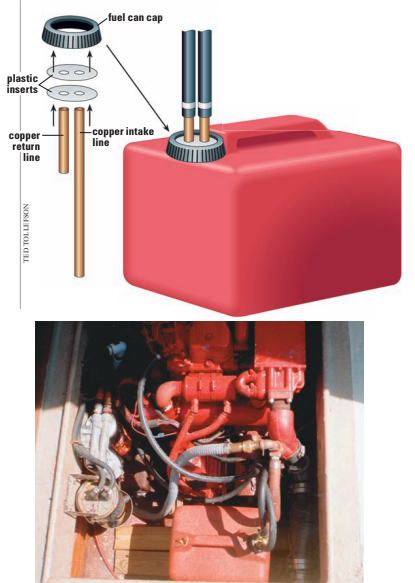
I used a standard 5-gallon fuel can and modified the spout area to accommodate an intake and return line from the diesel engine. The modification was two pieces of a plastic container cut to fit inside the open cap with two off-center holes in each piece for the copper tubes. One tube (intake) was inserted to about an inch from the bottom of the container and the other (return) went in about 4 inches. I had fuel for the engine and an uneventful trip to the dock.
This method would not work, nor is it advised, for a gasoline-powered vessel. However, as a temporary clean-fuel option it worked just fine in my diesel-powered boat. If you end up with contaminated diesel fuel, you might want to consider adding a temporary fuel tank to get the engine running and your boat back to a dock.
Thank you to Sailrite Enterprises, Inc., for providing free access to back issues of Good Old Boat through intellectual property rights. Sailrite.com