The origins of classic cruising sailboats
Issue 63 : Nov/Dec 2008
It is not an exaggeration to say that the famous early American yacht Cleopatra’s Barge, perhaps the first purpose-built cruising boat ever conceived, was actually a working boat in disguise. Built in 1816 for George Crowninshield Jr., a wealthy merchant mariner from Salem, Massachusetts, who wished to embark upon a “voyage of amusement and travels,” Cleopatra’s Barge was a conventional hermaphrodite schooner of the era and superficially resembled many other commercial vessels found in Salem at that time. Her hull form was quite ordinary, with a bluff, full bow section that tapered off to a narrow underwater run aft. This classic “cod’s head and mackerel’s tail” configuration represented the acme of early 19th century naval architectural theory, wherein it was presumed a vessel’s underbody must be most efficient when shaped like a fish.
What was unusual about Cleopatra’s Barge was the extravagant manner in which she was furnished. Her cabins featured exotic inlaid paneling and floors, gilded deck beams, velvet grab ropes, fireplaces, chandeliers, and cupboards crammed full of the finest silver, porcelain, and glassware. Her furniture, inspired by Crowninshield’s admiration of Napoleon Bonaparte, was decorated in Empire style with imperial eagles. Her appearance above the waterline, meanwhile, was eccentric. Her starboard side was painted with bright, multicolored stripes, while her port side was painted in an elaborate herringbone pattern. Her deck, sporting 12 cannons with no apparent purpose, was dominated by a life-size wooden Indian that seemed to have silent command of the entire vessel.
Throughout the remainder of the 19th century, very wealthy people sailing extravagant vessels came to dominate the sport of yachting. The sport’s primary focus was on racing, wagering, and social status, with rather less emphasis on cruising. The designing of yachts became a specialized practice, and gentlemen’s sailing vessels — once little more than working vessels dressed up in all sorts of finery, as was the case with Cleopatra’s Barge — became more refined in every respect.
By mid-century, yachts such as America, of America’s Cup fame, had demonstrated the superiority of more scientific theories of naval architecture. By the 1880s, empirically based racing handicap rules began to supplant older rules based on commercial measurements devised originally for tax purposes. Toward the end of the century, as the U.S. entered its so-called Gilded Age, upperclass tycoons did most of their racing in large, highly specialized sailboats and most of their cruising in very large, grandiose steam yachts.
Meanwhile, more middle-class recreational sailors were finding ways of their own to get afloat. Inspired by pioneers like R. T. McMullen and John MacGregor, of Great Britain, and Nathaniel Bishop, of the U.S., the number of middle-class folk engaged in cruising aboard their own small boats steadily increased from the late 19th century onward. This sort of unobtrusive sailing — small voyages for pleasure undertaken by ordinary people in very modest craft — was not of immediate public interest.
But there was something very powerful at work here: a seductive fantasy of autonomy and adventure that cruising under sail somehow promised to make real. John MacGregor summed it up very neatly in The Voyage Alone in the Yawl Rob Roy, his account of a cruise he made to France in 1867 in a 21-foot boat. “Often as a boy,” he wrote, “I had thought of the pleasure of being one’s own master in one’s own boat; but the reality far exceeded the imagination of it, and it was not a transient pleasure.”
Workboat to cruiser
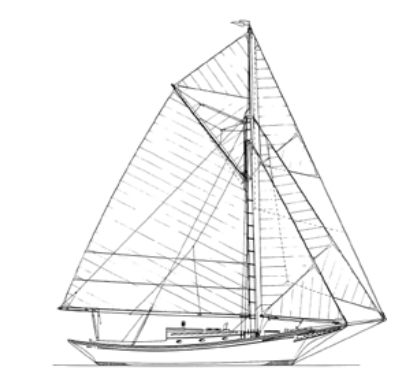
While wealthy yachtsmen originally sailed newly constructed vessels derived from working craft designs, sailors of more modest means found that the easiest and cheapest thing to do was simply to buy an old workboat and refurnish it. By slapping on new paint, tacking in some furniture down below, and perhaps altering the rig a bit, many such boats could be made into perfectly serviceable cruisers. It helped, of course, that in the late 19th and early 20th centuries, working sailboats were steadily being replaced by power vessels and hence were available in increasing numbers.
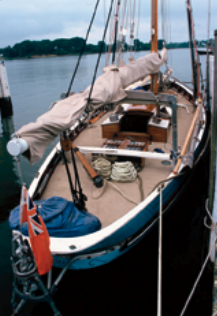
Fishing boats were the most popular candidates for conversion. Some types established secondary reputations as cruising boats, ultimately eclipsing their primary identities. We tend to forget, for example, that two popular American craft now considered classic coastal cruisers — the Cape Cod catboat and the Friendship sloop — were both originally designed and operated as inshore fishing boats.
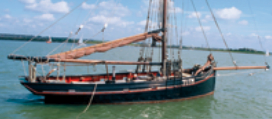
In Britain, in particular, lifeboats were seen as ideal candidates for conversion. This practice, which continues to this day, started at least as early as 1886, when E. F. Knight made a name for himself by cruising from England to the Baltic and back aboard Falcon, a converted lifeboat he purchased for just £20. Much later, in the mid-20th century, Tristan Jones established an even larger reputation voyaging aboard his converted lifeboat, Cresswell.
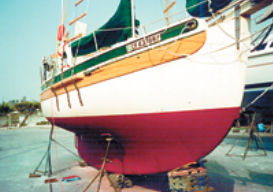
Pilot boats also were a logical choice for conversion, as they were usually designed to be both fast (so they could compete with other pilot boats racing out of a harbor to do business with inbound vessels) and seaworthy enough to go out in all weather. Several different types were pressed into service as yachts on both sides of the Atlantic. Old Bristol Channel pilot cutters became particularly popular as cruisers in Britain, and imitation pilot cutters (most notably those originally built by Sam Morse and now by Cape George Marine Works) are still in production today.
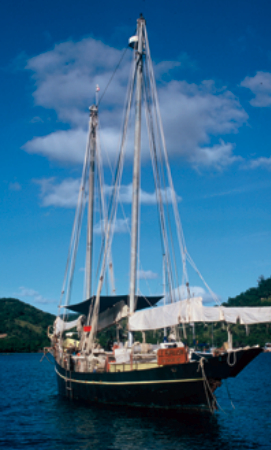
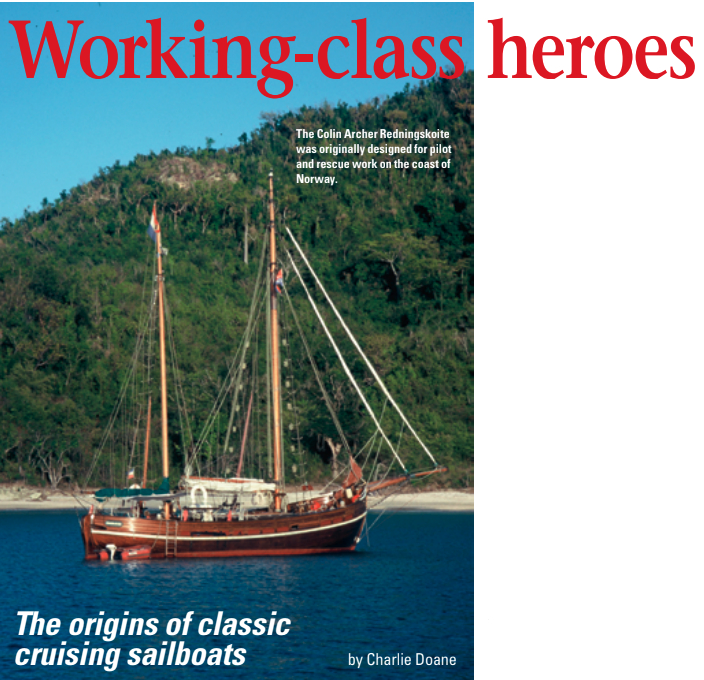
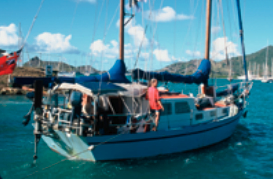
By far the most influential type were the beamy, double-ended 47-foot pilot and offshore rescue boats conceived by Colin Archer in 1893 for work along the coast of Norway. The simple symmetrical lines of these boats, known as Redningskoites, were copied very explicitly by others seeking to create durable, all-purpose cruising boats. The most well-known examples were the Tahiti ketch, designed by John Hanna in 1923, and Eric, a scaled-down 32-foot Redningskoite designed by William Atkin in 1925, which was reincarnated in the 1970s as the iconic Westsail 32. The huge success of the Westsail had a tremendous impact on the evolution of production fiberglass cruisers and begat numerous imitators. A few of the more modern variations with fin-keeled underbodies — the Valiant and Pacific Seacraft lines, for example — are still in production today.
The Slocum factor
The most famous converted working boat, of course, was Joshua Slocum’s Spray. Slocum does not at all fit the template of the amateur cruising sailor described here, but his influence on the sport was extraordinary. In terms of his background, he had, ironically, much in common with George Crown-inshield. Like Crowninshield, he gained all his nautical expertise as a professional merchant mariner. Unlike Crowninshield, however, Slocum lived in the latter part of the 19th century, when commercial sailing was being driven into extinction.
Whereas Crowninshield became a cruiser simply because it amused him,Slocum became one mostly out of desperation. His professional life had been destroyed and he was very down on his luck when, in 1892, a fellow ship captain, perhaps as a joke, made him a gift of a decrepit 36-foot Delaware oyster smack that had been left to rot in a field. With characteristic tenacity, Slocum rebuilt the boat and, after a very brief attempt to earn a living fishing her, he set out to sail around the world single-handed. This voyage not only helped to legitimize “alternative” cruising in the minds of the yachting establishment, it also spread the seed of the cruising dream much farther than ever before.
What perhaps is most significant about Spray as a boat is how anachronistic she was. Even at the time of her circumnavigation, which Slocum completed in 1898, she was completely obsolete. She was, by Slocum’s account, approximately 100 years old when he acquired her, and her hull form reflected her age. Her shape tended toward the old “cod’s head and mackerel’s tail” school of design and featured a fat entry, with her maximum beam a little forward of amidships and a finer run aft on her waterline. She was quite wide (over 14 feet) with relatively shoal draft (about 4 feet) and short ends (her waterline length was approximately 32 feet). She also was immensely heavy for her size, displacing 24,000 pounds, and carried all her ballast in her bilges, with none at all in the keel.
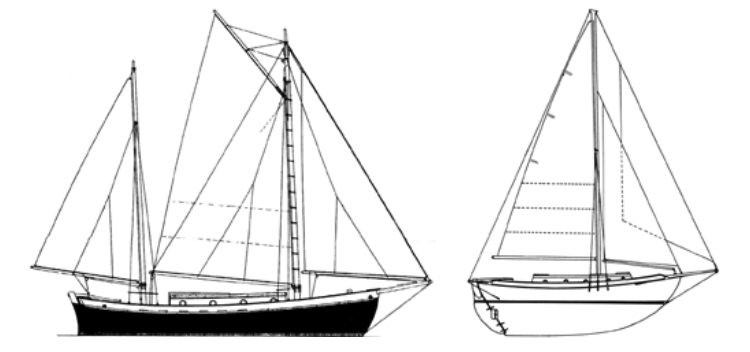
Spray had nothing in common with modern turn-of-the-century yachts (a fact in which Slocum took great pleasure), but she still served well enough as a cruiser. Indeed, her performance was nothing short of extraordinary. Slocum reported achieving top speeds on the order of 8 knots and routinely averaged 150 miles a day on passage — numbers more typical of modern yachts displacing half as much. He also boasted of the boat’s ability to steer herself, but credit for this, and for the speeds achieved, must in fact go to Slocum himself. He was a master mariner who had the skill and nerve to drive vessels very hard, and he was an intuitive expert when it came to sail trim.
What is also significant about Spray is that, in spite of her putative obsolescence, she is still considered a viable cruiser today. Contemporary boats that mimic her lines, most particularly steel hulls built to plans drawn by designer Bruce Roberts, though not exactly common, are not hard to find. Some devotees, in fact, still ardently insist that Spray represents the ultimate cruising boat.
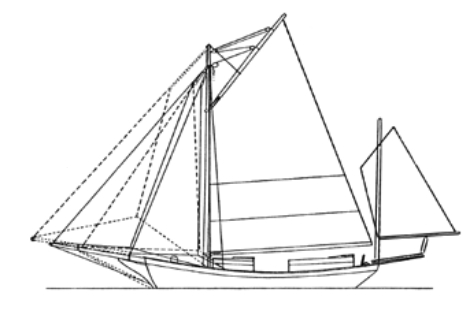
What this demonstrates is that unlike racing boats, which are subject only to the ruthless criteria of winning and losing, the worth of a cruising boat can be measured in a number of ways. One very good reason, for example, why some (but certainly not all) traditional designs based on old workboats like Spray are still viable is that they yield lots of interior accommodation space, which for many cruisers is a key consideration. They also are considered by many to be extremely seaworthy. But perhaps the most powerful and also most subjective reason people still choose to cruise in such boats is because of their strong romantic appeal.
Fishing schooners
Ultimately, the culture of the modest amateur cruiser precipitated a growing interest in the sport of ocean racing. This interest was initially fueled, or perhaps was even created from whole cloth, by Thomas Fleming Day and his evangelistic boating magazine The Rudder. Ocean racing between large gold-plated yachts dated back at least as far as 1866, when a group of flamboyant tycoons pitted three vessels against each other in a spontaneous mid-winter transatlantic gambit for an enormous wager of $90,000. Subsequent ocean races were occasionally held under more or less similar circumstances, but what Day managed to do was transform ocean racing into an organized sport featuring much smaller boats.
Day sponsored his first distance race from Brooklyn, New York, to Marblehead, Massachusetts, in 1904. It was contested by six vessels, none of which had waterlines longer than 30 feet. The following year he sponsored another race from Brooklyn to Hampton Roads, Virginia, and in 1906 launched the first Bermuda Race, which Day himself won in a 38-foot yawl. He vociferously promoted this sort of competition in his magazine, presenting it as a challenge to members of the upper-class yachting establishment, whom he described as “a lot of grey-headed, rum-soaked piazza scows . . . who spend their days swigging booze on the front stoop of a clubhouse.”
Day staged more Bermuda races from 1907 through 1910, then abandoned the effort in 1911 to take his own 26-foot boat, Sea Bird, on a transatlantic passage. Competition of this sort then died out for several years, thanks largely to the start of World War I, but was revived in 1923 by members of the fledgling Cruising Club of America (CCA), which officially assumed custody of the Bermuda Race the following year and has maintained it ever since.
In terms of boat design, this egalitarian blending of cruising ethos and ocean racing yielded serendipitous results. The most successful American ocean-racing boats in the immediate aftermath of World War I proved to be very seamanlike schooners. They were designed by men such as John Alden and William Hand and were both comfortable and relatively fast in open water. These boats were heavily constructed, relatively beamy, and of moderate to deep draft, with ballast distributed both in their bilges and low in their keels. They also featured short-to-moderate overhangs and full keels gently cut away forward.
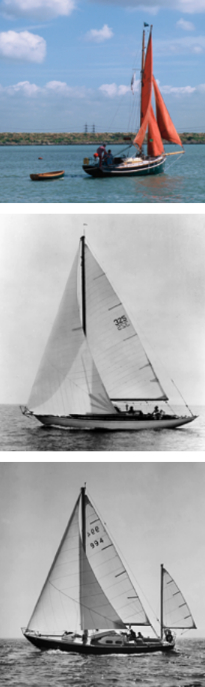
These fisherman schooners, as they were known, were, in the context of their time, nearly perfect dual-purpose vessels. They had enough space below for comfortable accommodations, were heavy enough to feel safe and solid in a seaway, yet were just fast enough to win races. They were the result, interestingly, of a very active cross-pollination between yacht and workboat designs. That’s because they were based on Grand Banks fishing schooners, which in turn had been refined by yacht designers. One of those designers was B. B. Crowninshield (a descendant of proto-cruiser George Crowninshield), who had been asked to improve upon older 19th-century fishing boat designs that had proved unsafe in open water.
Fisherman schooners, particularly Alden’s Malabar series, dominated the first decade of CCA Bermuda racing but were steadily supplanted by more modern designs that refined the schooners’ essentially conservative full-keeled underbodies by narrowing beam, stretching overhangs, and placing all ballast low in the keel. Another very important change, of course, was the adoption of the more aerodynamically efficient Marconi rig. By the mid-1930s these new designs came to dominate amateur ocean racing, but they were controlled in their development by the CCA’s new rating rule.
The basic hull form of CCA-rule boats, as descended directly from those of the fisherman schooners before them, is still considered by many to be among the most aesthetically pleasing ever conceived. More importantly for contemporary cruising sailors, the CCA rule still controlled the evolution of yacht design a quarter-century after its introduction, when the advent of fiberglass boat production in the late 1950s and early ’60s made the sport of sailing even more accessible to people of modest means. The result was a flood of sturdy, attractive, full-keeled fiberglass sailboats produced by firms like Pearson, Bristol, Hinckley, Allied Boat, Seafarer, and C. E. Ryder, many of which are among the most affordable and most seaworthy older boats still available on the brokerage market today.
Charlie Doane is completing a reference book about cruising sailboats, to be published by International Marine. Over the years he has owned and maintained a 1964 Pearson Alberg 35, a 1977 Golden Hind 31, and a 1985 39-foot hard-chined aluminum cutter designed by Yves-Marie Tanton. He lives with his family in Portsmouth, New Hampshire.
Thank you to Sailrite Enterprises, Inc., for providing free access to back issues of Good Old Boat through intellectual property rights. Sailrite.com