A veteran cruiser’s 12 steps to a well-fed crew
Issue 106 : Jan/Feb 2016
Provisioning your boat can be as easy as taking a short walk to the grocery store to stock up for a couple of days on the lake or as complicated as procuring everything you anticipate needing for the next three to six months. And it’s not just about food. Other important aspects to consider are transportation (or lack thereof), the size of the fridge/freezer (or lack thereof), stowage space (or lack thereof) and what’s available (or not) at the local grocery store. Provisioning can sometimes be quite a challenge. Like anything, the more often you do it and the more tools you have at hand, the easier it becomes.
Our first passages were short . . . a week was about the longest time we were at sea as we crossed the Gulf of Mexico from Texas to Florida. We’d gone camping and backpacking in the past, so a week’s advance planning wasn’t difficult. I made a list and we were fine . . . except that we ran out of snacks. Then, as we hopped along the Florida coast and up the U.S. East Coast, we never had to travel very far before another grocery store was within reach. We found, however, that we really enjoyed staying in less crowded, more remote anchorages for longer periods. As our requirements for having more food aboard grew, so did the need for planning. We started provisioning for two to four weeks. It wasn’t that hard once we had the basics aboard, but we still ran out of things from time to time.
As the sailing passages got longer and supermarkets farther apart, I became smarter about planning what and how much to purchase. I have compiled my experiences into a dozen tips to help organize the entire provisioning process.
Create a spreadsheet
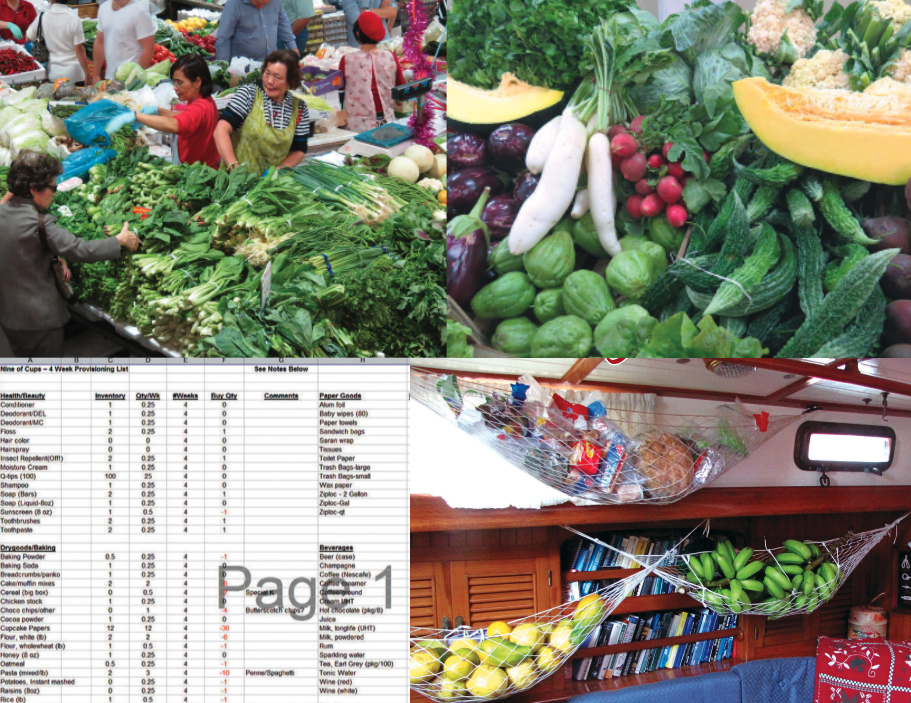
I use an Excel spreadsheet for making our provisioning list if I need to provision for more than a couple of days. The first time I did this it was cumbersome, because every little thing needed to go on the list, from salt and onions to condiments and Band-Aids. The positive side of using a spreadsheet is that, once created, it’s always there and easy to modify. (See below for a snapshot of the spreadsheet and “More Online,” page 42, for a link to the entire spreadsheet.)
I created a column for entering our current inventory on hand, a column for what I estimated we would need per week, and a column for the number of weeks for which we were provisioning. The “buy” quantity is automatically calculated, for example: C – (D x E) = F. I formatted column F so that minus quantities — those we need to buy — print in red, making them easy to see. It’s not rocket science. Once it’s completed, I print out the spreadsheet and use it as my master shopping list.
Now that we have iPads aboard, I started looking at possible apps for provisioning, but I’ve yet to find one that fits the bill. Instead, we have imported our spreadsheet into Apple’s Numbers. Now, if I can’t print, I can take my iPad shopping with me. Usually though, that printed spreadsheet list is my shopping bible.
I keep spreadsheets on file as a reference for future trips and adjust them at the end of each trip to reflect what I had too much of, what I might have liked more of, and what I ran out of (never TP, I hope). I typically have a 7-day, 30-day, and 60-day provisioning list with “need” quantities all filled in. I do an inventory, fill in the on-hand quantities and voilà! A new shopping list is ready.
Inventory first
As close to provisioning day as possible, I take an accurate inventory of what’s on board and check for out-of-date and obvious no-use items. If out-of-date items look OK, I move them from the storage bins in the bilge to the food lockers near the galley, so they’ll be used first. While taking inventory, it’s easy to straighten up and place similar items together so they’re easier to find at sea. I discard dried-up drink mixes, caked spices, and bulging cans. No-use items, like the canned curried veggies I thought we’d love, just take up space. I give or throw them away.
Plan in advance
I do basic meal planning to get an idea of how much of each item on my list I’ll need. If I’m provisioning for 30 days, that’s 30 breakfasts, 2 30 lunches, 30 dinners, and 30+ snacks. For instance, we eat lots of pasta,
so I assume we’ll have a pasta meal of some sort at least twice a week for about four weeks. That’s eight pasta meals. We get two meals from a typical 1-pound package of pasta, so I’ll need four packages to cover eight meals. What else goes with the pasta? Tomato sauce, canned tomatoes, spices, grated Parmesan, meat, mushrooms, canned or fresh veggies? It sounds tedious, but after a while we typically repeat some menus every 7 to 10 days, so the ingredients list becomes very predictable.
Buy what’s available
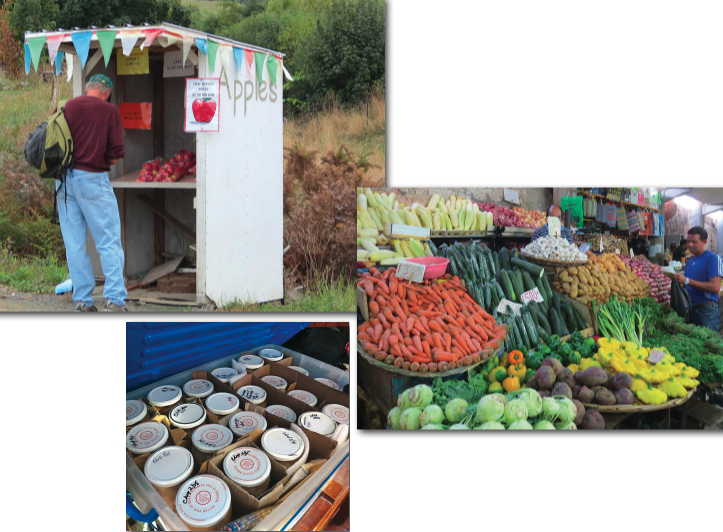
I modify my “needs” list depending on where we are and where we’ll be shopping. Many items readily available in the U.S. cannot be had in Mexico, the Caribbean, or South America, so the list changes to reflect the specific veggies, fruits, canned items, and so forth I can find. I always do a reconnaissance of the local supermarket(s), butchers, and fresh markets to see what’s available, what’s not, best deals, and best quality. Then I make my list accordingly. I call this the hunting phase. Gathering comes next.
Sometimes, I wind up searching for new recipes or asking locals for suggestions so I can use what’s locally available. What, exactly, do you do with breadfruit or chayote
Canning Food
Since we do not use a freezer on board, I do a lot of pressure canning before longer passages. When
I make the meat I know exactly what we’re eating . . . no extra salt or additives. It’s precooked, making meal prep while at sea (or when I’m lazy) very easy. A final advantage is that pressure-canned foods last for more than a year. Some cruisers we know pressure can entire meals, but I prefer the flexibility of just having the basic precooked ingredients at hand.
Beyond meats, I also can fruits and veggies that are in abundance. In southern Chile, blackberries grow wild everywhere. I picked and canned them and we enjoyed blackberry crumble throughout our South Pacific passage to New Zealand. I did the same with apples when they were in season.
Several other preserving methods, such as drying or pickling, are worth considering, but canning has worked and continues to work best for me.
Long-life items
In addition to canned and dry goods, several long-life items are available. We like milk, not milk powder, in our morning coffee, so we stock UHT milk. Unopened, it lasts for months and we find no discernible difference in taste. UHT cream and long-life juices are also available. Some soft tortilla-type products have a long shelf life (more than 3 months) and are great for wraps once the bread runs out. Tinned butter is available, as are yogurt mixes. Be sure to check the use-by date before purchasing these items.
Last-minute shopping
I prefer to buy “freshies” the morning we leave, if possible, and try to buy fruits, veggies, and eggs that have never been refrigerated. I buy the freshest, healthiest-looking produce I can find. We store lots of fresh produce in hammocks or hanging baskets.
Other than in the U.S., eggs are rarely refrigerated. They’re always available just sitting at room temperature on a store shelf. I store eggs that have never been refrigerated in a crate and turn them every other day to keep the yolks from sticking to the shell. They can last for months with no pre-treatment at all as long as they are turned frequently. Save your egg cartons, by the way; they come in handy in many fresh markets where eggs are sold individually.
Some folks we know grow their own herbs and bean sprouts on board. We do not, but it seems viable if there’s a way of securing them when at sea. My favorite long-storage veggies that don’t require refrigeration are winter squashes (such as butternut), cabbage, potatoes, and onions. Apples last a long time and oranges are good, too, if you can keep them cool.
Over-provision
Arrival delays due to weather and wind are the norm, rather than the exception, on longer passages. If we estimate 14 days between shopping trips, I provision for 21 or even 30 days. Extra is OK in my book, unless it’s freshies that will spoil if they are not used.
Running out of provisions at sea could be catastrophic, but it’s also a bummer to be short on food when we’re in an idyllic anchorage and just don’t want to go back to civilization. I tend to over-provision on items that will keep and that we can use in port or on our next passage. I also over-provision on snack items when we’re planning overnight trips. Night watches often require intense noshing.
Medical supplies
From antibiotics to Band-Aids and daily vitamins, I’ve created a separate list of off-the-shelf as well as prescription drugs and I track our inventory of these items with care. Running short of cooking spray is inconvenient; being without a medication can be a serious issue.
Consumable items
I went through the boat one day and made a list of every non-food and non-boat part that we use regularly. Toilet paper topped the list. Then came dish detergent and laundry detergent, bug spray, sunscreen, paper towels, AA batteries, printer paper . . . the list was quite long and varied. I added these items to the spreadsheet with my guesstimates of what was necessary to keep in stock.
Banish pests
Keeping roaches and other undesirable critters off the boat is difficult enough without giving them a free ride aboard with our provisions. If we’re buying from a local fresh market or any place that seems a bit dodgy, we dip all freshies in water before bringing them aboard. In a pristine anchorage, we usually dip them in salt water from the dinghy. Otherwise, we tote a bucket to the wharf and immerse them in water there.
We leave all dry and canned goods, especially anything packed in bags or boxes, either in the dinghy or on the dock until we’ve carefully inspected each item. We remove plastic and cardboard overwraps, which are great places for bugs to hide, and only then do the provisions move aboard. We find it beneficial to get rid of all extra packaging before we leave anyway, since it reduces the amount of trash we have to carry on board.
Label and stow
Beyond planning, buying, hauling, and checking for stowaway critters, I always keep in mind where and how I’m going to stow what I bought.
We don’t have an elaborate system for stowing provisions. We’ve purchased plastic crates and hammocks and tiered hanging baskets. We use every available nook and cranny, but I try to use the same locations each time so I remember what’s where. I originally made a map of where everything was stowed, but that went out with the next high tide.
I mark the tops of all cans with the contents and the use-by date with an indelible marker before stowing, making it much easier to sort outdated cans and locate what I want in a hurry.
Some folks swear by vacuum packers. We found this process to be a hassle and expensive, so I now stock up on Zip-Loc bags and use them instead for packaging dry goods such as flour, rice, sugar, and pasta. Zip-Locs not only keep the contents fresh but can also be opened for easy access and resealed, and they can be washed and re-used for something else.
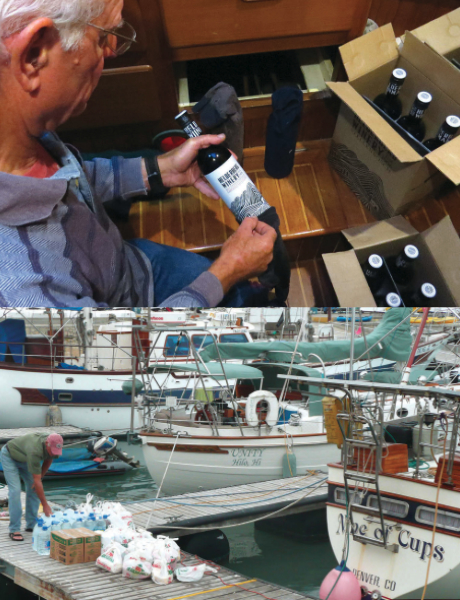
We found an area under some drawers in the aft cabin that was essentially wasted space. David lined the sides with felt fabric and this became our wine locker. We stow wine bottles in socks . . . white for white wine and colored socks for reds. We like to keep the wine locker topped up . . . it’s important to keep the boat in trim!
Tricks of pro provisioners
We try new or unfamiliar items at least once before buying them in large quantities. We’ve been pleasantly surprised and, conversely, thoroughly disappointed in the past by some products we’ve purchased . . . we do not recommend canned Brussels sprouts.
If I see something I haven’t seen in a long time and I’d like to have it, I buy it immediately. It might not be there the next time or I might not return to the same store.
Provisioning can be exhausting! When going away for a weekend it might be a one-stop affair on the way to the boat, but provisioning for a month or more takes time. If I can avoid doing my provisioning all at once, I do. Ideally, I prefer to break it up into three shopping trips: one for basics and canned goods; one trip for freshies, dairy products, and eggs; and a final trip for all the other stuff I thought of, forgot to buy, or used up since we started the provisioning process. Much depends on the period for which I’m provisioning, what transportation is available, and how much room is left in the lockers.
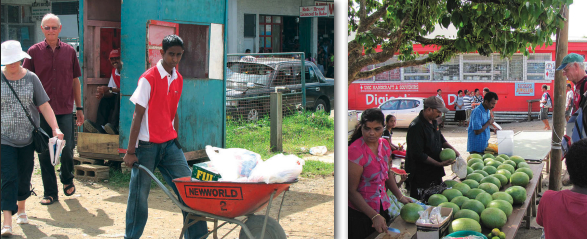
It’s rare for us to have a car at our disposal. We sometimes rent or borrow a car, bum a ride, or use public transportation, but more often than not, we walk. We suggest investing in good backpacks, sturdy plastic tote bags, and a trolley cart for hauling purchases back to the boat.
Marcie Connelly Lynn and her husband, David, have lived aboard their 1986 Liberty 458 cutter, Nine of Cups, since 2000 when they sold up and sailed off. They have since put more than 85,000 miles under her keel and visited 36 countries on five continents. They completed their first circumnavigation at Cape Town in 2015 and are currently in the Caribbean en route to the U.S.A. Read about their travels on their daily blog at www.justalittlefurther.com.
Thank you to Sailrite Enterprises, Inc., for providing free access to back issues of Good Old Boat through intellectual property rights. Sailrite.com