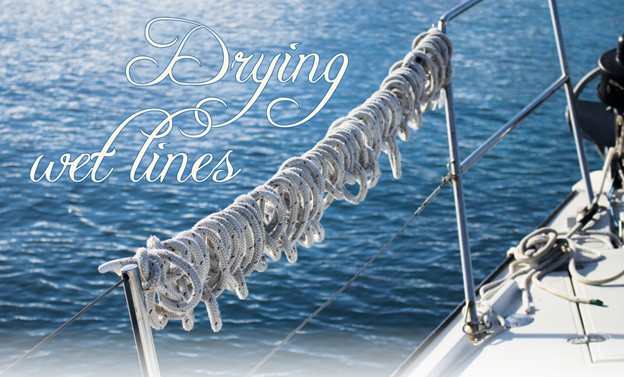
The kink-free lifeline daisy chain gives wet rope a good airing
Issue 120: May/June 2018
For sailors, wet rope is a fact of life. Coil and stow that wet rope after a sail, and green rope may become a fact of life.
Coiled rope is a perfect environment for mildew and mold growth. The surface-area-to-volume ratio of coiled rope is low and air cannot easily penetrate the coil to allow it to dry fast enough. When we bought our boat in the Pacific Northwest, all the rope on board was green! But an off color was not our biggest concern. Stowed wet, rope can rot from the inside out.
Spreading rope out on deck is better than stowing it wet in a dark locker, but doing so isn’t often practical and nor is it very efficient. Rope laid on deck can be a problem underfoot, it isn’t exposed to the breeze, and it will get wet again when dew forms at night.
The best solution we have come across is called the lifeline daisy chain. It takes the wet rope off the deck and out of the crew’s way and exposes all of the rope to sun and breeze to facilitate drying. It’s also fast and easy to tie, and even faster to untie. And because you’re simply pulling the line through loops, this daisy chain has no mechanism for introducing twist. In fact, rock climbers, whose lives depend on the ropes they use paying out cleanly, use this method often, because it induces less twist than coiling.
Tie the lifeline daisy chain with this method and your lines will be dry in no time:
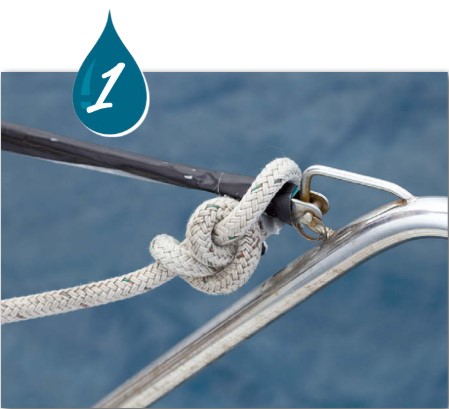
Tie one end of the rope with a loose knot around the lifeline, photo 1.
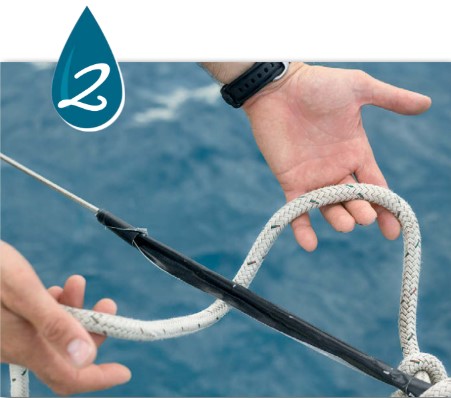
While holding the rope lead with your right hand, make a loop in the rope with your left hand, making sure the rope goes under the lifeline, photo 2.
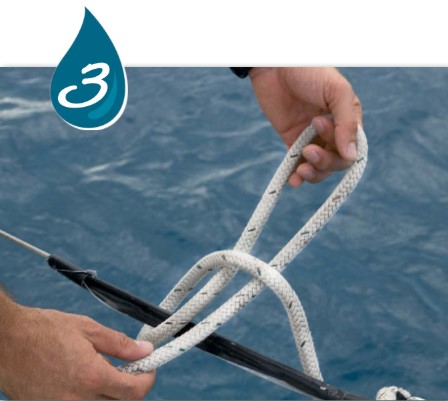
Pass the rope from your right hand over the lifeline and through the loop in your left hand. Take the rope from your right hand with your left hand and pull it through to form a loop. Keep the rope lead in your right hand, photo 3.
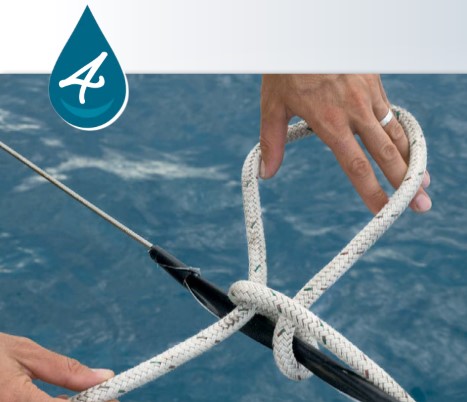
Open the loop with your left hand, photo 4.
Take the loop in your left hand under the lifeline. Position your left hand so you can easily grab the rope in your right hand, photo 5.
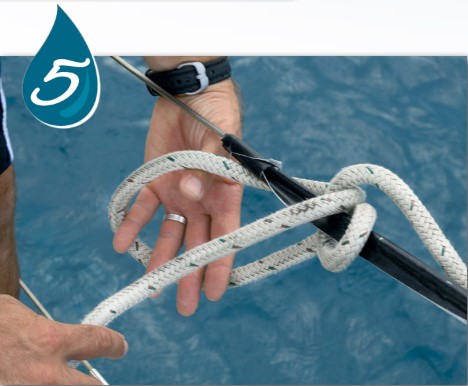
Pass the rope from your right hand to your left hand, making sure it goes through the loop and under the lifeline, photo 6.
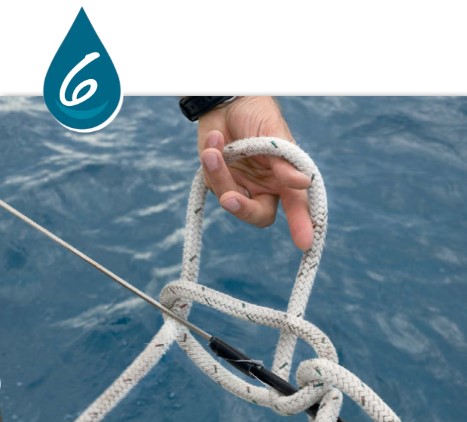
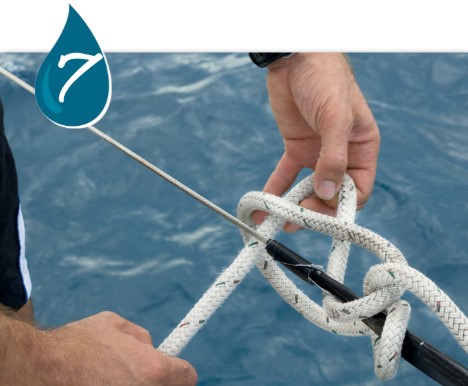
Pull the rope through to form a loop. You’re now back at step 3. Repeat the process until all the rope is daisy-chained around the lifeline. Make sure you pass the rope alternately over and under the lifeline, photo 7.
To finish, tie the end of the rope to the lifeline, photo 8.
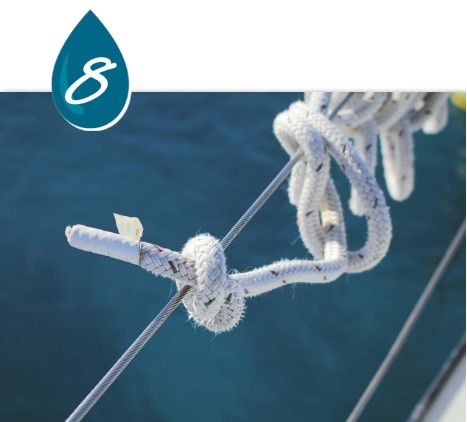
Spread the rope out along the length of the lifeline segment. When the rope is dry, simply undo the knot at the end (not the first knot you tied) and pull. The loops will pull through and you can coil as you go.
Robin Urquhart’s master’s degree in building engineering has been severely tested since he and his partner, now wife, Fiona McGlynn, headed south from Vancouver, and then west from Mexico, on MonArk, their good old 1979 Dufour 35. Check out their blog at www.youngandsalty.com, where they reach out to younger sailors who share a passion for good old boats.
Thank you to Sailrite Enterprises, Inc., for providing free access to back issues of Good Old Boat through intellectual property rights. Sailrite.com