Notes for creating harmony on board
Issue 123: Nov/Dec 2018
On a torturous August crossing of Lake Superior from Isle Royale to Grand Marais, the wind was either light and on the nose or roaring up randomly. Steep and confused swells shoved Hola, our Moody 376, from every direction. Drop after icy-cold drop of rain fell without a break. My husband, Jim, and I subsisted on our rolling-seas diet of rice crackers, peanut butter, and ginger ale. Miserable? Yes. Ready to quit sailing and take up gardening? No. In fact, this sail stands out as one of our best memories.
We had only ourselves to blame for making the crossing that day. Together we’d made the decision to leave and we were equally prepared to manage what came our way. Despite independent bouts of regret, we were buoyed by the strength and confidence that comes from shared leadership and decision making.
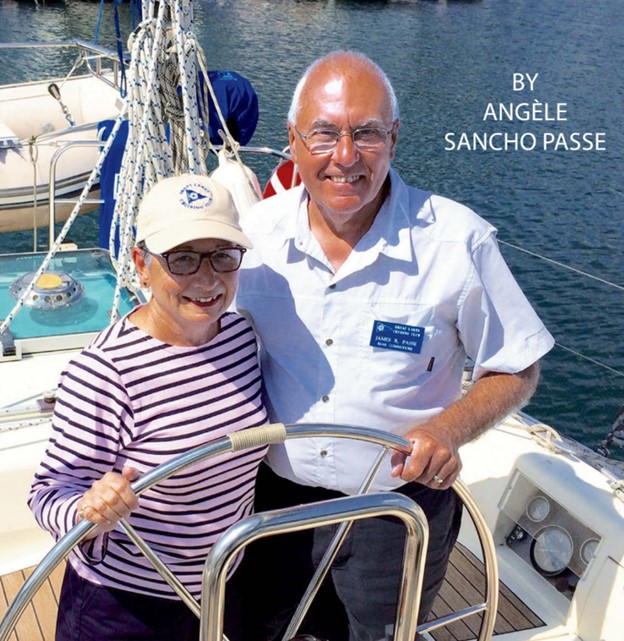
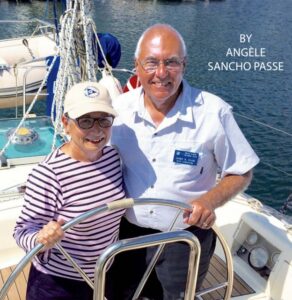
Jim and I have sailed together for more than 40 years. Aboard Hola, we have cruised all of the Great Lakes and voyaged to Newfoundland. Over time I’ve come to realize that the longevity of our sailing partnership is not haphazard. As the family’s social scientist, I’ve observed other boating couples and have thought a lot about why we’ve been successful. Following is a distillation of our five keys to happiness aboard.
A shared sense of adventure
Being adventurous is about having tolerance for uncertainty. For sailors, this is a useful trait, and Jim and I share it. When we cannot be sure of an outcome, we are open to the possibilities. We are flexible and resilient, able to recover from mishap and discomfort with humor and grace. It’s always a good sign to hear sailing couples laugh together when telling the tales of their misadventures.
Communication and decision making
Jim calls it “my view, her view, his view, our view.” Acknowledging our own perspectives, we next listen to each other. We compare the his and her ideas and discuss them, resolving discrepancies and compromising until we reach our perspective. For example, when we decided to cruise to Newfoundland, I shared my safety concerns. I wanted a more flexible sail plan (we had a main and roller-furling jib). I requested a permanently installed storm sail. Jim listened. We discussed options (type, cost, installation) and decided together to get a storm sail. The same process works well for on-the-spot decision making, such as whether or not to reef.
Safety rules
If one of us judges the weather too poor for sailing, we don’t go — even if the other is willing to go. This is not a matter of the less adventurous overriding the more adventurous. We both see it as a way to ascertain risk and preparedness. We are each best able to assess our own skill and stamina and tolerance. We know that we both must feel competent for each situation.
Boathandling
Jim and I each have our areas of expertise on board, but we cross-train as much as we can and our skill sets are complementary. I worry when I see a boat approaching the gas dock and I hear the skipper yelling, “Honey, Jump! JUMP!” It often means that boathandling is not a shared task and that “Honey” is likely having dark thoughts as she makes her dangerous leap. For long-term partnership in the adventure, both have to weigh the risks and make choices.
Crew comfort
Comfort is key to remaining competent and congenial partners on board. Accordingly, when provisioning, we give thought for all conditions, including fun times like afternoon tea. We organize watches to ensure we both get enough rest, we plan and navigate to minimize seasickness, and we give each other adequate personal space by balancing time on our small vessel with time on land.
The sail to Grand Marais was grim. But it was a shared grim. And that’s a whole lot better than a solitary blame-filled grim. It was us against the sea, each a prepared and competent sailor. It was a shared adventure. And it left us looking forward to more.
Angèle Sancho Passe, an education consultant and writer, has been cruising with her husband, Jim, for more than 40 years. Recipients of the Admiral Bayfield Award for extensively cruising all the Great Lakes, they teach the online webinar “Sharing the Helm” for the Great Lakes Cruising Club School. Hola, their good old boat, a Moody 376 they have owned since 1987, is berthed at Port Superior, across from the Apostle Islands on the south shore of Lake Superior. With some occasional moments of doubt, they are committed to the adventure.
Thank you to Sailrite Enterprises, Inc., for providing free access to back issues of Good Old Boat through intellectual property rights. Sailrite.com