Issue 130: Jan/Feb 2020
Nav in Hand
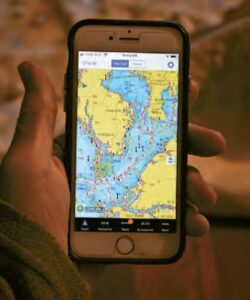
During a cruise of southwest Florida, I used the iNavX charting and navigation app on my iPhone 8 (it can be used on other IOS and Android devices as well). The app costs $14.99, and it enables the user to load data from several chart providers. I chose Navionics charts. Though I didn’t employ or discover many iNavX features on the trip, I used the app for basic navigation, creating waypoints and navigating to them, watching our position relative to charted depths, comparing speed over ground to speed through the water, and monitoring our estimated time of arrival.
The app can display raster and vector charts, and it used my device’s built-in GPS to show our position. It can connect via NMEA 2000 with other GPS devices on board, as well as depth, wind, engine, and battery instruments. It also can display tide and weather information when the AyeTides and Theyr Weather apps are installed on the same device. I understand it can also interface with the AISLive app and then overlay real-time ship movements.
Having all this capability in the palm of my hand is pretty slick, and the beauty of using my phone as a chart plotter is that I can keep it with me in the cockpit without risking damage.
For more info: inavx.com. —Dan Spurr, Good Old Boat research editor
Little Big Light
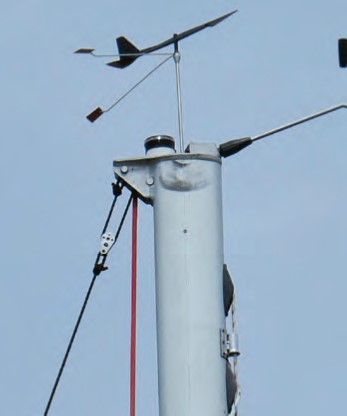
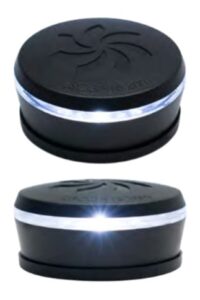
The first time I used the TecNiq M10 Wake Tower All-Round Navigation Light, it seemed too small. But when I plugged it into a test battery, penetrating, even light streamed out from the narrow lens (barely 3⁄16-inch high). I have five requirements for a masthead light, and the TecNiq light seems to tick them all: low electrical draw, long life, proper lighting output and angles, no VHF interference, and easy installation.
The low 100 mA draw is made possible by a sealed LED array and an efficient reflector. No light is wasted. The single amp-hour the light will consume overnight is a just a blip on a house battery bank charge; a single group 27 deep cycle battery has about 35 Ah of useable capacity. The 50,000-hour lamp life promises no more trips up the mast to change lamps.
It appeared as bright as any masthead light I can remember, clearly visible from a quarter mile on a sunny day. I also measured the vertical visibility angles; I could approach within 80 feet (about 30 degrees) of the boat without losing more than 50 percent of the light. This conforms to COLREGs section 10 and Inland 33 C.F.R. part 84.16 “Vertical Sectors.” In theory, you will only use the all-around light anchored or under power, so heel doesn’t matter, but it’s best to be safe.
I also checked this LED light for interference with VHF reception and transmission and found none. The light is USCG-certified and meets ABYC A-16.
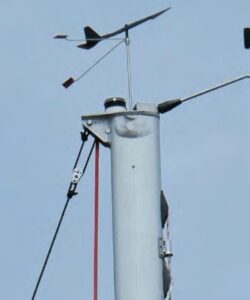
Installation was simple, but the housing is extremely compact (1.1 inches high by 2.5 inches in diameter) so there is no room inside for wire terminations. Additionally, it is so low profile that I set it atop a 1-inch spacer made from schedule 40 PVC pipe so that the light was not blocked by the wind-instrument sending unit mount. The PVC pipe diameter is a perfect match for the supplied gasket, and this gave me enough room for a pair of crimps and to coil up about 6 inches of extra wire. I didn’t weigh this light before installation and I can’t find that spec listed, but it’s the lightest masthead light I’ve handled, certainly well under 1 ounce. It secures with two or three #8 or #10 screws.
After only one season of use, it’s a bit early to proclaim it durable, but the circuit board is potted in urethane (always a good sign) and the waterproofing looks good. I like the reduced weight and windage, and it hasn’t flickered yet.
For more info: tecniqinc.com —Drew Frye, Good Old Boat contributing editor
Thank you to Sailrite Enterprises, Inc., for providing free access to back issues of Good Old Boat through intellectual property rights. Sailrite.com