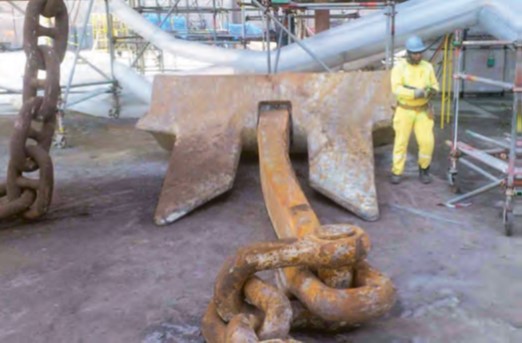
Understanding what’s happening on the bottom goes a long way to improving anchoring success.
Issue 130: Jan/Feb 2020
Any article about anchoring can smack of fear mongering. And the audience is ripe because impassioned debates about the best anchor type or brand have raged, and will continue to rage, at sundowners and raft-ups worldwide.
The fact is, among sailors who strive to seek out good holding, use enough scope to let the anchor do its job, and tuck in someplace as protected as possible if bad weather is in the offing, actual dragging is pretty rare. And yet, even sailors experienced at setting the hook can find themselves skidding across an anchorage.
But perhaps their never-ending quest for the perfect anchor is misplaced. Instead, perhaps the focus should be on understanding what’s happening and what can happen underwater, out of sight. Over some 10 years of research, I’ve systematically investigated the effects of scope, rode type and snubbers, bottom type, multiple anchors, wind, waves, and yawing. Diving on anchors before, during, and after tests, I’ve seen things I did not expect, and I’ve learned that it’s often not the hardware that causes the mischief. Whether the cause of dragging is a poor bottom, sloppy placement, or a rigging error, knowledge and attention to detail can go a long way towards reducing risk.
Bad Bottom
Bad bottoms come in a multitude of forms, weeds being a primary culprit. In the obvious case, the anchor either fails to penetrate the roots or gets clogged with stems, which prevent digging. Even when the anchor does penetrate, the set is seldom true. The anchor may be snagged on a single plant, ready to tear loose as soon as the force on it exceeds the roots’ strength.
A more insidious case, which can sabotage even large anchors, is the sod-cutter effect of weeds below the shank and rode. In this scenario, the fluke has successfully buried below the underwater turf, but the shank and rode are held above the root mat. This reduces the fluke angle, causing the anchor to plane just under the surface instead of digging deeper, resulting in a poor set.
Hardpan under sand is common wherever sedimentary rocks or coral abound, such as the Chesapeake Bay and many coastal areas. Bullet-hard marine clay hiding under sand lets an anchor appear to be set, but once the fluke reaches the impenetrable layer it stops. In this case, holding is compromised and dragging is likely when the wind picks up.
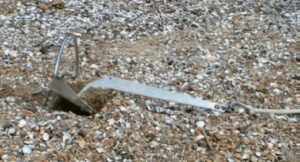
To set properly, anchors rely on resistance provided by the seabed against the surface of the anchor above the tip to create a downward force, burying the anchor ever deeper. But when the upper layer of a bottom is comprised of loose gravel and shells or light coral sand, that material may not provide the resistance needed to generate the downward force to push the tip into the otherwise suitable seabed layer below. The anchor will behave as though it has reached hardpan, but it hasn’t.
Chesapeake Bay sailors often complain that “the water just gets thicker”—meaning that the bottom is too soft. Solutions are an anchor with a lot of surface area (Fortress is popular), seeking good protection, using multiple anchors, or moving. Allowing the anchor to settle for 30 minutes before power setting helps, as does setting a second time, hours later, after the mud has settled around the anchor. Often wind and waves do this for you—unless they first loosen the anchor.
Trash, sadly, is a factor that can be found on any bottom but is a special hazard in soft mud, where it gets buried and can catch on anchors as they are setting. Sailors complain about soda cans on the tip of the fluke, but often it’s more subtle, with sticks and shells either deflecting the fluke from digging or clogging the shank and roll bar areas.
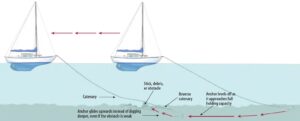
Trash, tree limbs, palm fronds, and branches can also lie on top of mud, making it hard for the fluke to reach firm material deep underground. In this case, even when an anchor is deployed properly, it will move 10 to 25 feet during setting. If the rode should drag across a stick, preventing it from diving further with the anchor, it will guide the anchor back towards the surface, and holding capacity decreases rapidly. This is not obvious when the anchor is initially set, but only as forces increase and dragging begins. The best prevention is to minimize the setting distance by allowing the anchor to settle in for 30 minutes before power setting.

Sometimes, a familiar anchorage known for a good sand bottom in which setting is easy can be covered with palm fronds and trash after a storm. A number of boats were lost months after last year’s hurricanes, found on the rocks with anchors clogged with branches. Similarly, a heavy layer of autumn leaves can make some creeks a little weird for months.
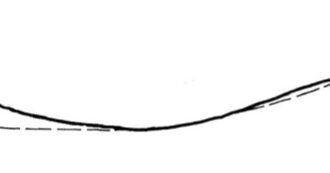
Finally, I’ve often found it tricky to anchor on a steep slope to fish (often prime fishing grounds). If the wind blows towards deeper water, the angle of the slope reduces scope. Dragging even a little bit into yet deeper water reduces it further. However, the most devious problem is that only firm materials can hold a steep slope, so you’re already anchoring in a bottom that’s hard to hook into securely.
Technique Tips
I’m not going to argue that everyone should always deploy their anchors with 10-to-1 scope. However, there are factors that should not be overlooked when calculating and setting a prudent scope. Did you allow for freeboard, tide, and wave height (including surge) in your calculation?
A popular anchoring method is to sort of slow the boat down, drop all of the chain upwind of and on top of the anchor, and then drift backwards while going below to mix a drink. Don’t be that person. A second popular method is to lower the anchor while backing up at 2 to 3 knots, plowing furrows all over the harbor. Don’t be that person either.
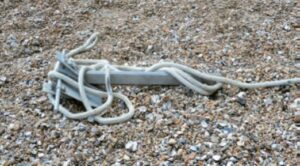
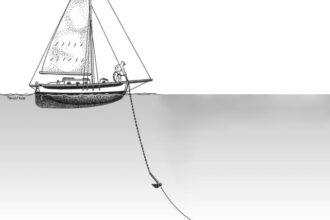
The most effective means of deploying an anchor is to stop the boat, lower the anchor until it just touches the bottom, and then slowly add additional rode as the boat drifts backwards, watching the rode’s angle toward the bottom slowly decrease. When the angle reaches 45 degrees, tug very lightly in the correct direction and then release additional rode as needed for scope. Do not back up at more than 1 to 2 knots, and power set only after you feel a firm initial grab.
Some sailors brag about how they simply rely on the boat’s weight to set the anchor. I’m pretty good at this, but I still drop anchor on weed patches, hardpan, or a bucket once in a while. If you don’t have an engine, pull up some slack and then release, letting the boat drift back on the anchor. Do this a few times.
Also, if you must reset after failed attempts, retrieve the anchor completely and make sure it’s not fouled before dropping it again. Mud and other debris on the anchor can upset anchor balance, interfering with setting; it also can provide useful clues about the bottom.
Allowing a boat to sail on its anchor can result in dragging. Keep an eye on the compass; the wind commonly oscillates 10 to 15 degrees, but any swing beyond that means the boat is yawing from side to side. Rode tension will increase by 50 to 200 percent as the wind gets a good look at the side of the boat. Bridles and riding sails can be used to pull the boat in line. Reducing windage forward will reduce the driving force, so get the dinghy off the foredeck and lower that reacher. All-chain rode or a hammerlock mooring will also still the bow.
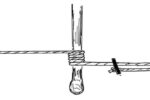
Steep chop, short scope, an all-chain rode, and shallow-ish water can combine to induce hobby horsing, thus delivering vicious upwards yanks on the anchor. Longer scope, deeper water, and snubbers all help. A large fender attached to the rode about 30 feet in front of the boat can help by decoupling the vertical pitching from the horizontal pull.
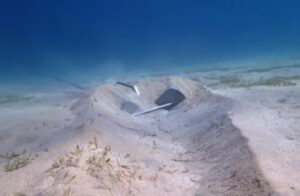
Waves and gusts can cause the boat to surge fore and aft. Combined with yawing and hobby horsing, a typical boat anchored in 6 to 10 feet of water and using an all-chain rode will exert 3 to 6 times more force on the rode than wind alone can generate. First, try to reduce yawing and hobby horsing. In deep water (over 25 feet), the catenary formed by an all-chain rode is quite effective at absorbing shock, but in shallower water or at short scope the chain can be pulled straight. A long nylon rope snubber (about one boat length) or a nylon rode can greatly reduce the load. Remember, though, that the increase in wind force generated by yawing cannot be attenuated by a snubber; you need to stop the yawing.
Hobby horsing can also reduce the holding capacity of the bottom. We’ve all stood in the shallows, letting our feet sink deeper and deeper in the sand. A little wiggling helps. When the time comes to pull them out, they will be well and truly stuck until we wiggle our toes again. That wiggling pumps in water and suspends the grains of sand, dramatically reducing the grip of the soil. The same happens to anchors. If we gently pull on them at long scope, with long rest periods in between, it can help to drive them deeper. But if we pulse the anchor more quickly than the soil can reconsolidate, the soil becomes fluid and the anchor slips right out. A boat dragging soon after a nasty chop moved into the harbor means hobby horsing and soil liquefaction were likely to blame.
In general, anchors are quite adept at dealing with a little shifting without operator intervention, but there are a few special cases. Wind direction changes are usually gradual, the chain slowly drags around, the anchor rotates to face the new force, and all is well. But a sharp reversal resulting from a tide change, a sudden thunderstorm, or
even the eye wall of a hurricane, can result in an anchor being pulled over backwards.
The anchor may be clogged with mud or debris, which either changes the balance of the anchor, keeping the tip off the bottom, or blocks it from digging. For pivoting fluke anchors, there is a greater than 50 percent chance that the fluke will be jammed with shells or trash, preventing the fluke from pivoting across to the other side, as required to reset after it has been flipped on its back by a severe change in the direction of pull. The fluke will stay on the original side, pointing upwards and never resetting. Roll bar anchors can load up with sticky mud on the heel. The Spade seems quite resistant. A chain rode helps by slowing the rotation process.
The only sure defense against a sudden dramatic change in the wind direction is to place two anchors. But be aware that to set two anchors, the rigging is more complicated, and each anchor must be sized to hold the full load. Twin-anchor systems can increase holding capacity in severe weather, reduce swing in very cramped anchoring situations, and stabilize anchors during 180-degree reversals. But a spread of anchors greatly increases the chance a dragging boat will snag one of the chains, pulling both down. A single conservatively sized anchor is the right answer 98 percent of the time.
Finally, if someone parks too close, moving may be the only practical recourse. Proper staggering leaves boats about one rode length apart at all times, assuming they all swing in unison. If another boat drags across your rode, you will both drag. Better to move than to depend on someone else’s anchoring skills (or lack thereof).
What’s Your Type?
Anchors are a remarkably personal choice, with six sailors giving you six distinct opinions on what’s clearly superior. And there’s always that joke about what’s the best anchor—the one that’s holding your boat in place. Following are some time-honored tips about some popular anchor types.
The strength of Fortress anchors is their ability to hold in soft mud by virtue of enormous fluke area at a low weight. The corollary is that the flukes tend to float on top of soft mud while the chain and streamlined shank sinks. A heavy chain makes this even worse. Although the mud palms are designed to force the flukes into the bottom, they can fail if the mud is soupy and the chain is oversized. Keep the shank light by using only grade 4 or better chain and do not oversize.
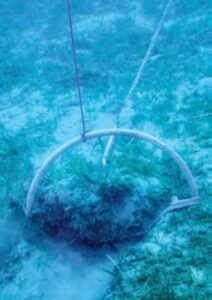
Roll-bar anchors depend on that arch to roll them butter side up. For the arch to work, it must have something to press against, and soft mud is not always sufficient. In fact, the chain and the shank can form a stable rudder and keel combination, guiding the anchor along upside down with the fluke gliding along the surface, also upside down. A large roll bar (Mantus) or more heavily weighted toe (Manson Supreme) helps. A smart deployment solution is to place the anchor while backing at 1 to 2 knots. This will cause the anchor to align with the flow of water (Mantus is particularly good at this) and land right side up, facing in the correct direction.
Some anchors just don’t like hard bottoms. Claw-style anchors reliably rotate into position in sand and mud but will lie on one side with only one tine digging in on harder, gravelly bottoms. Plow-style anchors will lie on one side, sliding right over things other anchors will hook on. Mantus and Spade anchors have sharper angles and dive right in where others hesitate.
Some anchors just don’t like soft bottoms. Bruce and claw-types have very limited fluke area. Plow-style anchors, well, just plow. Both are suitable if increased at least one size compared to more effective scoop-style anchors.
Pivoting fluke anchors often jam and refuse to reset in trashy or shell-laden bottoms. The compact design and curved fluke of the Manson Supreme makes it more prone to clogging with mud and junk, and the rear fluke kick-up of Rocna anchors holds sticky mud, altering the balance and retarding resetting. The Mantus rollbar is wide open and thus generally clog-free, and non-roll-bar types such as Spade and Excel avoid the problem entirely.
It is tempting to go too big. While a conservative selection is fine, pivoting fluke anchors are less stable if not well set. An oversize Fortress, for example, may be unstable in firm sand, so stay with the recommended size. With steel anchors it can be tempting to go small; weight on the bow increases pitching to windward. But a smaller anchor is also more sensitive to soil liquefaction if hobby horsing and yawing make it twitch. Instead, save weight by using high strength chain rather than skimping on the anchor. Overall, the best bet is to follow anchor manufacturer storm recommendations.
Every brand will fail to set if the shank or fluke is bent. If your anchor bent in a storm, accept that it has given its all, and buy a new one—and a better one.
Drew Frye draws on his training as a chemical engineer and pastimes of climbing and sailing to solve boat problems. He cruises Chesapeake Bay and the mid-Atlantic coast in his Corsair F-24 trimaran, Fast and Furry-ous, using its shoal draft to venture into less-explored waters. He is most recently author of Rigging Modern Anchors (2018, Seaworthy Publications).
Thank you to Sailrite Enterprises, Inc., for providing free access to back issues of Good Old Boat through intellectual property rights. Sailrite.com