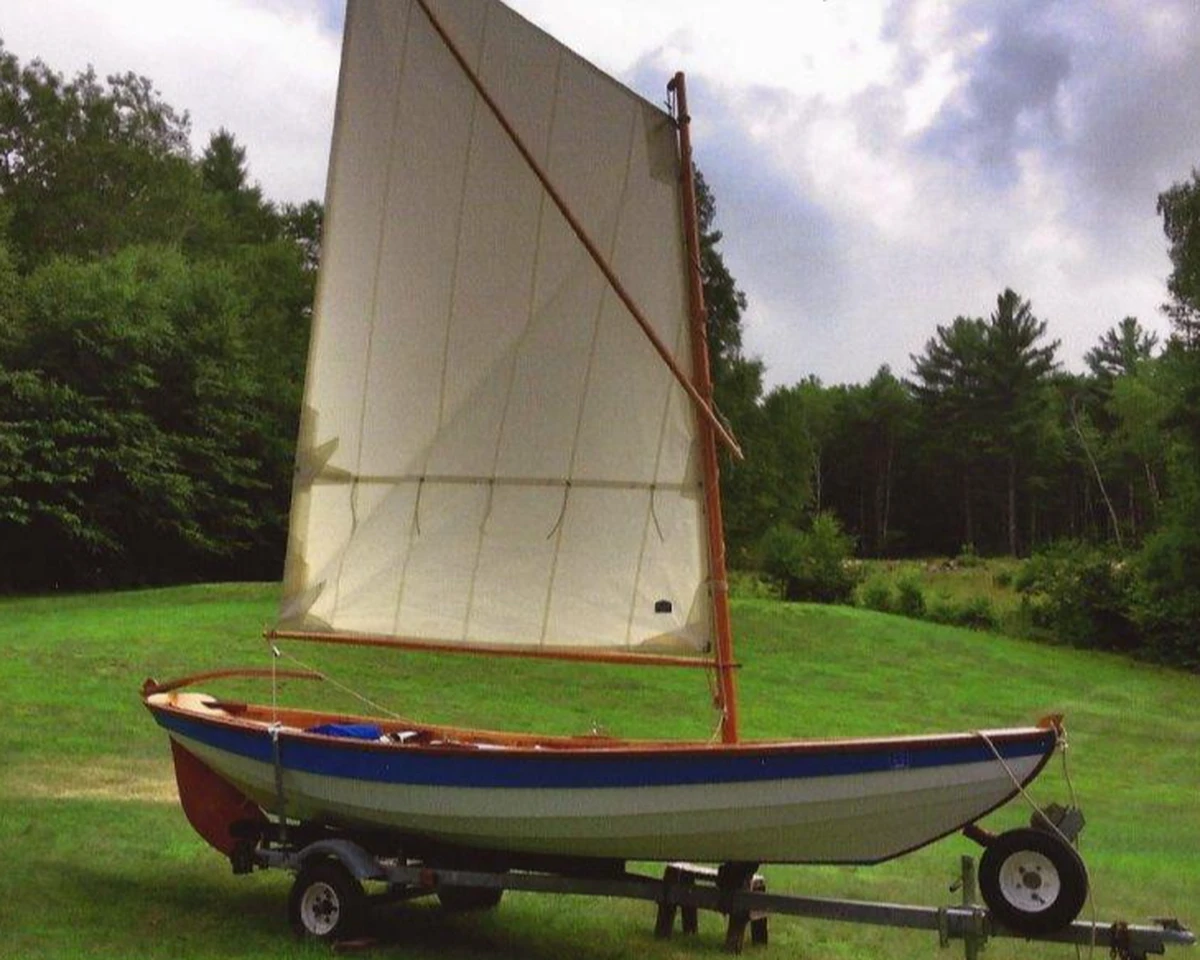
Description
The Swampscott Dory (Gardner) refers to the classic interpretations and plans documented by John Gardner, the renowned wooden boat historian, designer, and Mystic Seaport curator. In his seminal books like The Dory Book (1978) and Building Classic Small Craft, Gardner meticulously recorded, analyzed, and refined the traditional Swampscott dory—calling it the "aristocrat of the dory clan" for its elegant, refined lines compared to the heavier, slab-sided Banks dories. He preserved historical designs (e.g., Hammond 16-foot, Fred Dion's, 17-foot Nahant, 18-foot one-design sailing versions) while providing offsets, construction details, and modifications for modern amateur builders.
Gardner's work revived interest in the type during the mid-20th century, emphasizing its origins as a 19th-century North Shore Massachusetts beach-launched fishing boat (invented ~1840 by Theophilius Brackett for rowing/lobster pots and cargo through surf). The rounded hull offers superior buoyancy and surf handling over slab-sided cousins, with a flat bottom for beaching and easy heeling to roll in large fish. He documented recreational evolutions like clipper, alpha, and beachcomber sailing dories, popular for racing in the early 1900s.
These are lapstrake (clinker-built) wooden boats (often cedar on oak), though many builders adapt to glued-lap plywood for lighter weight and easier construction. They're excellent rowers (multiple stations for trim), spirited sailors (traditional rigs like leg-o'-mutton with small jib on unstayed mast), and versatile for daysailing, fishing, or light adventuring in choppy/coastal waters.