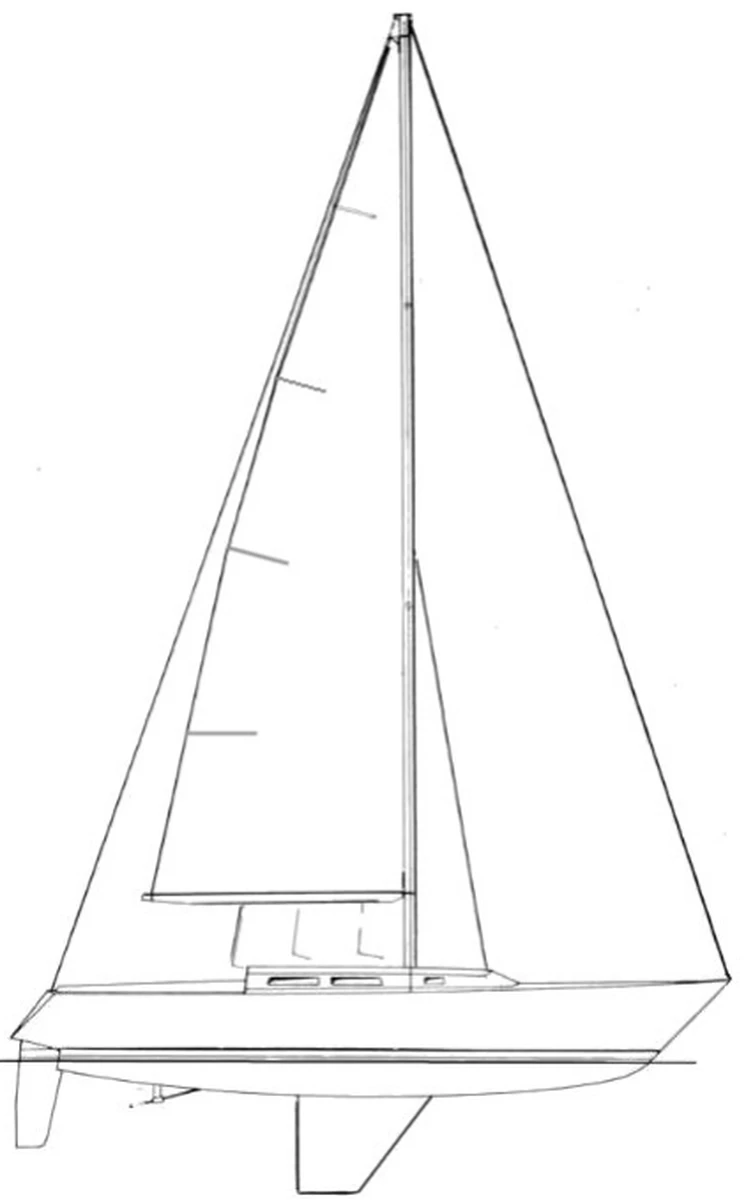
Description
Explain the dipping lug mainsail used in Ian Oughtred's Tammie Norrie
Overview of the Tammie Norrie
The Tammie Norrie is a compact, versatile 14-foot-6-inch (4.42 m) glued-lapstrake plywood dinghy designed by Scottish naval architect Iain Oughtred in 1993. Inspired by traditional Shetland fishing skiffs, it's optimized for solo or light-crew use in sheltered coastal waters, combining efficient rowing (with 7–8 ft oars for one or two rowers) and sailing capabilities. Weighing 140–160 lbs (64–73 kg), it features a shallow-draft wineglass-section hull, built-in flotation, a daggerboard for upwind performance, and an unstayed mast for simplicity and portability. It can even sleep one under a boom tent for camp-cruising. Construction uses 4–6 mm marine plywood via stitch-and-glue lapstrake methods, making it accessible for amateur builders.
While plans offer rig options like a standing lug, balanced lug yawl, or gaff sloop, the standard or most traditional configuration for the Tammie Norrie is a single dipping lug mainsail—emphasizing its heritage as a working boat.
What Is a Lug Sail?
A lug sail is a simple, four-sided (quadrilateral) fore-and-aft sail with ancient roots in fishing and working vessels, particularly in Europe and Scotland. Unlike triangular sails (e.g., Bermudan), it uses a long horizontal spar called a yard attached along the sail's luff (leading edge) near the top. There's typically no boom (bottom spar), making it loose-footed for easier handling. Lug sails are prized for their low cost, durability, and power in light winds, but they vary by how the yard interacts with the mast during maneuvers.
The Dipping Lug Mainsail: General Explanation
The dipping lug (also called a "dipping lugsail") is the most traditional and powerful variant of the lug rig, historically favored on working boats like Scottish fifies, French tunny boats, and English beach boats for its efficiency and simplicity. Key characteristics:
Setup: The sail's tack (bottom forward corner) is secured to the deck or stem forward of the mast (not at the mast base). The yard extends significantly ahead of the mast—often 1/3 or more of its length—creating a "balanced" forward area that improves pointing ability and stability.
No boom: The sail hangs loose from the yard, allowing it to be sheeted from the clew (bottom aft corner) via a single sheet.
Power and efficiency: It generates exceptional drive for its area (up to 20–30% more than a standing lug of equal size) due to its full, curved shape and ability to present a large leading edge to the wind. It's cheap to make (just canvas and a yard) and excels in light airs or reaching, but it's less ideal for heavy weather without reefing.
Disadvantages: Requires skill to handle, especially in gusts, and the dipping maneuver (detailed below) can be tricky for beginners.
How the Dipping Maneuver Works
The "dipping" refers to the unique tacking process, enabled by the unstayed mast (no wires for support):
Pre-tack: With the wind on one side, the yard angles aft, and ~1/3 of the sail sits forward of the mast.
Tacking: Ease the sheet to depower the sail. Lower the yard fully (or nearly so) to bring it forward, passing the masthead around the front (leeward side) to the new windward side. This avoids fouling the mast.
Post-tack: Re-secure the tack forward if needed, then hoist the yard and trim the sheet. The whole process takes 10–20 seconds with practice.
This contrasts with:
Standing lug: Tack at the mast; yard stays put but loses some power.
Balanced lug: Partial forward yard but no full dip—easier for modern recreational use.
The dip makes it "alive" and responsive but demands timing to avoid flogging.
The Dipping Lug in the Tammie Norrie
In Oughtred's design, the dipping lug mainsail measures 68 ft² (6.3 m²), providing ample power for the boat's 14.5 ft length without overwhelming a solo sailor. It's rigged on a lightweight, unstayed spruce mast (~18–20 ft tall) stepped amidships, emphasizing the boat's minimalist, traditional ethos. The yard is typically 10–12 ft long, made from varnished ash or spruce, with the sail cut full in the head (top) for better wind capture.
Performance: It shines in the Tammie Norrie's light-air optimized hull, achieving 4–5 knots on reaches and holding 45–50° to the wind when trimmed sharply. The forward tack and daggerboard combo allows close-hauled sailing rivaling larger rigs, while the loose foot keeps the cockpit clear for rowing or fishing.
Handling: Single-handed tacking is feasible but requires rehearsing the dip—Oughtred notes it's "rewarding" once mastered, with the boat's stability forgiving minor errors. For families or novices, switching to the balanced lug yawl option adds a small jib for easier balance.
Advantages in context: Aligns with the boat's Shetland roots, where dipping lugs powered sixareens (traditional skiffs) for hauling nets. It's low-maintenance (no standing rigging to chafe), portable (mast unsteps easily), and visually striking—evoking Scotland's misty isles. Builders often add reef points for versatility.
Overall, the dipping lug embodies the Tammie Norrie's spirit: unpretentious, capable, and deeply connected to maritime tradition. If building one, plans from sources like the WoodenBoat Store include full sailmaking details. For visuals, search builder blogs like "Sean's Tammie Norrie" for photos of the rig in action.
2.4s
Web page favicon
Web page favicon
Web page favicon
39 sources
List all the sliding gunter rigs in the Good Old Boat sail plan data base.
Sliding Gunter Rigs in the Good Old Boat Sail Plan Database
The Good Old Boat sail plan database (accessible at goodoldboat.com/saildata) catalogs various sailboat designs, including those with sliding gunter rigs—a traditional setup featuring a gaff (upper spar) that slides vertically on the mast for compact storage and easy reefing, often paired with a loose-footed mainsail. Based on a comprehensive review of the database entries mentioning "sliding gunter," the following boats incorporate this rig either as standard or optional. I've compiled them into a table for clarity, including key specs where available. Note that some designs list it as an alternative to other rigs (e.g., sprit or lateen).
Boat Model Designer Builder LOA (ft) Displacement (lb) Sail Area (ft²) Rig Notes
Cape Dory 10 Andrew C. Vavolotis Cape Cod Shipbuilding 10.5 150 63.5 (Gunter mainsail) Standard sliding gunter mainsail; compact tender with leg-o'-mutton option.
Cape Dory 14 (CB) Andrew C. Vavolotis Cape Cod Shipbuilding 14.5 200 85 Standard sliding gunter mainsail; centerboard version emphasizes traditional durability.
Ellen 12 (Gunter Rig) John Brooks Brooks Boats Designs 12.0 N/A N/A (sprit version: 61) Optional sliding gunter as alternative to standard sprit; compact, versatile dinghy.
Green Island 15 Mike Roberts Headland Boats 15.0 200–250 80–90 (64 mainsail + 34 jib) Standard sliding gunter sloop; responsive day-sailer for moderate breezes.
Caledonia Yawl (Gunter Rig) Iain Oughtred Amateur (glued-lapstrake plywood) 19.5 N/A 91–103 (mainsail) + 39 jib Gunter variant with sliding spar; replaces balanced lug/gaff yawl for simpler setup; includes asymmetrical spinnaker option.
Boston Whaler Squall H. G. Chapelle Boston Whaler 13.5 (est.) N/A N/A Optional sliding gunter alongside standard Marconi cat or lateen; portable, simple rig for production run (1970s).
These represent all explicit mentions of sliding gunter rigs in the database as of the current date. The database focuses on older, classic designs, so sail areas and displacements may vary by configuration. For full blueprints or dimensions, visit the individual boat pages on goodoldboat.com/saildata. If you're looking for plans, many are available via linked designers or archives.
2s
Web page favicon
Web page favicon
Web page favicon
43 sources
List all the leg o'mutton rigs in the Good Old Boat sail plan data base
Leg O'Mutton Rigs in the Good Old Boat Sail Plan Database
The Good Old Boat sail plan database (goodoldboat.com/saildata) includes various classic and small-boat designs, with leg o'mutton (or leg-of-mutton) rigs appearing primarily in lightweight dinghies, skiffs, and tenders. This sail type features a tall, triangular shape with a rounded luff, often loose-footed and paired with sprit booms for easy handling and reefing. It's valued for its simplicity, low center of effort, and performance in light winds. Below is a comprehensive list of all entries explicitly mentioning leg o'mutton rigs (as standard or variant), compiled from the database as of December 22, 2025. Many lack full specs like displacement, as they're amateur-built designs.
Boat Model Designer Builder LOA (ft) Displacement (lb) Sail Area (ft²) Rig Notes
Fisherman's Leg-O-Mutton Unknown N/A 12.0 N/A 68.85 (mainsail) + 14.09 (genoa) Traditional leg o'mutton mainsail; no further rig details provided.
Bolger Car Topper (Leg O' Mutton Rig) Philip C. Bolger N/A 12.0 N/A 59.9 Leg o'mutton mainsail (luff 14.25 ft, foot 9 ft, leech 13.62 ft); compact car-topper for portability.
John Dory 18'3" Sprit Rig (Leg O'Mutton) Iain Oughtred N/A 18.25 ~200–250 ~75 (mainsail; total ~96.85) Sprit-rigged leg o'mutton with unstayed mast stepped forward, diagonal sprit boom for peak tension, loose-footed for easy reefing; optimized for rowing/sailing skiff.
Sweet Pea (Leg O'Mutton Version) Unknown N/A 14.0 N/A 64.02 (mainsail) Variant with leg o'mutton mainsail; simple cat-rig setup.
Nemah (Leg-O-Mutton Sprit Rig) Unknown N/A 14.0 N/A 60.79 Leg o'mutton sprit rig; traditional Pacific Northwest-inspired design.
Windward 15 Karl A. Stambaugh N/A 15.0 N/A 85.08 Leg o'mutton mainsail (luff 16.33 ft, foot 10.67 ft, leech 16.6 ft; variant with foot 9.25 ft); responsive day-sailer.
Paulsboat Sailing Canoe Unknown N/A 14.0 N/A 10.59 Small leg o'mutton sail (luff 6.42 ft, foot 3.42 ft, leech 5.66 ft); canoe conversion for light sailing.
Goat Island Skiff Michael Storer N/A 15.5 N/A 15.15 (listed sail) Leg o'mutton variant (luff 8.5 ft, foot 3.5 ft, leech 8.41 ft); note: typical total sail area is ~107 ft² in lug config, this may refer to a partial or alternative sail.
Bolger Brick Philip C. Bolger N/A N/A N/A 59.9 Leg o'mutton secured to mast along luff; uses sprit with snotter for flattening; brick-shaped hull for stability.
Bolger Micro Philip C. Bolger N/A 15.33 N/A 120.15 (main) + 35.15 (smaller) Large leg o'mutton main (luff 19 ft, foot 12.67 ft, leech 20.98 ft); smaller variant available; efficient pocket cruiser.
These are all explicit matches; some designs (e.g., Philip Bolger's) recur across variants. For full plans or blueprints, check individual pages on goodoldboat.com/saildata. If a boat offers multiple rigs, only the leg o'mutton version is noted here.
3.7s
Web page favicon
Web page favicon
Web page favicon
40 sources
List all the 4-sided sprit rigs in the Good Old Boat sail plan data base
4-Sided Sprit Rigs in the Good Old Boat Sail Plan Database
The Good Old Boat sail plan database (goodoldboat.com/saildata) features a variety of traditional and modern small-boat rigs, but four-sided (quadrilateral) sprit rigs—characterized by a rectangular-ish sail with luff, leech, foot, and a diagonal from clew to peak, tensioned by a sprit boom—are relatively rare compared to triangular leg-o'mutton variants. These evoke classic working boats like Dutch pinkies or English beach boats, offering simplicity, a clear deck, and easy reefing without a boom. Based on a thorough review as of December 22, 2025, only one entry explicitly describes a four-sided spritsail. Others labeled "sprit" are predominantly triangular.
Boat Model Designer Builder LOA (ft) Displacement (lb) Sail Area (ft²) Rig Notes
20' Spritsail - Dorothy John Gardner N/A 20.0 N/A 108.33 (spritsail) Traditional spritsail rig with simple four-sided sail supported by diagonal sprit; clear deck for handling, inspired by historical sharpies; unstayed mast for portability.
For full plans, visit the linked page on goodoldboat.com/saildata. If no matches appear for variants, it's because descriptions default to leg-o'mutton unless specified otherwise. If you're seeking similar rigs outside this database, consider historical designs like the Benford Dory or Atkin boats.
5.3s
Web page favicon
Web page favicon
Web page favicon
78 sources
Gartside 20ft Sailing Pram
Gartside 20ft Sailing Pram (Design #215)
The 20ft Sailing Pram, Design #215, is a classic pram-bow (or scow) sailboat designed by renowned Canadian naval architect Paul Gartside. Introduced as part of his stock plan lineup, it draws inspiration from traditional working prams and beach boats, blending simplicity, stability, and versatility for family day-sailing, shallow-water exploration, or light camp-cruising. Its broad beam and flat-bottomed hull provide exceptional initial stability and sail-carrying power, making it forgiving for beginners while capable of handling moderate winds. At just over 20 feet, it's trailerable (under 2,700 lbs displacement) and compact enough for single-handed use, yet spacious for overnighting with a small cuddy or tent. The design emphasizes easy amateur construction, with a focus on plywood for affordability and speed.
Key Features
Hull Form: Pram bow for maximum interior volume and shallow draft; wineglass sections aft for efficient sailing; centerboard for upwind performance without excessive leeway.
Accommodations: Open cockpit with thwarts for 4–6 adults; optional small cuddy forward for gear storage or shelter; built-in flotation for safety.
Performance: Stable and responsive in light to moderate breezes; achieves 5–6 knots on reaches; excels in protected bays, rivers, or coastal waters.
Versatility: Primarily a sloop-rigged sailer, but adaptable for rowing with floorboards or outboard aux (up to 4–6 hp).
Specifications
Dimension/Feature Measurement (Imperial) Measurement (Metric)
Length Overall (LOA) 20 ft 4 in 6.2 m
Length Waterline (LWL) 16 ft 4 in 4.97 m
Beam 7 ft 11 in 2.40 m
Draft (Board Up) 1 ft 4 in 0.40 m
Draft (Board Down) 4 ft 10 in 1.47 m
Displacement 2,700 lbs 1,227 kg
Sail Area (Total) 199 ft² 18.5 m²
Building Time (Est.) 2,000 hours -
Skill Level Basic (amateur-friendly) -
Rig Details
The standard rig is a gaff sloop—a traditional setup with a four-sided gaff mainsail (peaked to a top spar for a fuller shape and better light-air performance) and a working jib on a short bowsprit. This provides balanced power distribution and easy reefing via slab or roller systems.
Mast: Unstayed spruce or fir, ~25–28 ft tall, stepped on a tabernacle for easy lowering.
Sail Breakdown: Mainsail ~140 ft² (gaff-rigged, loose-footed); jib ~59 ft²; optional light-air drifter or spinnaker for downwind fun.
Handling: Single halyard for mainsail; peak and throat halyards for gaff adjustment; all lines led aft for solo sailing. The gaff rig offers a low center of effort, reducing heeling in gusts, and the pram's stability complements it for relaxed coastal hops.
Construction and Plans
Built using marine plywood (6–9 mm) over sawn timber frames, with epoxy-glass sheathing for durability and low maintenance. Lofting is straightforward from full-size patterns; no complex bends required. Total plans include 5 sheets covering lines, offsets, construction details, sail plan, and arrangements—priced at $275 USD from Gartside Boats (gartsideboats.com). Builder reports highlight its forgiving build process, with many completing it in a garage over 1–2 years part-time.
For visuals and builder stories, check Gartside's site or forums like WoodenBoat.com. If you're planning a build, it's praised for its "sweet lines" and all-around usability, much like Gartside's smaller prams (e.g., Design #206).
2s
Web page favicon
Web page favicon
Web page favicon
12 sources
Fisherman's Leg-O-Mutton
Fisherman's Leg-O-Mutton
The Fisherman's Leg-O-Mutton is a compact, traditional 12-foot sailboat design featured in the Good Old Boat sail plan database, evoking the simple, hardy working boats used by coastal fishermen. With an unknown designer and no specified builder, it appears to be a historical or generic entry representing classic small-craft rigs rather than a production model. Optimized for day-sailing, fishing, or tender duties in sheltered waters, it emphasizes low-cost construction and easy handling. The leg-o'mutton mainsail— a tall, rounded triangular sail laced directly to the mast—provides a low center of effort for stability in gusts, often paired with a small genoa for balance. Total sail area is approximately 83 ft², suitable for solo or light-crew use in light to moderate winds. Due to limited documentation in the database, many hull specs are unavailable, but it's likely a lapstrake or plank-on-frame build with a centerboard for shallow draft.
Key Features
Hull Form: Traditional fishing boat lines, probably with a narrow beam for rowing efficiency and a transom stern; shallow draft for beaching.
Accommodations: Open cockpit for 2–3 adults; thwarts for seating and gear; potential for oarlocks as auxiliary propulsion.
Performance: Responsive in light airs due to the full sail shape; capable of 4–5 knots on reaches; forgiving for novices but requires reefing in stronger breezes.
Versatility: Primarily a sloop-rigged day boat; adaptable for rowing or small outboard; portable for trailering.
Specifications
Dimension/Feature Measurement (Imperial) Measurement (Metric)
Length Overall (LOA) 12 ft 0 in 3.66 m
Displacement N/A N/A
Beam N/A N/A
Draft N/A N/A
Sail Area (Total) ~83 ft² ~7.7 m²
Building Time (Est.) N/A N/A
Skill Level Beginner (simple rig) -
Rig Details
A classic leg-o'mutton sloop rig, with the mainsail laced along the luff to an unstayed mast for simplicity and easy striking. No boom is typical, keeping the foot loose for a clutter-free cockpit. The genoa adds pointing ability without complexity.
Mast: Likely ~12–14 ft spruce, stepped amidships.
Sail Breakdown:
Mainsail (Leg-O'Mutton): 68.85 ft²; Luff 11.75 ft, Foot 11.75 ft, Leech 16.01 ft; square-headed for maximum area and light-wind power.
Genoa: 14.09 ft²; Luff 7.5 ft, Foot 4.25 ft, Leech 6.67 ft, LP (perpendicular) 3.76 ft; self-tacking or sheeted from the cockpit.
Handling: Single halyard; brailing line for quick lowering; reef points for gusts. The rig's simplicity suits amateur sailors, with the leg-o'mutton shape offering better visibility forward than gaff rigs.
Construction and Plans
Details are sparse, suggesting a plank-on-edge or plywood construction with minimal hardware—ideal for home builders using offcuts. No full plans are linked in the database, but sail lofting can be derived from the provided dimensions. For similar designs, consider John Gardner's dories (e.g., 71 ft² leg-o'mutton setups) or Phil Bolger's 59 ft² variants, which share the rig's ethos. Check goodoldboat.com/saildata/boat/fishermans-legomutton/ for the raw data, or forums like WoodenBoat for builder adaptations. If this is the entry you're referencing, it's a nod to timeless, no-fuss sailing—perfect for rediscovering traditional craft.
2.5s
Web page favicon
Web page favicon
Web page favicon
30 sources
Saboteer
Saboteer (Glen-L Design)
The Saboteer is a lightweight, versatile 9-foot-7-inch sail/row pram designed by Glen-L Marine, ideal for beginners, families, or as a tender. Introduced as part of their Series 700 small-boat lineup, it's an evolution of the smaller Sabotina, offering improved performance in sailing, rowing, or towing while maintaining easy portability and construction. With a vee-bottom hard-chine hull, it provides good stability and tracking, making it suitable for calm lakes, bays, or as a yacht tender. At just 100 lbs, it's easily cartopped, trailered, or stowed in a van/pickup, and its simple cat rig delivers responsive handling in light winds without complexity.
Key Features
Hull Form: Pram bow for maximum space and shallow draft; vee bottom with hard chines for efficient planing and stability; daggerboard trunk for upwind capability.
Accommodations: Open cockpit for 2–3 adults/children; thwarts for seating; built-in flotation via air tanks.
Performance: Achieves 4–5 knots under sail; excels in light airs with the full-roached sail; stable for novices but nimble for skilled sailors.
Versatility: Dual-purpose as a pure rowboat (omit rig/daggerboard) or with a small outboard (up to 3 HP); optional kick-up rudder for beaching.
Specifications
Dimension/Feature Measurement (Imperial) Measurement (Metric)
Length Overall (LOA) 9 ft 7 in 2.92 m
Beam 4 ft 8 in 1.42 m
Hull Depth (Amidships) 19.5 in 0.50 m
Draft (Board Up) ~6 in ~0.15 m
Draft (Board Down) ~2 ft 6 in ~0.76 m
Displacement (Dry) 100 lbs 45 kg
Sail Area (Total) 59 ft² 5.5 m²
Passengers 2–3 -
Power (Max Outboard) 3 HP -
Building Time (Est.) 100–150 hours -
Skill Level Beginner (amateur-friendly) -
Rig Details
A straightforward cat rig with a single unstayed wood mast (free-standing for simplicity and low cost) and loose-footed mainsail, emphasizing ease of setup and stowage. The 2-part mast breaks down for storage inside the hull, and the sail slips onto a sleeve for quick rigging.
Mast: Spruce or fir, ~14 ft total (2-part); stepped in a tabernacle.
Sail Breakdown (Mainsail only):
Luff: 13 ft 0 in (with 4 in roach)
Foot: 8 ft 6 in
Leech: 14 ft 6 in (with 6 in roach)
Area: 59 ft²; full-cut for light-wind power, with reef points for gusts.
Other Elements: Daggerboard for lateral resistance; kick-up rudder option; single sheet led aft; brailing line for easy lowering.
Handling: Solo-friendly with minimal lines; the rig's low center of effort reduces heeling, and the pram's beam adds forgiveness.
Construction and Plans
Built from sheet plywood (1/4–3/8 in marine-grade) using stitch-and-glue or traditional methods over a simple jig with just three temporary forms (plus bow/stern transoms). No lofting required—full-size patterns for all parts, including rudder and daggerboard, are included. Plans allow using 8 ft panels if 10 ft sheets aren't available, keeping costs low (~$500–$800 materials). Epoxy-fiberglass sheathing optional for durability. Instructions cover rigging and finishing; hardware kits available from Glen-L for fittings like gudgeons, cleats, and blocks.
Plans (4 sheets) are $35 USD from glen-l.com, including sailmaking loft. Builders praise its quick build and "fun-to-sail" nature—check forums like WoodenBoat or Glen-L's blog for photos, such as a 2020 build log. If you're eyeing a tender or first sailboat, the Saboteer captures classic pram charm with modern ease.
2.5s
Web page favicon
Web page favicon
Web page favicon
17 sources
Glen-L Sabotina
Glen-L Sabotina
The Sabotina is a compact, beginner-friendly 7-foot-10-inch pram dinghy from Glen-L Marine, designed as an affordable entry into boatbuilding and sailing. Inspired by the classic Sabot racing dinghy (and sharing its rig and rudder), it's perfect for children, solo adults, or as a yacht tender. Its V-bottom chined hull offers stability, easy rowing, and responsive sailing in protected waters like ponds, lakes, or harbors. Weighing just 50–70 lbs, it's highly portable—cartop or stow in a car trunk—and versatile for towing, rowing, or powering with a small outboard. The design prioritizes simplicity, with options for traditional wood planking or modern stitch-and-glue plywood for quick builds.
Key Features
Hull Form: Pram bow with vee-bottom chines for minimal drag, good tracking, and buoyancy; avoids flat-bottom instability or excessive stern width.
Accommodations: Open cockpit with integral thwarts/seats (forming flotation tanks in stitch-and-glue version); room for 1–2 kids or one adult plus gear.
Performance: Sails briskly in light winds (up to 4 knots); rows efficiently with floorboards; tows smoothly behind larger boats.
Versatility: Build as pure rowboat, sailer, or motor tender (up to 3 HP outboard); shares form with proven Sabot/El Toro classes for reliable handling.
Specifications
Dimension/Feature Measurement (Imperial) Measurement (Metric)
Length Overall (LOA) 7 ft 10 in 2.39 m
Beam 3 ft 11 in 1.19 m
Hull Depth (Amidships) ~16 in ~0.41 m
Draft (Board Up) ~6 in ~0.15 m
Draft (Board Down) ~2 ft 2 in ~0.66 m
Displacement (Dry) 50–70 lbs 23–32 kg
Sail Area (Max) 38 ft² 3.5 m²
Passengers 1–2 (kids/adult) -
Power (Max Outboard) 3 HP -
Building Time (Est.) 60–100 hours -
Skill Level Beginner (classroom-friendly) -
Rig Details
A simple cat rig mimicking the Sabot class, with an unstayed wood mast for easy setup and stowage. It's loose-footed for a clear cockpit, ideal for young sailors.
Mast: 2" square wood (e.g., Douglas-fir or Sitka spruce), shaped to octagon; ~10–12 ft tall; floats if capsized.
Boom: 1" x 2" wood stick (fir or oak).
Sail Breakdown (Mainsail only): 38 ft²; sock-type Dacron sail slips over mast; full-cut for light-air power, with reef points optional.
Other Elements: Daggerboard for upwind work; pivoting rudder (Sabot-style); single sheet and halyard; brailing for quick dousing.
Handling: Kid-simple with minimal gear; low center of effort minimizes capsize risk; optional lug rig for even easier use.
Construction and Plans
Choose between standard version (plank-on-frame over 3 temporary forms and transoms; teaches traditional skills) or stitch-and-glue version (panel-based plywood with epoxy; fastest/lightest, with closed flotation). Both use marine plywood (1/4 in) and include full-size patterns—no lofting needed. Fiberglass sheathing optional for longevity; bronze hardware kits available.
Plans (SKU: G-046) are $59–$250 USD from glen-l.com, covering 4 sheets with instructions, patterns, and sail loft. Stitch-and-glue kit: $199; sail: $390; hardware: $118–$186. A builder's 60-hour/$400 project (stitch-and-glue) highlights its toughness as a tender. For inspiration, see glen-l.com or forums like WoodenBoat—many praise it as the "perfect first boat" for families.
3.1s
Web page favicon
Web page favicon
Web page favicon
6 sources
Peterson 35
Peterson 35 (Ganbare 35)
The Peterson 35, also known as the Ganbare 35, is a classic racer-cruiser sailboat designed by renowned naval architect Doug Peterson in 1973 as a production version of his One Ton Cup contender "Ganbare." Built in limited numbers (approximately 35 hulls) by Cooper Boatworks Ltd. and later Martin Yachts in Canada, it blends offshore racing pedigree with practical cruising amenities, making it a sought-after bluewater performer for its era. With a sleek fin-keel/spade-rudder configuration and generous sail area, it excels in light to moderate winds, achieving hull speeds of 7+ knots while offering a comfortable motion for coastal or transoceanic passages. At 35 feet, it's trailerable with effort but shines as a liveaboard or club racer, with a bright interior featuring a U-shaped galley, nav station, and V-berth forward for 4–6 crew. Though out of production, it's prized for its solid fiberglass construction and Doug Peterson's IOR-influenced lines—fast yet forgiving.
Key Features
Hull Form: Moderate-displacement fin keel with spade rudder for agile handling and upwind pointing (40–45° apparent); flared bow minimizes weather helm.
Accommodations: Enclosed head, quarter berth, settees converting to berths; teak joinery for warmth; ample storage for extended cruising.
Performance: High SA/D ratio (17.16) for spirited sailing; balanced helm in 15–20 knots; suitable for short-handed crews with tiller steering.
Versatility: Masthead sloop rig supports genoa/jib swaps; optional cutter setup; diesel auxiliary for reliability; tankage supports week-long trips.
Specifications
Dimension/Feature Measurement (Imperial) Measurement (Metric)
Length Overall (LOA) 35 ft 5 in 10.79 m
Length Waterline (LWL) 28 ft 6 in 8.69 m
Beam 11 ft 3 in 3.43 m
Draft (Max) 6 ft 3 in 1.91 m
Displacement 13,200 lbs 5,987 kg
Ballast 6,500 lbs (lead) 2,948 kg
Sail Area (Reported) 597 ft² 55.46 m²
Fuel Capacity 20 gal 76 L
Water Capacity 24 gal 91 L
First Built 1973 -
Number Built ~35 -
Building Time (Restoration Est.) N/A (production boat) -
Skill Level (Sailing) Intermediate (racer-cruiser) -
Rig Details
A fractional-rigged masthead sloop with aluminum spars (mast ~50 ft from DWL) for simplicity and strength, optimized for the IOR rule with a focus on genoa-driven power. The rig is deck-stepped on a reinforced cabin top, with swept-back spreaders and stainless standing rigging.
Rig Measurements: I (foretriangle height): 47 ft; J (foretriangle base): 15.3 ft; P (mainsail luff): 42 ft; E (mainsail foot): 11.3 ft.
Sail Breakdown:
Foretriangle: 360 ft² (typically 130% genoa or working jib).
Mainsail: 237 ft² (fully battened for roach; slab reefing standard).
Total (100% triangles): 597 ft².
Handling: In-mast or boom furling optional on later models; running backstays for downwind; self-tailing winches (4–6) for cockpit trimming. The design's low ballast/displacement (49%) ensures quick tacking and minimal weather helm, ideal for racing or cruising.
Construction and Availability
Hand-laid fiberglass hull with balsa-cored deck (plywood in early models); lead ballast bolted externally for tuning; through-bolted chainplates. Known for robust build quality, though common refits include rigging replacement and engine upgrades (original Farymann 12 HP diesel often swapped for Yanmar/Volvo). Performance ratios highlight its seaworthiness: Comfort Ratio 26.57 (coastal cruiser), Capsize Screening 1.91 (stable offshore), and Hull Speed 7.15 kn.
No official plans are available, as it's a production design, but offsets and lines can be sourced from archives like the Doug Peterson collection or yacht designers. For purchase or surveys, check listings on YachtWorld or SailboatListings (recent sales ~$30K–$60K USD). Builder logs on forums like Sailing Anarchy praise its "bulletproof" feel and racing heritage—perfect for reviving a '70s icon.
3s
Web page favicon
Web page favicon
Web page favicon
11 sources
Pearson 30 (Chita)
Peterson 30 (Chita)
The Peterson 30, commonly known as the Chita 30, is a lightweight racer-cruiser sailboat designed by legendary naval architect Doug Peterson in 1977. Built in limited numbers (fewer than 20 hulls) by Chita Inc. in Japan, it was conceived as a high-performance offshore contender inspired by Peterson's successful IOR (International Offshore Rule) designs, like the One Tonner Ganbare. With a sleek fin keel and spade rudder, it prioritizes speed and agility, making it a favorite for club racing and coastal cruising. At 30 feet, it's nimble yet seaworthy, with a low-displacement hull that planes easily in building winds. The interior is spartan but functional, featuring a V-berth forward, saloon with settees, galley, and head for 4–5 crew. Though rare today, surviving examples are valued for their racing heritage and responsive handling—often described as "a mini-Peterson 40" in forums.
Key Features
Hull Form: Low-aspect fin keel (optional shoal draft) with spade rudder for quick tacking and pointing (35–40° apparent); narrow entry reduces pitching in chop.
Accommodations: Compact layout with teak trim; quarter berths aft; suitable for weekends aboard but tight for extended liveaboard.
Performance: High SA/D (17.19) for acceleration in 10–20 knots; hull speed 6.79 kn; excels reaching and downwind; balanced helm minimizes fatigue.
Versatility: Masthead sloop rig supports symmetric spinnaker; diesel auxiliary; trailerable with modifications for distance racing.
Specifications
Dimension/Feature Measurement (Imperial) Measurement (Metric)
Length Overall (LOA) 30 ft 0 in 9.14 m
Length Waterline (LWL) 25 ft 8 in 7.82 m
Beam 9 ft 6 in 2.90 m
Draft (Max) 5 ft 7 in 1.71 m
Displacement 7,000 lbs 3,175 kg
Ballast 3,000 lbs (lead) 1,361 kg
Sail Area (Reported) 392 ft² 36.42 m²
Fuel Capacity 12 gal 45 L
Water Capacity 12 gal 45 L
First Built 1977 -
Number Built <20 -
Building Time (Restoration Est.) N/A (production boat) -
Skill Level (Sailing) Advanced (racer) -
Rig Details
A fractional-ish masthead sloop with aluminum spars (mast ~42 ft from DWL) and swept spreaders, tuned for IOR genoa power. Deck-stepped on a compression post, with stainless rigging replaceable via standard parts.
Rig Measurements: I: 38.3 ft; J: 12.2 ft; P: 34 ft; E: 9.3 ft.
Sail Breakdown:
Foretriangle: 234 ft² (130–150% genoa standard; working jib for cruising).
Mainsail: 158 ft² (slab reefing; full battens for shape).
Total (100% triangles): 392 ft².
Handling: 4–6 winches for sheets; runners for mast bend; the rig's power-to-weight favors short-handed racing, with easy reefing for passages.
Construction and Availability
Solid fiberglass hull (no core) with balsa-cored deck for stiffness; external lead ballast; known for Japanese build quality—stiff and dry. Common upgrades include modern rigging, electronics, and engine repowers (original ~15 HP Yanmar diesel). Performance metrics: Comfort Ratio 20 (bluewater capable), Capsize 1.99 (stable), emphasizing its offshore roots.
Plans are unavailable as a semi-custom design, but lines/offsets from Peterson archives via designers like German Frers. Listings on YachtWorld or Craigslist (e.g., 1976 models ~$7K–$15K USD); forums like Sailing Anarchy share owner stories of its "bulletproof" speed. If this isn't the Pearson 30 you meant (a similar-era Shaw design), clarify—Chita specifically denotes the Peterson variant.
2.4s
Web page favicon
Web page favicon
Web page favicon
36 sources
Kelly Peterson 44 ketch
Kelly-Peterson 44 Ketch
The Kelly-Peterson 44 is an iconic bluewater cruising ketch (with a cutter variant as standard) designed by Doug Peterson in 1975, conceived by yacht broker Jack Kelly to fill a niche for serious offshore voyaging. Built by Yu Ching Marine in Taiwan under Kelly-Peterson Yachts, approximately 52 hulls were produced from 1976 to 1980, earning a cult following for its robust construction, balanced performance, and thoughtful layout—often hailed as a "go-anywhere" boat for couples or small families. The ketch rig, less common than the cutter but available as an option, splits sail area between main and mizzen for easier handling in heavy weather and better balance under reduced canvas, while maintaining the design's generous sail plan for excellent light-air performance. At 44 feet, it's a heavy-displacement center-cockpit ketch with skeg-hung rudder, prioritizing seaworthiness over speed, yet capable of 7–8 knots on reaches. Owners praise its "quick and comfy" motion, dry ride, and spacious interior with teak joinery, U-galley, nav station, and multiple berths for 4–6.
Key Features
Hull Form: Moderate fin keel with skeg rudder for directional stability and protection; flared bow and wineglass sections aft reduce pounding in seas.
Accommodations: Center cockpit with deep coamings for security; walkthrough to aft cabin with double berth and head; V-berth forward, saloon settees, and quarter berth; ample tankage for extended passages.
Performance: SA/D ~16 for solid upwind work (35–40° tacking angles); form stability from beam and ballast; excels in trades but requires reefing early in gusts.
Versatility: Ketch rig aids short-handed sailing; diesel auxiliary; optional bowsprit for cutter headsails; proven circumnavigator with upgrades like solar and wind gen.
Specifications
Dimension/Feature Measurement (Imperial) Measurement (Metric)
Length Overall (LOA) 43 ft 10 in 13.36 m
Length on Deck (LOD) 43 ft 10 in 13.36 m
Length Waterline (LWL) 38 ft 8 in 11.79 m
Beam 12 ft 11 in 3.94 m
Draft (Max) 6 ft 4 in 1.93 m
Displacement 30,000 lbs 13,608 kg
Ballast 10,000 lbs (lead) 4,536 kg
Sail Area (Reported, Ketch) ~780 ft² ~72.5 m²
Fuel Capacity 117 gal 443 L
Water Capacity 132 gal 500 L
First Built 1976 -
Number Built ~52 -
Auxiliary Power Perkins 4-154, 54 HP -
Rig Details
The ketch configuration features two unstayed masts (main ~51 ft, mizzen shorter) with aluminum spars and stainless standing rigging, deck-stepped for easy maintenance. It emphasizes versatility with a split rig for reefing without losing drive, though the cutter version (single mast) is more common for genoa power.
Rig Measurements (Ketch): I (fore): 50.92 ft; J: 17.58 ft; P (main luff): 45.33 ft; E (main foot): 14.60 ft; P2 (mizzen luff): 34.58 ft; E2 (mizzen foot): 11.58 ft.
Sail Breakdown (Approximate, Ketch):
Mainsail: 341 ft² (luff 45.33 ft, foot 14.6 ft, leech 46.87 ft).
Mizzen: ~150–200 ft² (based on P2/E2; loose-footed for simplicity).
Genoa (135%): 594 ft²; Working Genoa (130%): 572 ft².
Staysail: 162 ft²; Storm Jib: 118 ft²; Storm Trysail: 101 ft²; Asymmetrical Spinnaker: 1,299 ft² (165% LP).
Handling: Boom-furling or slab reefing; running backstays; the ketch's divided power (main ~44%, mizzen ~20%, fore ~36%) shines in 25+ knots, reducing heeling and easing sail changes. High-aspect sails offer efficiency but may need roach adjustments for cruising.
Construction and Availability
Solid hand-laid fiberglass hull (no core) with plywood-cored deck for stiffness; external lead ballast; known for tank-like build quality, though teak decks often require recaulking. Common refits: Rigging (every 10–15 years), engine (Perkins to Yanmar), and electronics. Performance ratios: Comfort 35+ (heavy cruiser), Capsize <2 (seaworthy). As bluewater stalwarts, they're "quite good" for oceans but demand survey for osmosis or chainplate issues.
Plans unavailable (production design), but offsets via Peterson archives. Listings ~$80K–$150K USD on YachtWorld; check owner groups for ketch-specific mods.
2.1s
Web page favicon
Web page favicon
Web page favicon
19 sources
Kelly Peterson 46
Kelly-Peterson 46 Cutter
The Kelly-Peterson 46 is a robust, bluewater-capable cutter-rigged sailboat designed by Doug Peterson in 1980, expanding on the successful Kelly-Peterson 44 formula for serious offshore cruising. Conceived by yacht broker Jack Kelly (with interiors by Victor Huff), it was built in limited numbers by Queen Long Marine in Taiwan from 1980 to 1990, with approximately 30 hulls produced. At 46 feet, it offers a heavier displacement than its predecessor for enhanced stability and load-carrying, while retaining Peterson's signature balance of speed and seaworthiness—ideal for couples or small families on long passages. The center-cockpit layout provides a secure helm and generous interior volume, with a walkthrough to an aft cabin, U-shaped galley, nav station, V-berth forward, and multiple settees/berths for 6–7. Owners rave about its "tank-like" build, dry motion in beam seas, and versatility for circumnavigations, though it's less nimble than modern designs.
Key Features
Hull Form: Fin keel with skeg-hung rudder for protected steering and good tracking; moderate beam and wineglass sections aft minimize hobby-horsing.
Accommodations: Teak-finished saloon with dinette, enclosed head(s), and ample storage; optional pilothouse or sugar scoop transom on some; full tankage supports extended autonomy.
Performance: SA/D 17.07 for lively sailing in 10–25 knots; comfort ratio 38.51 suits ocean crossings; hull speed 8.56 kn, with easy reefing for heavy weather.
Versatility: Cutter rig excels short-handed; diesel inboard; bowsprit for staysail power; proven in trades winds and Southern Ocean legs.
Specifications
Dimension/Feature Measurement (Imperial) Measurement (Metric)
Length Overall (LOA) 46 ft 3 in 14.10 m
Length Waterline (LWL) 40 ft 10 in 12.44 m
Beam 13 ft 4 in 4.06 m
Draft (Max) 6 ft 8 in 2.03 m
Displacement 33,300 lbs 15,105 kg
Ballast 11,330 lbs (lead) 5,139 kg
Sail Area (Reported) 1,100 ft² 102.19 m²
Fuel Capacity 150 gal 568 L
Water Capacity 200 gal 757 L
First Built 1980 -
Number Built ~30 -
Auxiliary Power Pathfinder 85 HP diesel (upgrades common) -
Rig Details
A masthead cutter rig with aluminum spars (mast ~54 ft above deck) and stainless standing rigging, deck-stepped on a reinforced compression post for straightforward maintenance. The setup emphasizes balanced sailhandling with inner forestay for staysail deployment in foul weather.
Rig Measurements: I (foretriangle height): 54 ft; J (foretriangle base): 18.25 ft; P (mainsail luff): 48 ft; E (mainsail foot): 16 ft.
Sail Breakdown (Approximate):
Genoa (135%): ~600–650 ft²; Working Jib: ~400 ft²; Staysail: ~250 ft².
Mainsail: 384 ft² (slab or in-boom reefing; full battens for roach).
Total (100% triangles): 877 ft²; optional spinnaker ~1,500 ft².
Handling: Vang, boom preventer, and running backstays standard; the cutter's divided foretriangle reduces sheet loads, making it forgiving for solo watchstanding.
Construction and Availability
Hand-laid fiberglass hull with Airex foam core for lightness and insulation; balsa-cored deck; external lead ballast for tuning. Renowned for Taiwanese quality—stiff, osmosis-resistant, and overbuilt—though teak decks and chainplates warrant inspection. Common upgrades: Rig replacement (15–20 years), Yanmar/Volvo repowers (from original Pathfinder), and solar integration. Capsize screening 1.66 confirms offshore safety; Bal/Disp 34% aids righting.
Plans are scarce (semi-custom production), but lines available via Peterson archives. Current listings ~$100K–$200K USD on YachtWorld; join owner forums like CruisersForum for ketch conversions or refit tips. A step up from the KP44 in space and stability, it's a "forever boat" for passagemakers.
2s
Web page favicon
Web page favicon
Web page favicon
12 sources
Peterson 42
Peterson 42 (IOR Racer-Cruiser)
The Peterson 42 is a high-performance IOR (International Offshore Rule) racer-cruiser designed by legendary naval architect Doug Peterson in 1981, optimized for grand prix events like the SORC (Southern Ocean Racing Conference) and Admiral's Cup. Built in limited numbers as custom yachts (e.g., by Miller Marine in Seattle or specialist yards), it represents Peterson's evolution of lighter, faster designs post his One Ton successes, with sleek lines for planing in waves and agile handling. Variants include aluminum racers like Intuition (commissioned for Pat Malloy's 1981 Admiral's Cup campaign, where the U.S. team placed second overall) and fiberglass production models like the Baltic 42 DP (built by Baltic Yachts, ~30 hulls from 1981–1985). At 42 feet, it's a lightweight flyer for competitive crews (6–8), blending racing speed with basic cruising amenities—V-berth forward, saloon settees, and quarter berths—but spartan for offshore passages. Priced today at $50K–$100K USD, it's a collector's item for its era-defining IOR aesthetics and proven podium finishes.
Key Features
Hull Form: Low-aspect fin keel with spade rudder for quick maneuvers and upwind pointing (~35° apparent); narrow waterline entry reduces slamming; open transom for speed.
Accommodations: Racing-oriented interior with 6 ft headroom; functional galley, nav station, enclosed head; ample cockpit lockers but minimal storage for long voyages.
Performance: SA/D ~20+ for acceleration in 12–25 knots; D/L ~200 (light/planar); excels reaching (8–10 knots); balanced helm but weather-helms in overcanvas.
Versatility: Masthead sloop for genoa power; optional tall rig; diesel auxiliary; trailerable with mods but best for coastal/offshore racing.
Specifications
Dimension/Feature Measurement (Imperial) Measurement (Metric)
Length Overall (LOA) 42 ft 0 in 12.80 m
Length Waterline (LWL) 34 ft 6 in 10.52 m
Beam 13 ft 0 in 3.96 m
Draft (Max) 8 ft 0 in 2.44 m
Displacement 18,400 lbs 8,346 kg
Ballast 8,060 lbs (lead) 3,656 kg
Sail Area (Reported) 843 ft² 78.32 m²
Fuel Capacity 40 gal (est.) 151 L
Water Capacity 40 gal (est.) 151 L
First Built 1981 -
Number Built ~10–15 (custom); 30 (Baltic variant) -
Auxiliary Power Bukh/Pathfinder 40–50 HP diesel -
Rig Details
A fractional-leaning masthead sloop with aluminum spars (mast ~56 ft above deck) and stainless rigging, tuned for IOR genoa overlap and spinnaker runs. Deck-stepped for easy tuning, with inboard/outboard genoa tracks for sheeting angles.
Rig Measurements (Standard): I: 56.5 ft; J: 16.7 ft; P: 50.3 ft; E: 14.6 ft (tall rig: I 57.5 ft, P 51 ft).
Sail Breakdown (Approximate):
Genoa (130–150%): ~500–550 ft²; Working Jib: ~300 ft².
Mainsail: ~300–350 ft² (slab reefing; full battens optional).
Spinnaker: ~1,200 ft² (symmetric for downwind).
Handling: 6–8 winches; runners for mast bend; the rig's power suits light-air regattas but demands active crew for tacks.
Construction and Availability
Primarily hand-laid fiberglass (GRP) with Airex foam core for stiffness and lightness; some racers (e.g., Intuition) in aluminum for durability in abuse. External lead keel for adjustability; known for tank-like build but inspect chainplates and rudder bearings. Upgrades common: Modern sails, carbon spars, and Yanmar repowers. Performance ratios: Comfort ~25 (racer-cruiser), Capsize ~2.0 (seaworthy but tippy in extremes).
Plans rare (custom design), but offsets via Peterson archives. Check YachtWorld for listings; owner tales on forums like Sailing Anarchy highlight its Admiral's Cup legacy—Intuition DNF'd in 1984 Clipper Cup but shone in 1981 trials.
2.6s
Web page favicon
Web page favicon
Web page favicon
34 sources
Baltic 42
Baltic 42 DP
The Baltic 42 DP (DP for Doug Peterson) is a high-performance racer-cruiser sailboat designed by renowned naval architect Doug Peterson in 1981, marking his first serial production collaboration with Baltic Yachts in Finland. Built from 1981 to 1985 in limited numbers (approximately 30 hulls), it draws from Peterson's successful IOR (International Offshore Rule) racing designs, such as the 1983 Admiral's Cup contender Intuition, but detuned for greater ocean-going comfort while retaining sharp club-racing capabilities. The prototype, Big Shadow, was similar to Peterson's Design #77 (Louisiana Crude/Serendipity 43). With a lightweight fin keel and spade rudder, it excels in light to moderate winds (SA/D ratio of 19.43 for quick acceleration), achieving hull speeds of 7–8 knots on reaches, and offers a balanced, responsive helm for short-handed crews of 4–6. At 42 feet, it's a versatile coastal/offshore performer with a spacious interior—featuring an owner's suite aft, forward guest cabin, huge saloon, U-galley, and nav station—though the low, narrow coachroof can make it feel dark below. A keel/centerboard version exists for shallower drafts, and very few center-cockpit models were produced. Today, it's a collector's favorite for its Finnish build quality and racing heritage, with used prices ranging $100K–$150K USD.
Key Features
Hull Form: Low-aspect fin keel with spade rudder for agile upwind pointing (35–40° apparent) and planing potential; narrow entry and flared bow minimize slamming in chop; optional deep keel (7.92 ft) or shoal/centerboard.
Accommodations: Functional racing layout with 6 ft headroom; V-berth forward, saloon settees (convert to doubles), quarter berths aft; enclosed head; ample lockers but spartan for extended cruising.
Performance: Lively in 10–20 knots with minimal weather helm; detuned from full race spec for comfort in beam seas; pounds/inch immersion of 1,639 lb supports heavy loading without excessive sinkage.
Versatility: Masthead sloop rig for easy genoa swaps; diesel auxiliary; trailerable with mods but optimized for club racing or coastal passages.
Specifications
Dimension/Feature Measurement (Imperial) Measurement (Metric)
Length Overall (LOA) 41 ft 11 in 12.78 m
Length Waterline (LWL) 34 ft 5 in 10.49 m
Beam 13 ft 4 in 4.07 m
Draft (Fin Keel) 7 ft 11 in 2.41 m
Displacement 18,400 lbs 8,346 kg
Ballast 8,060 lbs (lead) 3,656 kg
Sail Area (Reported) 843 ft² 78.32 m²
Fuel Capacity 45 gal 170 L
Water Capacity 60 gal 227 L
First Built 1981 -
Number Built ~30 -
Auxiliary Power Perkins diesel (40–50 HP) -
Displacement/Length (D/L) 201.44 -
Sail Area/Displacement (SA/D) 19.43 -
Comfort Ratio 24.64 -
Capsize Screening 2.02 -
Hull Speed 7.86 kn -
Rig Details
A masthead sloop rig with aluminum spars (standard mast ~56 ft above deck; tall version ~57.5 ft) and stainless standing rigging, deck-stepped for simple tuning and in-mast adjustments. Swept spreaders and inboard/outboard tracks optimize genoa sheeting for IOR-style power.
Rig Measurements (Standard): I (foretriangle height): 56.00 ft; J (foretriangle base): 17.68 ft; P (mainsail luff): 50.00 ft; E (mainsail foot): 13.89 ft.
Tall Mast Variant: I: 57.50 ft; P: 51.00 ft; E: 15.00 ft.
Sail Breakdown:
Foretriangle: 495 ft² (130–150% genoa standard; working jib ~300 ft²).
Mainsail: 347 ft² (slab reefing; full battens for roach and shape holding).
Total (100% triangles): 842 ft²; symmetric spinnaker optional (~1,200 ft²).
Handling: 6–8 self-tailing winches; boom vang and preventer; the rig's high-aspect sails deliver efficiency in light airs but require early reefing to maintain balance.
Construction and Availability
Hand-laid fiberglass (GRP) hull with Airex foam core for lightness and rigidity; balsa-cored deck; external lead ballast bolted for keel tuning. Finnish craftsmanship ensures a stiff, dry hull with excellent osmosis resistance, though common refits include rigging updates (every 10–15 years), teak deck recaulking, and engine repowers (from Perkins to Yanmar). Build quality is "ocean-going," with a low coachroof enhancing visibility but limiting light below. Pros include the expansive saloon and galley for its era; cons are the deep draft (restrictive for some marinas) and darker interior. Owners note it's a "sharp performer on the club circuit" with good all-around sailing manners. Check YachtWorld or De Valk for listings; for history, see Baltic Yachts archives or forums like CruisersForum.
2.9s
Web page favicon
Web page favicon
Web page favicon
13 sources
Petersen 38
The Peterson 38 is a high-performance racer-cruiser sailboat designed by acclaimed naval architect Doug Peterson in 1982, embodying his IOR-era expertise in fast, seaworthy yachts. Built in limited numbers (8 hulls) by
Explain the dipping lug mainsail used in Ian Oughtred's Tammie Norrie
Overview of the Tammie Norrie
The Tammie Norrie is a compact, versatile 14-foot-6-inch (4.42 m) glued-lapstrake plywood dinghy designed by Scottish naval architect Iain Oughtred in 1993. Inspired by traditional Shetland fishing skiffs, it's optimized for solo or light-crew use in sheltered coastal waters, combining efficient rowing (with 7–8 ft oars for one or two rowers) and sailing capabilities. Weighing 140–160 lbs (64–73 kg), it features a shallow-draft wineglass-section hull, built-in flotation, a daggerboard for upwind performance, and an unstayed mast for simplicity and portability. It can even sleep one under a boom tent for camp-cruising. Construction uses 4–6 mm marine plywood via stitch-and-glue lapstrake methods, making it accessible for amateur builders.
While plans offer rig options like a standing lug, balanced lug yawl, or gaff sloop, the standard or most traditional configuration for the Tammie Norrie is a single dipping lug mainsail—emphasizing its heritage as a working boat.
What Is a Lug Sail?
A lug sail is a simple, four-sided (quadrilateral) fore-and-aft sail with ancient roots in fishing and working vessels, particularly in Europe and Scotland. Unlike triangular sails (e.g., Bermudan), it uses a long horizontal spar called a yard attached along the sail's luff (leading edge) near the top. There's typically no boom (bottom spar), making it loose-footed for easier handling. Lug sails are prized for their low cost, durability, and power in light winds, but they vary by how the yard interacts with the mast during maneuvers.
The Dipping Lug Mainsail: General Explanation
The dipping lug (also called a "dipping lugsail") is the most traditional and powerful variant of the lug rig, historically favored on working boats like Scottish fifies, French tunny boats, and English beach boats for its efficiency and simplicity. Key characteristics:
Setup: The sail's tack (bottom forward corner) is secured to the deck or stem forward of the mast (not at the mast base). The yard extends significantly ahead of the mast—often 1/3 or more of its length—creating a "balanced" forward area that improves pointing ability and stability.
No boom: The sail hangs loose from the yard, allowing it to be sheeted from the clew (bottom aft corner) via a single sheet.
Power and efficiency: It generates exceptional drive for its area (up to 20–30% more than a standing lug of equal size) due to its full, curved shape and ability to present a large leading edge to the wind. It's cheap to make (just canvas and a yard) and excels in light airs or reaching, but it's less ideal for heavy weather without reefing.
Disadvantages: Requires skill to handle, especially in gusts, and the dipping maneuver (detailed below) can be tricky for beginners.
How the Dipping Maneuver Works
The "dipping" refers to the unique tacking process, enabled by the unstayed mast (no wires for support):
Pre-tack: With the wind on one side, the yard angles aft, and ~1/3 of the sail sits forward of the mast.
Tacking: Ease the sheet to depower the sail. Lower the yard fully (or nearly so) to bring it forward, passing the masthead around the front (leeward side) to the new windward side. This avoids fouling the mast.
Post-tack: Re-secure the tack forward if needed, then hoist the yard and trim the sheet. The whole process takes 10–20 seconds with practice.
This contrasts with:
Standing lug: Tack at the mast; yard stays put but loses some power.
Balanced lug: Partial forward yard but no full dip—easier for modern recreational use.
The dip makes it "alive" and responsive but demands timing to avoid flogging.
The Dipping Lug in the Tammie Norrie
In Oughtred's design, the dipping lug mainsail measures 68 ft² (6.3 m²), providing ample power for the boat's 14.5 ft length without overwhelming a solo sailor. It's rigged on a lightweight, unstayed spruce mast (~18–20 ft tall) stepped amidships, emphasizing the boat's minimalist, traditional ethos. The yard is typically 10–12 ft long, made from varnished ash or spruce, with the sail cut full in the head (top) for better wind capture.
Performance: It shines in the Tammie Norrie's light-air optimized hull, achieving 4–5 knots on reaches and holding 45–50° to the wind when trimmed sharply. The forward tack and daggerboard combo allows close-hauled sailing rivaling larger rigs, while the loose foot keeps the cockpit clear for rowing or fishing.
Handling: Single-handed tacking is feasible but requires rehearsing the dip—Oughtred notes it's "rewarding" once mastered, with the boat's stability forgiving minor errors. For families or novices, switching to the balanced lug yawl option adds a small jib for easier balance.
Advantages in context: Aligns with the boat's Shetland roots, where dipping lugs powered sixareens (traditional skiffs) for hauling nets. It's low-maintenance (no standing rigging to chafe), portable (mast unsteps easily), and visually striking—evoking Scotland's misty isles. Builders often add reef points for versatility.
Overall, the dipping lug embodies the Tammie Norrie's spirit: unpretentious, capable, and deeply connected to maritime tradition. If building one, plans from sources like the WoodenBoat Store include full sailmaking details. For visuals, search builder blogs like "Sean's Tammie Norrie" for photos of the rig in action.
2.4s
Web page favicon
Web page favicon
Web page favicon
39 sources
List all the sliding gunter rigs in the Good Old Boat sail plan data base.
Sliding Gunter Rigs in the Good Old Boat Sail Plan Database
The Good Old Boat sail plan database (accessible at goodoldboat.com/saildata) catalogs various sailboat designs, including those with sliding gunter rigs—a traditional setup featuring a gaff (upper spar) that slides vertically on the mast for compact storage and easy reefing, often paired with a loose-footed mainsail. Based on a comprehensive review of the database entries mentioning "sliding gunter," the following boats incorporate this rig either as standard or optional. I've compiled them into a table for clarity, including key specs where available. Note that some designs list it as an alternative to other rigs (e.g., sprit or lateen).
Boat Model Designer Builder LOA (ft) Displacement (lb) Sail Area (ft²) Rig Notes
Cape Dory 10 Andrew C. Vavolotis Cape Cod Shipbuilding 10.5 150 63.5 (Gunter mainsail) Standard sliding gunter mainsail; compact tender with leg-o'-mutton option.
Cape Dory 14 (CB) Andrew C. Vavolotis Cape Cod Shipbuilding 14.5 200 85 Standard sliding gunter mainsail; centerboard version emphasizes traditional durability.
Ellen 12 (Gunter Rig) John Brooks Brooks Boats Designs 12.0 N/A N/A (sprit version: 61) Optional sliding gunter as alternative to standard sprit; compact, versatile dinghy.
Green Island 15 Mike Roberts Headland Boats 15.0 200–250 80–90 (64 mainsail + 34 jib) Standard sliding gunter sloop; responsive day-sailer for moderate breezes.
Caledonia Yawl (Gunter Rig) Iain Oughtred Amateur (glued-lapstrake plywood) 19.5 N/A 91–103 (mainsail) + 39 jib Gunter variant with sliding spar; replaces balanced lug/gaff yawl for simpler setup; includes asymmetrical spinnaker option.
Boston Whaler Squall H. G. Chapelle Boston Whaler 13.5 (est.) N/A N/A Optional sliding gunter alongside standard Marconi cat or lateen; portable, simple rig for production run (1970s).
These represent all explicit mentions of sliding gunter rigs in the database as of the current date. The database focuses on older, classic designs, so sail areas and displacements may vary by configuration. For full blueprints or dimensions, visit the individual boat pages on goodoldboat.com/saildata. If you're looking for plans, many are available via linked designers or archives.
2s
Web page favicon
Web page favicon
Web page favicon
43 sources
List all the leg o'mutton rigs in the Good Old Boat sail plan data base
Leg O'Mutton Rigs in the Good Old Boat Sail Plan Database
The Good Old Boat sail plan database (goodoldboat.com/saildata) includes various classic and small-boat designs, with leg o'mutton (or leg-of-mutton) rigs appearing primarily in lightweight dinghies, skiffs, and tenders. This sail type features a tall, triangular shape with a rounded luff, often loose-footed and paired with sprit booms for easy handling and reefing. It's valued for its simplicity, low center of effort, and performance in light winds. Below is a comprehensive list of all entries explicitly mentioning leg o'mutton rigs (as standard or variant), compiled from the database as of December 22, 2025. Many lack full specs like displacement, as they're amateur-built designs.
Boat Model Designer Builder LOA (ft) Displacement (lb) Sail Area (ft²) Rig Notes
Fisherman's Leg-O-Mutton Unknown N/A 12.0 N/A 68.85 (mainsail) + 14.09 (genoa) Traditional leg o'mutton mainsail; no further rig details provided.
Bolger Car Topper (Leg O' Mutton Rig) Philip C. Bolger N/A 12.0 N/A 59.9 Leg o'mutton mainsail (luff 14.25 ft, foot 9 ft, leech 13.62 ft); compact car-topper for portability.
John Dory 18'3" Sprit Rig (Leg O'Mutton) Iain Oughtred N/A 18.25 ~200–250 ~75 (mainsail; total ~96.85) Sprit-rigged leg o'mutton with unstayed mast stepped forward, diagonal sprit boom for peak tension, loose-footed for easy reefing; optimized for rowing/sailing skiff.
Sweet Pea (Leg O'Mutton Version) Unknown N/A 14.0 N/A 64.02 (mainsail) Variant with leg o'mutton mainsail; simple cat-rig setup.
Nemah (Leg-O-Mutton Sprit Rig) Unknown N/A 14.0 N/A 60.79 Leg o'mutton sprit rig; traditional Pacific Northwest-inspired design.
Windward 15 Karl A. Stambaugh N/A 15.0 N/A 85.08 Leg o'mutton mainsail (luff 16.33 ft, foot 10.67 ft, leech 16.6 ft; variant with foot 9.25 ft); responsive day-sailer.
Paulsboat Sailing Canoe Unknown N/A 14.0 N/A 10.59 Small leg o'mutton sail (luff 6.42 ft, foot 3.42 ft, leech 5.66 ft); canoe conversion for light sailing.
Goat Island Skiff Michael Storer N/A 15.5 N/A 15.15 (listed sail) Leg o'mutton variant (luff 8.5 ft, foot 3.5 ft, leech 8.41 ft); note: typical total sail area is ~107 ft² in lug config, this may refer to a partial or alternative sail.
Bolger Brick Philip C. Bolger N/A N/A N/A 59.9 Leg o'mutton secured to mast along luff; uses sprit with snotter for flattening; brick-shaped hull for stability.
Bolger Micro Philip C. Bolger N/A 15.33 N/A 120.15 (main) + 35.15 (smaller) Large leg o'mutton main (luff 19 ft, foot 12.67 ft, leech 20.98 ft); smaller variant available; efficient pocket cruiser.
These are all explicit matches; some designs (e.g., Philip Bolger's) recur across variants. For full plans or blueprints, check individual pages on goodoldboat.com/saildata. If a boat offers multiple rigs, only the leg o'mutton version is noted here.
3.7s
Web page favicon
Web page favicon
Web page favicon
40 sources
List all the 4-sided sprit rigs in the Good Old Boat sail plan data base
4-Sided Sprit Rigs in the Good Old Boat Sail Plan Database
The Good Old Boat sail plan database (goodoldboat.com/saildata) features a variety of traditional and modern small-boat rigs, but four-sided (quadrilateral) sprit rigs—characterized by a rectangular-ish sail with luff, leech, foot, and a diagonal from clew to peak, tensioned by a sprit boom—are relatively rare compared to triangular leg-o'mutton variants. These evoke classic working boats like Dutch pinkies or English beach boats, offering simplicity, a clear deck, and easy reefing without a boom. Based on a thorough review as of December 22, 2025, only one entry explicitly describes a four-sided spritsail. Others labeled "sprit" are predominantly triangular.
Boat Model Designer Builder LOA (ft) Displacement (lb) Sail Area (ft²) Rig Notes
20' Spritsail - Dorothy John Gardner N/A 20.0 N/A 108.33 (spritsail) Traditional spritsail rig with simple four-sided sail supported by diagonal sprit; clear deck for handling, inspired by historical sharpies; unstayed mast for portability.
For full plans, visit the linked page on goodoldboat.com/saildata. If no matches appear for variants, it's because descriptions default to leg-o'mutton unless specified otherwise. If you're seeking similar rigs outside this database, consider historical designs like the Benford Dory or Atkin boats.
5.3s
Web page favicon
Web page favicon
Web page favicon
78 sources
Gartside 20ft Sailing Pram
Gartside 20ft Sailing Pram (Design #215)
The 20ft Sailing Pram, Design #215, is a classic pram-bow (or scow) sailboat designed by renowned Canadian naval architect Paul Gartside. Introduced as part of his stock plan lineup, it draws inspiration from traditional working prams and beach boats, blending simplicity, stability, and versatility for family day-sailing, shallow-water exploration, or light camp-cruising. Its broad beam and flat-bottomed hull provide exceptional initial stability and sail-carrying power, making it forgiving for beginners while capable of handling moderate winds. At just over 20 feet, it's trailerable (under 2,700 lbs displacement) and compact enough for single-handed use, yet spacious for overnighting with a small cuddy or tent. The design emphasizes easy amateur construction, with a focus on plywood for affordability and speed.
Key Features
Hull Form: Pram bow for maximum interior volume and shallow draft; wineglass sections aft for efficient sailing; centerboard for upwind performance without excessive leeway.
Accommodations: Open cockpit with thwarts for 4–6 adults; optional small cuddy forward for gear storage or shelter; built-in flotation for safety.
Performance: Stable and responsive in light to moderate breezes; achieves 5–6 knots on reaches; excels in protected bays, rivers, or coastal waters.
Versatility: Primarily a sloop-rigged sailer, but adaptable for rowing with floorboards or outboard aux (up to 4–6 hp).
Specifications
Dimension/Feature Measurement (Imperial) Measurement (Metric)
Length Overall (LOA) 20 ft 4 in 6.2 m
Length Waterline (LWL) 16 ft 4 in 4.97 m
Beam 7 ft 11 in 2.40 m
Draft (Board Up) 1 ft 4 in 0.40 m
Draft (Board Down) 4 ft 10 in 1.47 m
Displacement 2,700 lbs 1,227 kg
Sail Area (Total) 199 ft² 18.5 m²
Building Time (Est.) 2,000 hours -
Skill Level Basic (amateur-friendly) -
Rig Details
The standard rig is a gaff sloop—a traditional setup with a four-sided gaff mainsail (peaked to a top spar for a fuller shape and better light-air performance) and a working jib on a short bowsprit. This provides balanced power distribution and easy reefing via slab or roller systems.
Mast: Unstayed spruce or fir, ~25–28 ft tall, stepped on a tabernacle for easy lowering.
Sail Breakdown: Mainsail ~140 ft² (gaff-rigged, loose-footed); jib ~59 ft²; optional light-air drifter or spinnaker for downwind fun.
Handling: Single halyard for mainsail; peak and throat halyards for gaff adjustment; all lines led aft for solo sailing. The gaff rig offers a low center of effort, reducing heeling in gusts, and the pram's stability complements it for relaxed coastal hops.
Construction and Plans
Built using marine plywood (6–9 mm) over sawn timber frames, with epoxy-glass sheathing for durability and low maintenance. Lofting is straightforward from full-size patterns; no complex bends required. Total plans include 5 sheets covering lines, offsets, construction details, sail plan, and arrangements—priced at $275 USD from Gartside Boats (gartsideboats.com). Builder reports highlight its forgiving build process, with many completing it in a garage over 1–2 years part-time.
For visuals and builder stories, check Gartside's site or forums like WoodenBoat.com. If you're planning a build, it's praised for its "sweet lines" and all-around usability, much like Gartside's smaller prams (e.g., Design #206).
2s
Web page favicon
Web page favicon
Web page favicon
12 sources
Fisherman's Leg-O-Mutton
Fisherman's Leg-O-Mutton
The Fisherman's Leg-O-Mutton is a compact, traditional 12-foot sailboat design featured in the Good Old Boat sail plan database, evoking the simple, hardy working boats used by coastal fishermen. With an unknown designer and no specified builder, it appears to be a historical or generic entry representing classic small-craft rigs rather than a production model. Optimized for day-sailing, fishing, or tender duties in sheltered waters, it emphasizes low-cost construction and easy handling. The leg-o'mutton mainsail— a tall, rounded triangular sail laced directly to the mast—provides a low center of effort for stability in gusts, often paired with a small genoa for balance. Total sail area is approximately 83 ft², suitable for solo or light-crew use in light to moderate winds. Due to limited documentation in the database, many hull specs are unavailable, but it's likely a lapstrake or plank-on-frame build with a centerboard for shallow draft.
Key Features
Hull Form: Traditional fishing boat lines, probably with a narrow beam for rowing efficiency and a transom stern; shallow draft for beaching.
Accommodations: Open cockpit for 2–3 adults; thwarts for seating and gear; potential for oarlocks as auxiliary propulsion.
Performance: Responsive in light airs due to the full sail shape; capable of 4–5 knots on reaches; forgiving for novices but requires reefing in stronger breezes.
Versatility: Primarily a sloop-rigged day boat; adaptable for rowing or small outboard; portable for trailering.
Specifications
Dimension/Feature Measurement (Imperial) Measurement (Metric)
Length Overall (LOA) 12 ft 0 in 3.66 m
Displacement N/A N/A
Beam N/A N/A
Draft N/A N/A
Sail Area (Total) ~83 ft² ~7.7 m²
Building Time (Est.) N/A N/A
Skill Level Beginner (simple rig) -
Rig Details
A classic leg-o'mutton sloop rig, with the mainsail laced along the luff to an unstayed mast for simplicity and easy striking. No boom is typical, keeping the foot loose for a clutter-free cockpit. The genoa adds pointing ability without complexity.
Mast: Likely ~12–14 ft spruce, stepped amidships.
Sail Breakdown:
Mainsail (Leg-O'Mutton): 68.85 ft²; Luff 11.75 ft, Foot 11.75 ft, Leech 16.01 ft; square-headed for maximum area and light-wind power.
Genoa: 14.09 ft²; Luff 7.5 ft, Foot 4.25 ft, Leech 6.67 ft, LP (perpendicular) 3.76 ft; self-tacking or sheeted from the cockpit.
Handling: Single halyard; brailing line for quick lowering; reef points for gusts. The rig's simplicity suits amateur sailors, with the leg-o'mutton shape offering better visibility forward than gaff rigs.
Construction and Plans
Details are sparse, suggesting a plank-on-edge or plywood construction with minimal hardware—ideal for home builders using offcuts. No full plans are linked in the database, but sail lofting can be derived from the provided dimensions. For similar designs, consider John Gardner's dories (e.g., 71 ft² leg-o'mutton setups) or Phil Bolger's 59 ft² variants, which share the rig's ethos. Check goodoldboat.com/saildata/boat/fishermans-legomutton/ for the raw data, or forums like WoodenBoat for builder adaptations. If this is the entry you're referencing, it's a nod to timeless, no-fuss sailing—perfect for rediscovering traditional craft.
2.5s
Web page favicon
Web page favicon
Web page favicon
30 sources
Saboteer
Saboteer (Glen-L Design)
The Saboteer is a lightweight, versatile 9-foot-7-inch sail/row pram designed by Glen-L Marine, ideal for beginners, families, or as a tender. Introduced as part of their Series 700 small-boat lineup, it's an evolution of the smaller Sabotina, offering improved performance in sailing, rowing, or towing while maintaining easy portability and construction. With a vee-bottom hard-chine hull, it provides good stability and tracking, making it suitable for calm lakes, bays, or as a yacht tender. At just 100 lbs, it's easily cartopped, trailered, or stowed in a van/pickup, and its simple cat rig delivers responsive handling in light winds without complexity.
Key Features
Hull Form: Pram bow for maximum space and shallow draft; vee bottom with hard chines for efficient planing and stability; daggerboard trunk for upwind capability.
Accommodations: Open cockpit for 2–3 adults/children; thwarts for seating; built-in flotation via air tanks.
Performance: Achieves 4–5 knots under sail; excels in light airs with the full-roached sail; stable for novices but nimble for skilled sailors.
Versatility: Dual-purpose as a pure rowboat (omit rig/daggerboard) or with a small outboard (up to 3 HP); optional kick-up rudder for beaching.
Specifications
Dimension/Feature Measurement (Imperial) Measurement (Metric)
Length Overall (LOA) 9 ft 7 in 2.92 m
Beam 4 ft 8 in 1.42 m
Hull Depth (Amidships) 19.5 in 0.50 m
Draft (Board Up) ~6 in ~0.15 m
Draft (Board Down) ~2 ft 6 in ~0.76 m
Displacement (Dry) 100 lbs 45 kg
Sail Area (Total) 59 ft² 5.5 m²
Passengers 2–3 -
Power (Max Outboard) 3 HP -
Building Time (Est.) 100–150 hours -
Skill Level Beginner (amateur-friendly) -
Rig Details
A straightforward cat rig with a single unstayed wood mast (free-standing for simplicity and low cost) and loose-footed mainsail, emphasizing ease of setup and stowage. The 2-part mast breaks down for storage inside the hull, and the sail slips onto a sleeve for quick rigging.
Mast: Spruce or fir, ~14 ft total (2-part); stepped in a tabernacle.
Sail Breakdown (Mainsail only):
Luff: 13 ft 0 in (with 4 in roach)
Foot: 8 ft 6 in
Leech: 14 ft 6 in (with 6 in roach)
Area: 59 ft²; full-cut for light-wind power, with reef points for gusts.
Other Elements: Daggerboard for lateral resistance; kick-up rudder option; single sheet led aft; brailing line for easy lowering.
Handling: Solo-friendly with minimal lines; the rig's low center of effort reduces heeling, and the pram's beam adds forgiveness.
Construction and Plans
Built from sheet plywood (1/4–3/8 in marine-grade) using stitch-and-glue or traditional methods over a simple jig with just three temporary forms (plus bow/stern transoms). No lofting required—full-size patterns for all parts, including rudder and daggerboard, are included. Plans allow using 8 ft panels if 10 ft sheets aren't available, keeping costs low (~$500–$800 materials). Epoxy-fiberglass sheathing optional for durability. Instructions cover rigging and finishing; hardware kits available from Glen-L for fittings like gudgeons, cleats, and blocks.
Plans (4 sheets) are $35 USD from glen-l.com, including sailmaking loft. Builders praise its quick build and "fun-to-sail" nature—check forums like WoodenBoat or Glen-L's blog for photos, such as a 2020 build log. If you're eyeing a tender or first sailboat, the Saboteer captures classic pram charm with modern ease.
2.5s
Web page favicon
Web page favicon
Web page favicon
17 sources
Glen-L Sabotina
Glen-L Sabotina
The Sabotina is a compact, beginner-friendly 7-foot-10-inch pram dinghy from Glen-L Marine, designed as an affordable entry into boatbuilding and sailing. Inspired by the classic Sabot racing dinghy (and sharing its rig and rudder), it's perfect for children, solo adults, or as a yacht tender. Its V-bottom chined hull offers stability, easy rowing, and responsive sailing in protected waters like ponds, lakes, or harbors. Weighing just 50–70 lbs, it's highly portable—cartop or stow in a car trunk—and versatile for towing, rowing, or powering with a small outboard. The design prioritizes simplicity, with options for traditional wood planking or modern stitch-and-glue plywood for quick builds.
Key Features
Hull Form: Pram bow with vee-bottom chines for minimal drag, good tracking, and buoyancy; avoids flat-bottom instability or excessive stern width.
Accommodations: Open cockpit with integral thwarts/seats (forming flotation tanks in stitch-and-glue version); room for 1–2 kids or one adult plus gear.
Performance: Sails briskly in light winds (up to 4 knots); rows efficiently with floorboards; tows smoothly behind larger boats.
Versatility: Build as pure rowboat, sailer, or motor tender (up to 3 HP outboard); shares form with proven Sabot/El Toro classes for reliable handling.
Specifications
Dimension/Feature Measurement (Imperial) Measurement (Metric)
Length Overall (LOA) 7 ft 10 in 2.39 m
Beam 3 ft 11 in 1.19 m
Hull Depth (Amidships) ~16 in ~0.41 m
Draft (Board Up) ~6 in ~0.15 m
Draft (Board Down) ~2 ft 2 in ~0.66 m
Displacement (Dry) 50–70 lbs 23–32 kg
Sail Area (Max) 38 ft² 3.5 m²
Passengers 1–2 (kids/adult) -
Power (Max Outboard) 3 HP -
Building Time (Est.) 60–100 hours -
Skill Level Beginner (classroom-friendly) -
Rig Details
A simple cat rig mimicking the Sabot class, with an unstayed wood mast for easy setup and stowage. It's loose-footed for a clear cockpit, ideal for young sailors.
Mast: 2" square wood (e.g., Douglas-fir or Sitka spruce), shaped to octagon; ~10–12 ft tall; floats if capsized.
Boom: 1" x 2" wood stick (fir or oak).
Sail Breakdown (Mainsail only): 38 ft²; sock-type Dacron sail slips over mast; full-cut for light-air power, with reef points optional.
Other Elements: Daggerboard for upwind work; pivoting rudder (Sabot-style); single sheet and halyard; brailing for quick dousing.
Handling: Kid-simple with minimal gear; low center of effort minimizes capsize risk; optional lug rig for even easier use.
Construction and Plans
Choose between standard version (plank-on-frame over 3 temporary forms and transoms; teaches traditional skills) or stitch-and-glue version (panel-based plywood with epoxy; fastest/lightest, with closed flotation). Both use marine plywood (1/4 in) and include full-size patterns—no lofting needed. Fiberglass sheathing optional for longevity; bronze hardware kits available.
Plans (SKU: G-046) are $59–$250 USD from glen-l.com, covering 4 sheets with instructions, patterns, and sail loft. Stitch-and-glue kit: $199; sail: $390; hardware: $118–$186. A builder's 60-hour/$400 project (stitch-and-glue) highlights its toughness as a tender. For inspiration, see glen-l.com or forums like WoodenBoat—many praise it as the "perfect first boat" for families.
3.1s
Web page favicon
Web page favicon
Web page favicon
6 sources
Peterson 35
Peterson 35 (Ganbare 35)
The Peterson 35, also known as the Ganbare 35, is a classic racer-cruiser sailboat designed by renowned naval architect Doug Peterson in 1973 as a production version of his One Ton Cup contender "Ganbare." Built in limited numbers (approximately 35 hulls) by Cooper Boatworks Ltd. and later Martin Yachts in Canada, it blends offshore racing pedigree with practical cruising amenities, making it a sought-after bluewater performer for its era. With a sleek fin-keel/spade-rudder configuration and generous sail area, it excels in light to moderate winds, achieving hull speeds of 7+ knots while offering a comfortable motion for coastal or transoceanic passages. At 35 feet, it's trailerable with effort but shines as a liveaboard or club racer, with a bright interior featuring a U-shaped galley, nav station, and V-berth forward for 4–6 crew. Though out of production, it's prized for its solid fiberglass construction and Doug Peterson's IOR-influenced lines—fast yet forgiving.
Key Features
Hull Form: Moderate-displacement fin keel with spade rudder for agile handling and upwind pointing (40–45° apparent); flared bow minimizes weather helm.
Accommodations: Enclosed head, quarter berth, settees converting to berths; teak joinery for warmth; ample storage for extended cruising.
Performance: High SA/D ratio (17.16) for spirited sailing; balanced helm in 15–20 knots; suitable for short-handed crews with tiller steering.
Versatility: Masthead sloop rig supports genoa/jib swaps; optional cutter setup; diesel auxiliary for reliability; tankage supports week-long trips.
Specifications
Dimension/Feature Measurement (Imperial) Measurement (Metric)
Length Overall (LOA) 35 ft 5 in 10.79 m
Length Waterline (LWL) 28 ft 6 in 8.69 m
Beam 11 ft 3 in 3.43 m
Draft (Max) 6 ft 3 in 1.91 m
Displacement 13,200 lbs 5,987 kg
Ballast 6,500 lbs (lead) 2,948 kg
Sail Area (Reported) 597 ft² 55.46 m²
Fuel Capacity 20 gal 76 L
Water Capacity 24 gal 91 L
First Built 1973 -
Number Built ~35 -
Building Time (Restoration Est.) N/A (production boat) -
Skill Level (Sailing) Intermediate (racer-cruiser) -
Rig Details
A fractional-rigged masthead sloop with aluminum spars (mast ~50 ft from DWL) for simplicity and strength, optimized for the IOR rule with a focus on genoa-driven power. The rig is deck-stepped on a reinforced cabin top, with swept-back spreaders and stainless standing rigging.
Rig Measurements: I (foretriangle height): 47 ft; J (foretriangle base): 15.3 ft; P (mainsail luff): 42 ft; E (mainsail foot): 11.3 ft.
Sail Breakdown:
Foretriangle: 360 ft² (typically 130% genoa or working jib).
Mainsail: 237 ft² (fully battened for roach; slab reefing standard).
Total (100% triangles): 597 ft².
Handling: In-mast or boom furling optional on later models; running backstays for downwind; self-tailing winches (4–6) for cockpit trimming. The design's low ballast/displacement (49%) ensures quick tacking and minimal weather helm, ideal for racing or cruising.
Construction and Availability
Hand-laid fiberglass hull with balsa-cored deck (plywood in early models); lead ballast bolted externally for tuning; through-bolted chainplates. Known for robust build quality, though common refits include rigging replacement and engine upgrades (original Farymann 12 HP diesel often swapped for Yanmar/Volvo). Performance ratios highlight its seaworthiness: Comfort Ratio 26.57 (coastal cruiser), Capsize Screening 1.91 (stable offshore), and Hull Speed 7.15 kn.
No official plans are available, as it's a production design, but offsets and lines can be sourced from archives like the Doug Peterson collection or yacht designers. For purchase or surveys, check listings on YachtWorld or SailboatListings (recent sales ~$30K–$60K USD). Builder logs on forums like Sailing Anarchy praise its "bulletproof" feel and racing heritage—perfect for reviving a '70s icon.
3s
Web page favicon
Web page favicon
Web page favicon
11 sources
Pearson 30 (Chita)
Peterson 30 (Chita)
The Peterson 30, commonly known as the Chita 30, is a lightweight racer-cruiser sailboat designed by legendary naval architect Doug Peterson in 1977. Built in limited numbers (fewer than 20 hulls) by Chita Inc. in Japan, it was conceived as a high-performance offshore contender inspired by Peterson's successful IOR (International Offshore Rule) designs, like the One Tonner Ganbare. With a sleek fin keel and spade rudder, it prioritizes speed and agility, making it a favorite for club racing and coastal cruising. At 30 feet, it's nimble yet seaworthy, with a low-displacement hull that planes easily in building winds. The interior is spartan but functional, featuring a V-berth forward, saloon with settees, galley, and head for 4–5 crew. Though rare today, surviving examples are valued for their racing heritage and responsive handling—often described as "a mini-Peterson 40" in forums.
Key Features
Hull Form: Low-aspect fin keel (optional shoal draft) with spade rudder for quick tacking and pointing (35–40° apparent); narrow entry reduces pitching in chop.
Accommodations: Compact layout with teak trim; quarter berths aft; suitable for weekends aboard but tight for extended liveaboard.
Performance: High SA/D (17.19) for acceleration in 10–20 knots; hull speed 6.79 kn; excels reaching and downwind; balanced helm minimizes fatigue.
Versatility: Masthead sloop rig supports symmetric spinnaker; diesel auxiliary; trailerable with modifications for distance racing.
Specifications
Dimension/Feature Measurement (Imperial) Measurement (Metric)
Length Overall (LOA) 30 ft 0 in 9.14 m
Length Waterline (LWL) 25 ft 8 in 7.82 m
Beam 9 ft 6 in 2.90 m
Draft (Max) 5 ft 7 in 1.71 m
Displacement 7,000 lbs 3,175 kg
Ballast 3,000 lbs (lead) 1,361 kg
Sail Area (Reported) 392 ft² 36.42 m²
Fuel Capacity 12 gal 45 L
Water Capacity 12 gal 45 L
First Built 1977 -
Number Built <20 -
Building Time (Restoration Est.) N/A (production boat) -
Skill Level (Sailing) Advanced (racer) -
Rig Details
A fractional-ish masthead sloop with aluminum spars (mast ~42 ft from DWL) and swept spreaders, tuned for IOR genoa power. Deck-stepped on a compression post, with stainless rigging replaceable via standard parts.
Rig Measurements: I: 38.3 ft; J: 12.2 ft; P: 34 ft; E: 9.3 ft.
Sail Breakdown:
Foretriangle: 234 ft² (130–150% genoa standard; working jib for cruising).
Mainsail: 158 ft² (slab reefing; full battens for shape).
Total (100% triangles): 392 ft².
Handling: 4–6 winches for sheets; runners for mast bend; the rig's power-to-weight favors short-handed racing, with easy reefing for passages.
Construction and Availability
Solid fiberglass hull (no core) with balsa-cored deck for stiffness; external lead ballast; known for Japanese build quality—stiff and dry. Common upgrades include modern rigging, electronics, and engine repowers (original ~15 HP Yanmar diesel). Performance metrics: Comfort Ratio 20 (bluewater capable), Capsize 1.99 (stable), emphasizing its offshore roots.
Plans are unavailable as a semi-custom design, but lines/offsets from Peterson archives via designers like German Frers. Listings on YachtWorld or Craigslist (e.g., 1976 models ~$7K–$15K USD); forums like Sailing Anarchy share owner stories of its "bulletproof" speed. If this isn't the Pearson 30 you meant (a similar-era Shaw design), clarify—Chita specifically denotes the Peterson variant.
2.4s
Web page favicon
Web page favicon
Web page favicon
36 sources
Kelly Peterson 44 ketch
Kelly-Peterson 44 Ketch
The Kelly-Peterson 44 is an iconic bluewater cruising ketch (with a cutter variant as standard) designed by Doug Peterson in 1975, conceived by yacht broker Jack Kelly to fill a niche for serious offshore voyaging. Built by Yu Ching Marine in Taiwan under Kelly-Peterson Yachts, approximately 52 hulls were produced from 1976 to 1980, earning a cult following for its robust construction, balanced performance, and thoughtful layout—often hailed as a "go-anywhere" boat for couples or small families. The ketch rig, less common than the cutter but available as an option, splits sail area between main and mizzen for easier handling in heavy weather and better balance under reduced canvas, while maintaining the design's generous sail plan for excellent light-air performance. At 44 feet, it's a heavy-displacement center-cockpit ketch with skeg-hung rudder, prioritizing seaworthiness over speed, yet capable of 7–8 knots on reaches. Owners praise its "quick and comfy" motion, dry ride, and spacious interior with teak joinery, U-galley, nav station, and multiple berths for 4–6.
Key Features
Hull Form: Moderate fin keel with skeg rudder for directional stability and protection; flared bow and wineglass sections aft reduce pounding in seas.
Accommodations: Center cockpit with deep coamings for security; walkthrough to aft cabin with double berth and head; V-berth forward, saloon settees, and quarter berth; ample tankage for extended passages.
Performance: SA/D ~16 for solid upwind work (35–40° tacking angles); form stability from beam and ballast; excels in trades but requires reefing early in gusts.
Versatility: Ketch rig aids short-handed sailing; diesel auxiliary; optional bowsprit for cutter headsails; proven circumnavigator with upgrades like solar and wind gen.
Specifications
Dimension/Feature Measurement (Imperial) Measurement (Metric)
Length Overall (LOA) 43 ft 10 in 13.36 m
Length on Deck (LOD) 43 ft 10 in 13.36 m
Length Waterline (LWL) 38 ft 8 in 11.79 m
Beam 12 ft 11 in 3.94 m
Draft (Max) 6 ft 4 in 1.93 m
Displacement 30,000 lbs 13,608 kg
Ballast 10,000 lbs (lead) 4,536 kg
Sail Area (Reported, Ketch) ~780 ft² ~72.5 m²
Fuel Capacity 117 gal 443 L
Water Capacity 132 gal 500 L
First Built 1976 -
Number Built ~52 -
Auxiliary Power Perkins 4-154, 54 HP -
Rig Details
The ketch configuration features two unstayed masts (main ~51 ft, mizzen shorter) with aluminum spars and stainless standing rigging, deck-stepped for easy maintenance. It emphasizes versatility with a split rig for reefing without losing drive, though the cutter version (single mast) is more common for genoa power.
Rig Measurements (Ketch): I (fore): 50.92 ft; J: 17.58 ft; P (main luff): 45.33 ft; E (main foot): 14.60 ft; P2 (mizzen luff): 34.58 ft; E2 (mizzen foot): 11.58 ft.
Sail Breakdown (Approximate, Ketch):
Mainsail: 341 ft² (luff 45.33 ft, foot 14.6 ft, leech 46.87 ft).
Mizzen: ~150–200 ft² (based on P2/E2; loose-footed for simplicity).
Genoa (135%): 594 ft²; Working Genoa (130%): 572 ft².
Staysail: 162 ft²; Storm Jib: 118 ft²; Storm Trysail: 101 ft²; Asymmetrical Spinnaker: 1,299 ft² (165% LP).
Handling: Boom-furling or slab reefing; running backstays; the ketch's divided power (main ~44%, mizzen ~20%, fore ~36%) shines in 25+ knots, reducing heeling and easing sail changes. High-aspect sails offer efficiency but may need roach adjustments for cruising.
Construction and Availability
Solid hand-laid fiberglass hull (no core) with plywood-cored deck for stiffness; external lead ballast; known for tank-like build quality, though teak decks often require recaulking. Common refits: Rigging (every 10–15 years), engine (Perkins to Yanmar), and electronics. Performance ratios: Comfort 35+ (heavy cruiser), Capsize <2 (seaworthy). As bluewater stalwarts, they're "quite good" for oceans but demand survey for osmosis or chainplate issues.
Plans unavailable (production design), but offsets via Peterson archives. Listings ~$80K–$150K USD on YachtWorld; check owner groups for ketch-specific mods.
2.1s
Web page favicon
Web page favicon
Web page favicon
19 sources
Kelly Peterson 46
Kelly-Peterson 46 Cutter
The Kelly-Peterson 46 is a robust, bluewater-capable cutter-rigged sailboat designed by Doug Peterson in 1980, expanding on the successful Kelly-Peterson 44 formula for serious offshore cruising. Conceived by yacht broker Jack Kelly (with interiors by Victor Huff), it was built in limited numbers by Queen Long Marine in Taiwan from 1980 to 1990, with approximately 30 hulls produced. At 46 feet, it offers a heavier displacement than its predecessor for enhanced stability and load-carrying, while retaining Peterson's signature balance of speed and seaworthiness—ideal for couples or small families on long passages. The center-cockpit layout provides a secure helm and generous interior volume, with a walkthrough to an aft cabin, U-shaped galley, nav station, V-berth forward, and multiple settees/berths for 6–7. Owners rave about its "tank-like" build, dry motion in beam seas, and versatility for circumnavigations, though it's less nimble than modern designs.
Key Features
Hull Form: Fin keel with skeg-hung rudder for protected steering and good tracking; moderate beam and wineglass sections aft minimize hobby-horsing.
Accommodations: Teak-finished saloon with dinette, enclosed head(s), and ample storage; optional pilothouse or sugar scoop transom on some; full tankage supports extended autonomy.
Performance: SA/D 17.07 for lively sailing in 10–25 knots; comfort ratio 38.51 suits ocean crossings; hull speed 8.56 kn, with easy reefing for heavy weather.
Versatility: Cutter rig excels short-handed; diesel inboard; bowsprit for staysail power; proven in trades winds and Southern Ocean legs.
Specifications
Dimension/Feature Measurement (Imperial) Measurement (Metric)
Length Overall (LOA) 46 ft 3 in 14.10 m
Length Waterline (LWL) 40 ft 10 in 12.44 m
Beam 13 ft 4 in 4.06 m
Draft (Max) 6 ft 8 in 2.03 m
Displacement 33,300 lbs 15,105 kg
Ballast 11,330 lbs (lead) 5,139 kg
Sail Area (Reported) 1,100 ft² 102.19 m²
Fuel Capacity 150 gal 568 L
Water Capacity 200 gal 757 L
First Built 1980 -
Number Built ~30 -
Auxiliary Power Pathfinder 85 HP diesel (upgrades common) -
Rig Details
A masthead cutter rig with aluminum spars (mast ~54 ft above deck) and stainless standing rigging, deck-stepped on a reinforced compression post for straightforward maintenance. The setup emphasizes balanced sailhandling with inner forestay for staysail deployment in foul weather.
Rig Measurements: I (foretriangle height): 54 ft; J (foretriangle base): 18.25 ft; P (mainsail luff): 48 ft; E (mainsail foot): 16 ft.
Sail Breakdown (Approximate):
Genoa (135%): ~600–650 ft²; Working Jib: ~400 ft²; Staysail: ~250 ft².
Mainsail: 384 ft² (slab or in-boom reefing; full battens for roach).
Total (100% triangles): 877 ft²; optional spinnaker ~1,500 ft².
Handling: Vang, boom preventer, and running backstays standard; the cutter's divided foretriangle reduces sheet loads, making it forgiving for solo watchstanding.
Construction and Availability
Hand-laid fiberglass hull with Airex foam core for lightness and insulation; balsa-cored deck; external lead ballast for tuning. Renowned for Taiwanese quality—stiff, osmosis-resistant, and overbuilt—though teak decks and chainplates warrant inspection. Common upgrades: Rig replacement (15–20 years), Yanmar/Volvo repowers (from original Pathfinder), and solar integration. Capsize screening 1.66 confirms offshore safety; Bal/Disp 34% aids righting.
Plans are scarce (semi-custom production), but lines available via Peterson archives. Current listings ~$100K–$200K USD on YachtWorld; join owner forums like CruisersForum for ketch conversions or refit tips. A step up from the KP44 in space and stability, it's a "forever boat" for passagemakers.
2s
Web page favicon
Web page favicon
Web page favicon
12 sources
Peterson 42
Peterson 42 (IOR Racer-Cruiser)
The Peterson 42 is a high-performance IOR (International Offshore Rule) racer-cruiser designed by legendary naval architect Doug Peterson in 1981, optimized for grand prix events like the SORC (Southern Ocean Racing Conference) and Admiral's Cup. Built in limited numbers as custom yachts (e.g., by Miller Marine in Seattle or specialist yards), it represents Peterson's evolution of lighter, faster designs post his One Ton successes, with sleek lines for planing in waves and agile handling. Variants include aluminum racers like Intuition (commissioned for Pat Malloy's 1981 Admiral's Cup campaign, where the U.S. team placed second overall) and fiberglass production models like the Baltic 42 DP (built by Baltic Yachts, ~30 hulls from 1981–1985). At 42 feet, it's a lightweight flyer for competitive crews (6–8), blending racing speed with basic cruising amenities—V-berth forward, saloon settees, and quarter berths—but spartan for offshore passages. Priced today at $50K–$100K USD, it's a collector's item for its era-defining IOR aesthetics and proven podium finishes.
Key Features
Hull Form: Low-aspect fin keel with spade rudder for quick maneuvers and upwind pointing (~35° apparent); narrow waterline entry reduces slamming; open transom for speed.
Accommodations: Racing-oriented interior with 6 ft headroom; functional galley, nav station, enclosed head; ample cockpit lockers but minimal storage for long voyages.
Performance: SA/D ~20+ for acceleration in 12–25 knots; D/L ~200 (light/planar); excels reaching (8–10 knots); balanced helm but weather-helms in overcanvas.
Versatility: Masthead sloop for genoa power; optional tall rig; diesel auxiliary; trailerable with mods but best for coastal/offshore racing.
Specifications
Dimension/Feature Measurement (Imperial) Measurement (Metric)
Length Overall (LOA) 42 ft 0 in 12.80 m
Length Waterline (LWL) 34 ft 6 in 10.52 m
Beam 13 ft 0 in 3.96 m
Draft (Max) 8 ft 0 in 2.44 m
Displacement 18,400 lbs 8,346 kg
Ballast 8,060 lbs (lead) 3,656 kg
Sail Area (Reported) 843 ft² 78.32 m²
Fuel Capacity 40 gal (est.) 151 L
Water Capacity 40 gal (est.) 151 L
First Built 1981 -
Number Built ~10–15 (custom); 30 (Baltic variant) -
Auxiliary Power Bukh/Pathfinder 40–50 HP diesel -
Rig Details
A fractional-leaning masthead sloop with aluminum spars (mast ~56 ft above deck) and stainless rigging, tuned for IOR genoa overlap and spinnaker runs. Deck-stepped for easy tuning, with inboard/outboard genoa tracks for sheeting angles.
Rig Measurements (Standard): I: 56.5 ft; J: 16.7 ft; P: 50.3 ft; E: 14.6 ft (tall rig: I 57.5 ft, P 51 ft).
Sail Breakdown (Approximate):
Genoa (130–150%): ~500–550 ft²; Working Jib: ~300 ft².
Mainsail: ~300–350 ft² (slab reefing; full battens optional).
Spinnaker: ~1,200 ft² (symmetric for downwind).
Handling: 6–8 winches; runners for mast bend; the rig's power suits light-air regattas but demands active crew for tacks.
Construction and Availability
Primarily hand-laid fiberglass (GRP) with Airex foam core for stiffness and lightness; some racers (e.g., Intuition) in aluminum for durability in abuse. External lead keel for adjustability; known for tank-like build but inspect chainplates and rudder bearings. Upgrades common: Modern sails, carbon spars, and Yanmar repowers. Performance ratios: Comfort ~25 (racer-cruiser), Capsize ~2.0 (seaworthy but tippy in extremes).
Plans rare (custom design), but offsets via Peterson archives. Check YachtWorld for listings; owner tales on forums like Sailing Anarchy highlight its Admiral's Cup legacy—Intuition DNF'd in 1984 Clipper Cup but shone in 1981 trials.
2.6s
Web page favicon
Web page favicon
Web page favicon
34 sources
Baltic 42
Baltic 42 DP
The Baltic 42 DP (DP for Doug Peterson) is a high-performance racer-cruiser sailboat designed by renowned naval architect Doug Peterson in 1981, marking his first serial production collaboration with Baltic Yachts in Finland. Built from 1981 to 1985 in limited numbers (approximately 30 hulls), it draws from Peterson's successful IOR (International Offshore Rule) racing designs, such as the 1983 Admiral's Cup contender Intuition, but detuned for greater ocean-going comfort while retaining sharp club-racing capabilities. The prototype, Big Shadow, was similar to Peterson's Design #77 (Louisiana Crude/Serendipity 43). With a lightweight fin keel and spade rudder, it excels in light to moderate winds (SA/D ratio of 19.43 for quick acceleration), achieving hull speeds of 7–8 knots on reaches, and offers a balanced, responsive helm for short-handed crews of 4–6. At 42 feet, it's a versatile coastal/offshore performer with a spacious interior—featuring an owner's suite aft, forward guest cabin, huge saloon, U-galley, and nav station—though the low, narrow coachroof can make it feel dark below. A keel/centerboard version exists for shallower drafts, and very few center-cockpit models were produced. Today, it's a collector's favorite for its Finnish build quality and racing heritage, with used prices ranging $100K–$150K USD.
Key Features
Hull Form: Low-aspect fin keel with spade rudder for agile upwind pointing (35–40° apparent) and planing potential; narrow entry and flared bow minimize slamming in chop; optional deep keel (7.92 ft) or shoal/centerboard.
Accommodations: Functional racing layout with 6 ft headroom; V-berth forward, saloon settees (convert to doubles), quarter berths aft; enclosed head; ample lockers but spartan for extended cruising.
Performance: Lively in 10–20 knots with minimal weather helm; detuned from full race spec for comfort in beam seas; pounds/inch immersion of 1,639 lb supports heavy loading without excessive sinkage.
Versatility: Masthead sloop rig for easy genoa swaps; diesel auxiliary; trailerable with mods but optimized for club racing or coastal passages.
Specifications
Dimension/Feature Measurement (Imperial) Measurement (Metric)
Length Overall (LOA) 41 ft 11 in 12.78 m
Length Waterline (LWL) 34 ft 5 in 10.49 m
Beam 13 ft 4 in 4.07 m
Draft (Fin Keel) 7 ft 11 in 2.41 m
Displacement 18,400 lbs 8,346 kg
Ballast 8,060 lbs (lead) 3,656 kg
Sail Area (Reported) 843 ft² 78.32 m²
Fuel Capacity 45 gal 170 L
Water Capacity 60 gal 227 L
First Built 1981 -
Number Built ~30 -
Auxiliary Power Perkins diesel (40–50 HP) -
Displacement/Length (D/L) 201.44 -
Sail Area/Displacement (SA/D) 19.43 -
Comfort Ratio 24.64 -
Capsize Screening 2.02 -
Hull Speed 7.86 kn -
Rig Details
A masthead sloop rig with aluminum spars (standard mast ~56 ft above deck; tall version ~57.5 ft) and stainless standing rigging, deck-stepped for simple tuning and in-mast adjustments. Swept spreaders and inboard/outboard tracks optimize genoa sheeting for IOR-style power.
Rig Measurements (Standard): I (foretriangle height): 56.00 ft; J (foretriangle base): 17.68 ft; P (mainsail luff): 50.00 ft; E (mainsail foot): 13.89 ft.
Tall Mast Variant: I: 57.50 ft; P: 51.00 ft; E: 15.00 ft.
Sail Breakdown:
Foretriangle: 495 ft² (130–150% genoa standard; working jib ~300 ft²).
Mainsail: 347 ft² (slab reefing; full battens for roach and shape holding).
Total (100% triangles): 842 ft²; symmetric spinnaker optional (~1,200 ft²).
Handling: 6–8 self-tailing winches; boom vang and preventer; the rig's high-aspect sails deliver efficiency in light airs but require early reefing to maintain balance.
Construction and Availability
Hand-laid fiberglass (GRP) hull with Airex foam core for lightness and rigidity; balsa-cored deck; external lead ballast bolted for keel tuning. Finnish craftsmanship ensures a stiff, dry hull with excellent osmosis resistance, though common refits include rigging updates (every 10–15 years), teak deck recaulking, and engine repowers (from Perkins to Yanmar). Build quality is "ocean-going," with a low coachroof enhancing visibility but limiting light below. Pros include the expansive saloon and galley for its era; cons are the deep draft (restrictive for some marinas) and darker interior. Owners note it's a "sharp performer on the club circuit" with good all-around sailing manners. Check YachtWorld or De Valk for listings; for history, see Baltic Yachts archives or forums like CruisersForum.
2.9s
Web page favicon
Web page favicon
Web page favicon
13 sources
Petersen 38
Peterson 38
The Peterson 38 is a high-performance racer-cruiser sailboat designed by acclaimed naval architect Doug Peterson in 1982, embodying his IOR-era expertise in fast, seaworthy yachts. Built in limited numbers (8 hulls) by Island Yacht Corp. in the USA, it was intended as a versatile coastal and offshore cruiser with racing roots, offering a generous sail plan for light-air prowess and a balanced fin-keel/spade-rudder configuration for agile handling. At nearly 38 feet, it's nimble yet capable of ocean passages, with a lightweight displacement that allows planing in moderate breezes (SA/D of 19.44). The interior is functional for 4–6 crew, featuring a V-berth forward, saloon settees, galley, nav station, and quarter berths, though it's more spartan than modern cruisers. With a hull speed of 7.52 knots and comfort ratio of 24.30, it's praised for its dry ride and pointing ability (35–40° apparent), making it a cult favorite among Peterson enthusiasts for club racing or extended hops.A, it was intended as a versatile coastal and offshore cruiser with racing roots, offering a generous sail plan for light-air prowess and a balanced fin-keel/spade-rudder configuration for agile handling. At nearly 38 feet, it's nimble yet capable of ocean passages, with a lightweight displacement that allows planing in moderate breezes (SA/D of 19.44). The interior is functional for 4–6 crew, featuring a V-berth forward, saloon settees, galley, nav station, and quarter berths, though it's more spartan than modern cruisers. With a hull speed of 7.52 knots and comfort ratio of 24.30, it's praised for its dry ride and pointing ability (35–40° apparent), making it a cult favorite among Peterson enthusiasts for club racing or extended hops.