

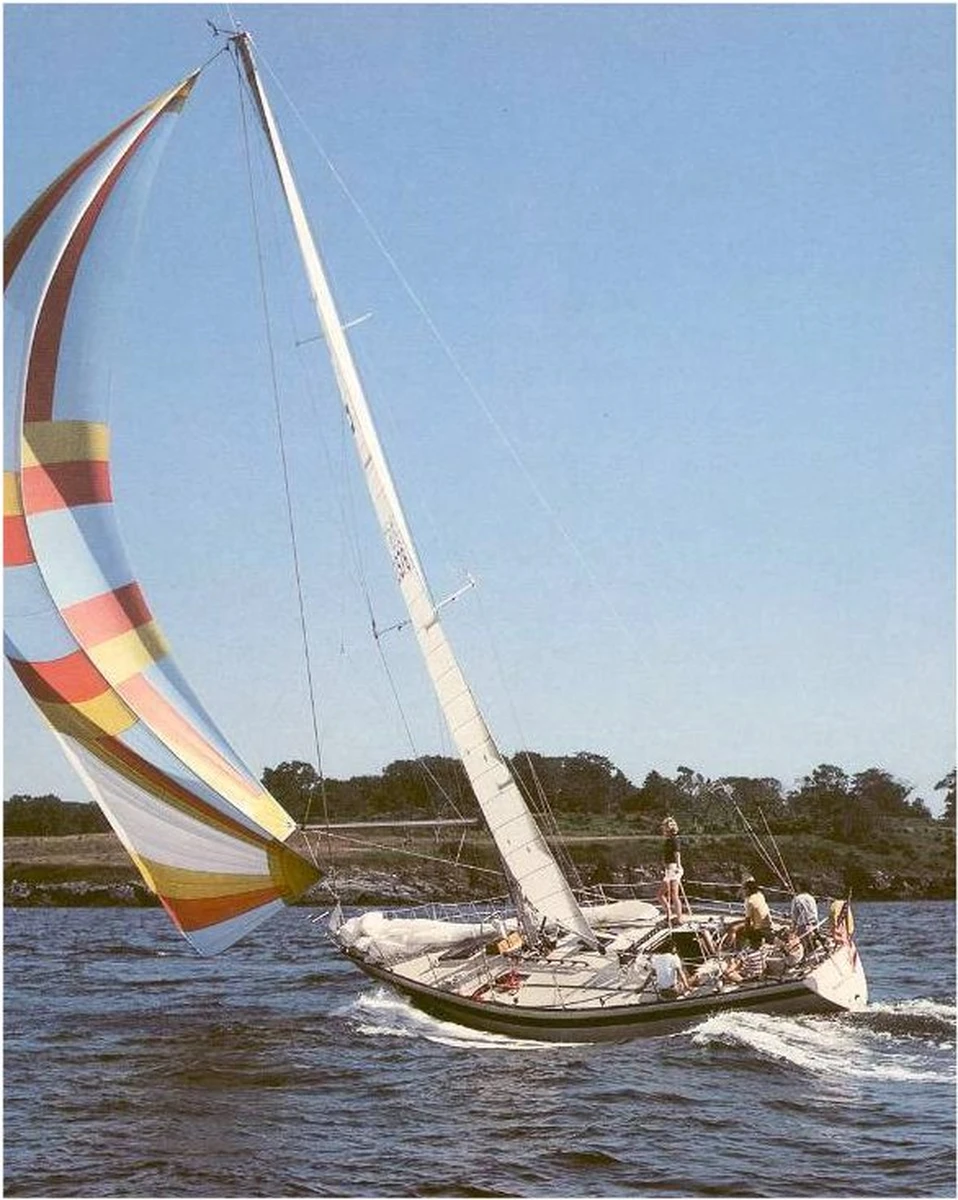
Pearson 40
Description
The Pearson 40 is a flush-deck, centerboard cruising sailboat that blends racy aesthetics with practical bluewater capability, designed for versatile coastal and offshore sailing in a 40-foot package. As a masthead sloop, it emphasizes speed and handling with a large sail plan and lightweight construction, while the centerboard allows shoal-draft access to skinny waters like the Bahamas. Influenced by IOR racing trends, its "whale-shaped" underbody and spade rudder deliver lively performance, making it forgiving yet responsive for short-handed crews or families. Owners rave about its stability in rough conditions, ample teak interior, and value as a "sleeper" performer, though the flush deck and original rudder can polarize opinions. At 45+ years old, it's a rewarding classic for upgrades, with a loyal following in the Pearson community. Designed by William H. Shaw—Pearson's chief architect and general manager during the late 1970s—the Pearson 40 was introduced in 1977 as an innovative departure from the company's traditional cruisers, incorporating flush-deck styling inspired by contemporaries like the Ericson 39 and Tartan 41. Shaw focused on a lightweight, balsa-cored hull for speed without sacrificing seaworthiness, targeting sailors seeking a "racy" yet comfortable vessel. Built by Pearson Yachts in Portsmouth, Rhode Island, production ran from 1979 to 1981, yielding 71 hulls—a modest number reflecting the divisive design and market shifts toward aft-cockpit models. It followed successes like the Pearson 365 and preceded the 424, marking Pearson's push into performance-oriented cruisers before the company's 1986 closure. The Pearson Yachts Owners Portal (pearsonyachts.org) supports the fleet with forums, parts, and upgrades like the Mark II rudder.
Construction Details
| Designer | William H. "Bill" Shaw |
|---|---|
| Builder | Paul Gartside |
| Length | 39.920 ft |
| LOA | 39.920 ft |
| LWL | 31.250 ft |
| Beam | 12.500 ft |
| Displacement | 22800 lb |
| Ballast | 12200 lb |
| Max Draft | 9.420 ft |
| Min Draft | 4.250 ft |
| Year Built | 1977 |
The standard boat dimensions
| i | 53 ft |
|---|---|
| j | 17 ft |
| p | 47 ft |
| e | 15 ft |
| p2 | - |
| e2 | - |
| i2 | - |
| j2 | - |
| I | J | P | E | P2 | E2 | I2 | J2 |
|---|---|---|---|---|---|---|---|
| 53 ft | 17 ft | 47 ft | 15 ft | - | - | - | - |
Sails
Pearson 40 - MAINSAIL
| Luff | * 47 ft - (14326 mm) |
|---|---|
| Foot | * 15 ft - (4572 mm) |
| Leech | * 48.56 ft - (14801 mm) |
| Tack Angle | * 88 ° |
| Diagonal | * 48.83 ft - (14883 mm) |
| Head (inches) | * 6 in - (152 mm) |
| Area | * 362.53 ft² |
| Edit in Calculator |
Pearson 40 - JIBSAIL
| Luff | * 44.53 ft - (13573 mm) |
|---|---|
| Foot | * 22.53 ft - (6867 mm) |
| Leech | * 38.64 ft - (11777 mm) |
| Percentage LP | * 115 % |
| Length Perpendicular | * 19.55 ft - (5959 mm) |
| Deck Angle | * 12.03 ° |
| Area | * 435.26 ft² |
| Edit in Calculator |
Pearson 40 - GENOA
| Luff | * 52.88 ft - (16118 mm) |
|---|---|
| Foot | * 27.46 ft - (8370 mm) |
| Leech | * 49.73 ft - (15158 mm) |
| Percentage LP | * 150 % |
| Length Perpendicular | * 25.5 ft - (7772 mm) |
| Deck Angle | * 3.99 ° |
| Area | * 674.24 ft² |
| Edit in Calculator |
Pearson 40 - SPINNAKER
| Stays | * 52.88 ft - (16118 mm) |
|---|---|
| MidGirth | * 30.6 ft - (9327 mm) |
| Foot | * 30.6 ft - (9327 mm) |
| Perc LP | * 180 % |
| Area | * 1375 ft² |
| Edit in Calculator |
Disclaimer. Boats are not all the same -- even when produced in the same factory of the same model. Sailrite does its best to publish accurate dimensions, but we often find it worthwhile to have our customers measure their boats carefully before we produce kits for them. You should take the same precautions, especially when the data is not from Sailrite. The information on this site is not guaranteed to be accurate. Sailrite offers this content as a service to our community, but takes no responsibility for the reliability of the data provided.
Comments


