

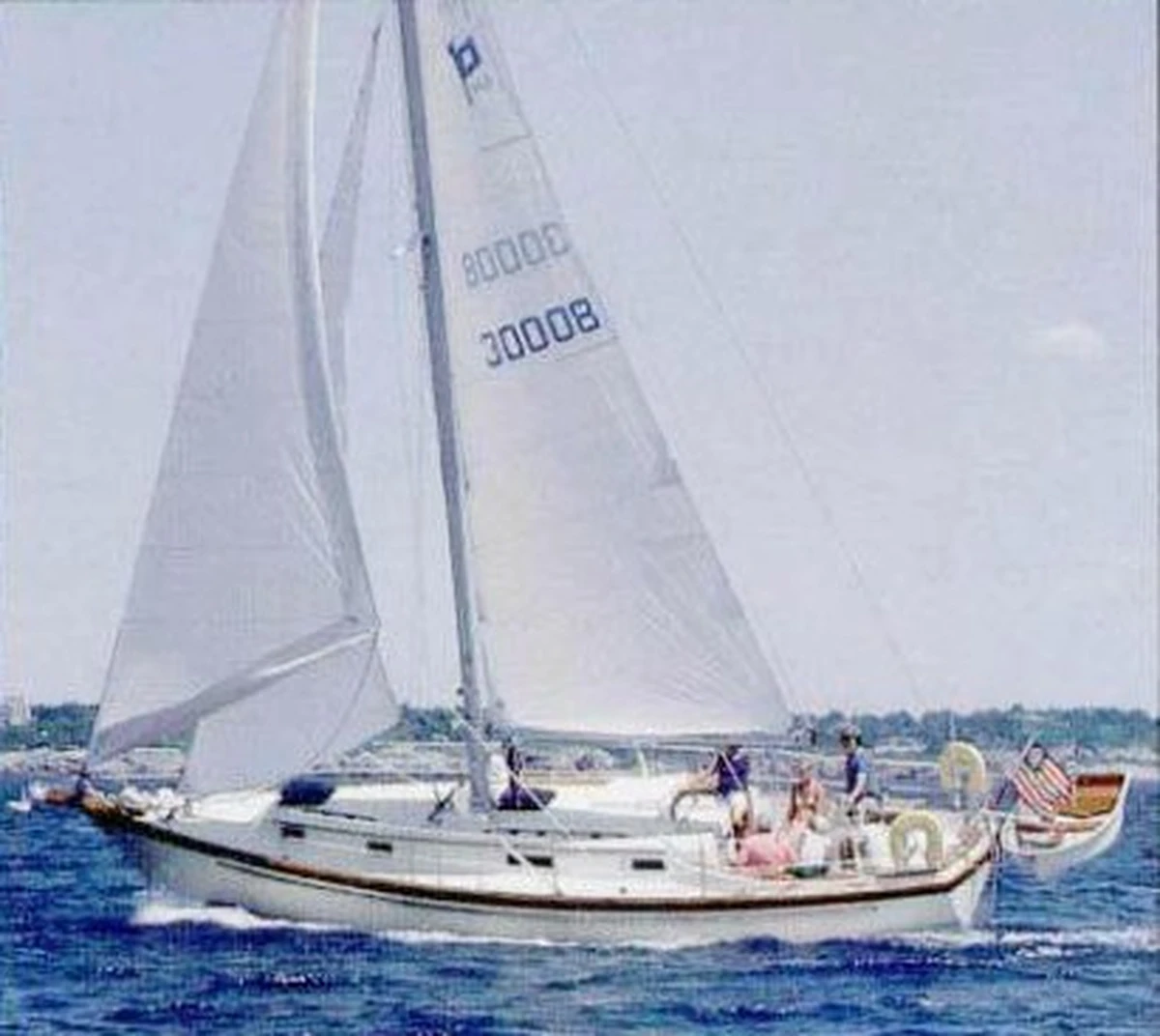
Pearson 36 Cutter
Description
The Pearson 36 Cutter (also known as the Pearson 367) is a heavy-displacement fiberglass bluewater cruiser designed by William H. "Bill" Shaw for Pearson Yachts, produced from 1981 to 1982 as a response to renewed interest in traditional cutter rigs for their ease of handling and balance in heavy weather. Featuring a fin keel with skeg-hung rudder for protected steering, a wide beam for interior volume, and a split sail plan (inner staysail, yankee jib, and mainsail) optimized for shorthanded sailing, it emphasizes seaworthiness and liveaboard comfort while sleeping up to seven in a well-appointed layout. Powered by a robust 44 hp Westerbeke diesel and built with hand-laid solid fiberglass hulls (balsa-cored decks), it was priced around $60,000 new, appealing to coastal and offshore cruisers seeking a "particular joy" in simplicity over speed. Bill Shaw, Pearson's longtime in-house designer, created the 36 Cutter in 1980 to leverage the resurgence of cutter configurations amid evolving offshore preferences, drawing on his experience with earlier models like the Pearson 365 for a hull that prioritized stability and sail-handling ease during prototype testing that summer. Built exclusively at Pearson Yachts' Portsmouth, Rhode Island facility under Grumman Allied Industries, production was limited to 1981–1982 with an estimated 20–30 units, reflecting a niche focus before the company's later shifts; hand-laid construction ensured exceptional durability, with resources like owners' manuals and parts catalogs still available via the Pearson Yacht Owners Portal. No variants beyond the cutter rig were offered, distinguishing it from the earlier Pearson 36 sloop (1972–1976) and the subsequent 36-2 (1985–1990), though it shares Shaw's signature blend of performance and practicality.
Construction Details
| Designer | William H. "Bill" Shaw |
|---|---|
| Builder | Pearson Yachts |
| Length | 36.420 ft |
| LOA | 36.420 ft |
| LWL | 30.000 ft |
| Beam | 11.500 ft |
| Displacement | 17700 lb |
| Ballast | 700 lb |
| Max Draft | 5.500 ft |
| Year Built | 1981 |
The standard boat dimensions
| i | 43 ft |
|---|---|
| j | 16.40 ft |
| p | 38 ft |
| e | 13 ft |
| p2 | - |
| e2 | - |
| i2 | - |
| j2 | - |
| I | J | P | E | P2 | E2 | I2 | J2 |
|---|---|---|---|---|---|---|---|
| 43 ft | 16.40 ft | 38 ft | 13 ft | - | - | - | - |
Documents
Sails
Pearson 36 Cutter - MAINSAIL
| Luff | * 38 ft - (11582 mm) |
|---|---|
| Foot | * 13 ft - (3962 mm) |
| Leech | * 39.46 ft - (12027 mm) |
| Tack Angle | * 88 ° |
| Diagonal | * 39.73 ft - (12110 mm) |
| Head (inches) | * 6 in - (152 mm) |
| Area | * 255.18 ft² |
| Edit in Calculator |
Pearson 36 Cutter - JIBSAIL
| Luff | * 36.82 ft - (11223 mm) |
|---|---|
| Foot | * 20.49 ft - (6245 mm) |
| Leech | * 34.46 ft - (10503 mm) |
| Percentage LP | * 115.06 % |
| Length Perpendicular | * 18.87 ft - (5752 mm) |
| Deck Angle | * 2.06 ° |
| Area | * 347.39 ft² |
| Edit in Calculator |
Pearson 36 Cutter - GENOA
| Luff | * 43.72 ft - (13326 mm) |
|---|---|
| Foot | * 24.96 ft - (7608 mm) |
| Leech | * 44.38 ft - (13527 mm) |
| Percentage LP | * 147.01 % |
| Length Perpendicular | * 24.11 ft - (7349 mm) |
| Deck Angle | * -5.88 ° |
| Area | * 527.04 ft² |
| Edit in Calculator |
Pearson 36 Cutter - SPINNAKER
| Stays | * 43.72 ft - (13326 mm) |
|---|---|
| MidGirth | * 29.52 ft - (8998 mm) |
| Foot | * 29.52 ft - (8998 mm) |
| Perc LP | * 180 % |
| Area | * 1097 ft² |
| Edit in Calculator |
Disclaimer. Boats are not all the same -- even when produced in the same factory of the same model. Sailrite does its best to publish accurate dimensions, but we often find it worthwhile to have our customers measure their boats carefully before we produce kits for them. You should take the same precautions, especially when the data is not from Sailrite. The information on this site is not guaranteed to be accurate. Sailrite offers this content as a service to our community, but takes no responsibility for the reliability of the data provided.
Comments


