

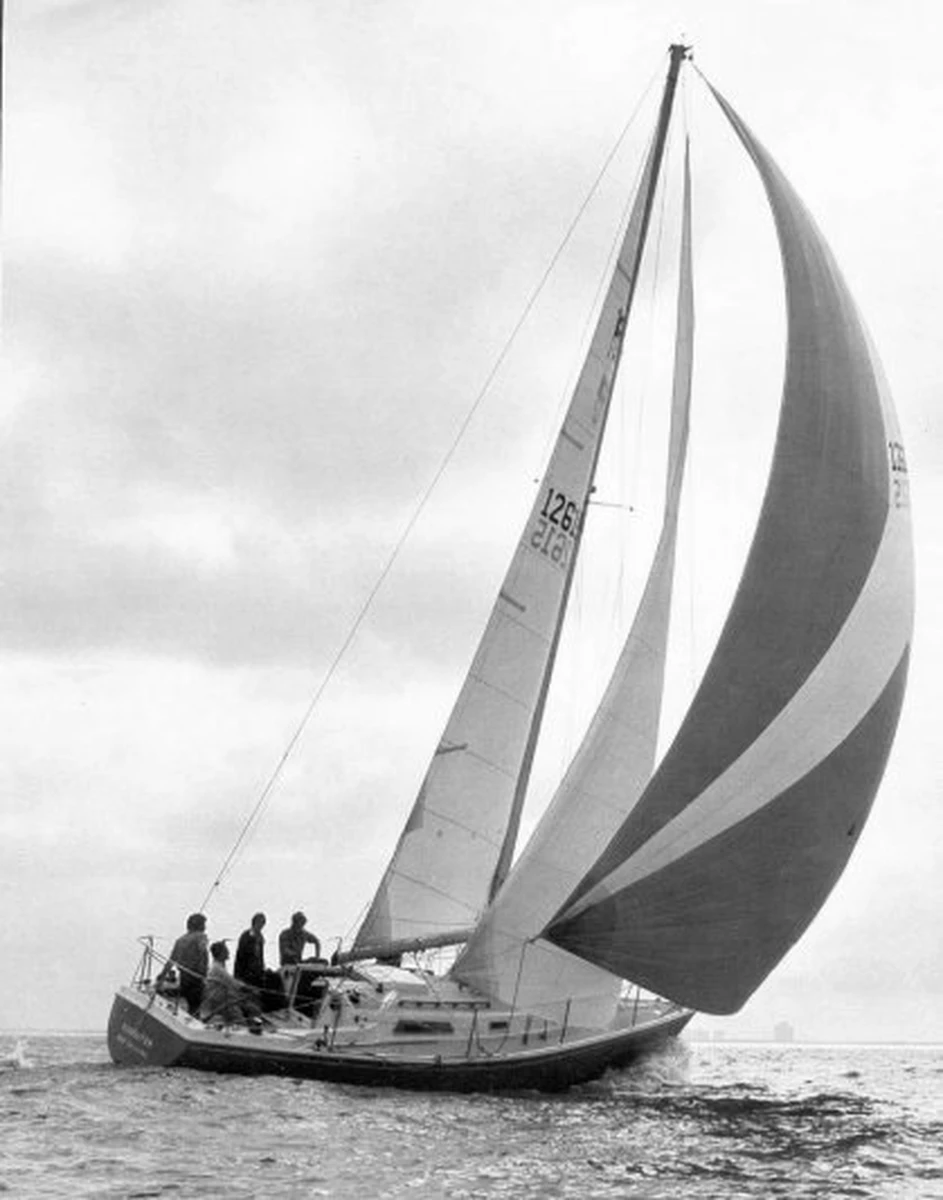
Pearson 10M
Description
The Pearson 10M is a sleek, performance-oriented masthead sloop designed for coastal racing and cruising, offering a balance of speed, stability, and comfort in a 33-foot hull. Built during Pearson's golden era of racer-cruisers, it features a fin keel with skeg-hung rudder for protected, responsive steering and a generous sail plan for lively upwind work. Ideal for club racing or family weekends, it points sharply and sails sweetly in moderate winds, with a secure cockpit and surprisingly roomy teak interior for 4-5 aboard. Owners describe it as "built like a tank" with overbuilt construction that ages gracefully, though its age means potential deck core maintenance. With a SA/D of 15.67, it's a spirited moderate cruiser rather than a bluewater tank, excelling in protected waters like the Chesapeake or Great Lakes. Designed by William H. Shaw in 1973, the Pearson 10M (often called the "Ten Meter" for its metric-inspired dimensions) was Pearson Yachts' entry into the growing one-design and handicap racing scene, blending Shaw's Sparkman & Stephens racing pedigree with practical cruising features. Shaw, Pearson's chief designer since the 1960s, aimed for a "sweet-sailing" boat that outperformed contemporaries like the Tartan 34 while offering family-friendly amenities. Built in Portsmouth, Rhode Island, production ran from 1973 to 1981, with 230 hulls completed—a respectable run before the model was eclipsed by larger cruisers like the 323. Engine options evolved from gas Atomic 4s to optional diesels (Faryman, Westerbeke, Volvo) by the late 1970s. A taller rig variant boosted light-air performance. The Pearson Yachts Owners Portal (pearsonyachts.org) and forums like SailNet provide robust support, with many 10Ms still racing or cruising actively.
Construction Details
| Designer | William H. "Bill" Shaw |
|---|---|
| Builder | Pearson Yachts |
| Length | 33.040 ft |
| LOA | 33.040 ft |
| LWL | 28.330 ft |
| Beam | 11.000 ft |
| Displacement | 12441 lb |
| Ballast | 5445 lb |
| Max Draft | 5.920 ft |
| Year Built | 1973 |
The standard boat dimensions
| i | 43.85 ft |
|---|---|
| j | 14.12 ft |
| p | 38.45 ft |
| e | 11 ft |
| p2 | - |
| e2 | - |
| i2 | - |
| j2 | - |
| I | J | P | E | P2 | E2 | I2 | J2 |
|---|---|---|---|---|---|---|---|
| 43.85 ft | 14.12 ft | 38.45 ft | 11 ft | - | - | - | - |
Sails
Pearson 10M - MAINSAIL
| Luff | * 38.45 ft - (11720 mm) |
|---|---|
| Foot | * 11 ft - (3353 mm) |
| Leech | * 39.38 ft - (12003 mm) |
| Tack Angle | * 88 ° |
| Diagonal | * 39.62 ft - (12076 mm) |
| Head (inches) | * 5.25 in - (133 mm) |
| Area | * 218.56 ft² |
| Edit in Calculator |
Pearson 10M - JIBSAIL
| Luff | * 36.85 ft - (11232 mm) |
|---|---|
| Foot | * 18.72 ft - (5706 mm) |
| Leech | * 31.97 ft - (9744 mm) |
| Percentage LP | * 115.01 % |
| Length Perpendicular | * 16.24 ft - (4950 mm) |
| Deck Angle | * 11.98 ° |
| Area | * 299.22 ft² |
| Edit in Calculator |
Pearson 10M - GENOA
| Luff | 42.75 ft - (13030 mm) |
|---|---|
| Foot | 22.75 ft - (6934 mm) |
| Leech | 40.5 ft - (12344 mm) |
| Percentage LP | * 150.14 % |
| Length Perpendicular | * 21.2 ft - (6462 mm) |
| Deck Angle | * 3.4 ° |
| Area | * 453.23 ft² |
| Edit in Calculator |
Pearson 10M - GENOA
| Luff | * 43.76 ft - (13338 mm) |
|---|---|
| Foot | * 22.82 ft - (6956 mm) |
| Leech | * 41.14 ft - (12539 mm) |
| Percentage LP | * 150 % |
| Length Perpendicular | * 21.18 ft - (6456 mm) |
| Deck Angle | * 4 ° |
| Area | * 463.45 ft² |
| Edit in Calculator |
Pearson 10M - ASYMMETRICAL
| Luff | 44.5 ft - (13564 mm) |
|---|---|
| Foot | 24 ft - (7315 mm) |
| Leech | 41.5 ft - (12649 mm) |
| Perc LP | * 165 % |
| Area | * 801 ft² |
| Edit in Calculator |
Pearson 10M - SPINNAKER
| Stays | * 43.76 ft - (13338 mm) |
|---|---|
| MidGirth | * 25.42 ft - (7748 mm) |
| Foot | * 25.42 ft - (7748 mm) |
| Perc LP | * 180 % |
| Area | * 946 ft² |
| Edit in Calculator |
Disclaimer. Boats are not all the same -- even when produced in the same factory of the same model. Sailrite does its best to publish accurate dimensions, but we often find it worthwhile to have our customers measure their boats carefully before we produce kits for them. You should take the same precautions, especially when the data is not from Sailrite. The information on this site is not guaranteed to be accurate. Sailrite offers this content as a service to our community, but takes no responsibility for the reliability of the data provided.
Comments


