Description
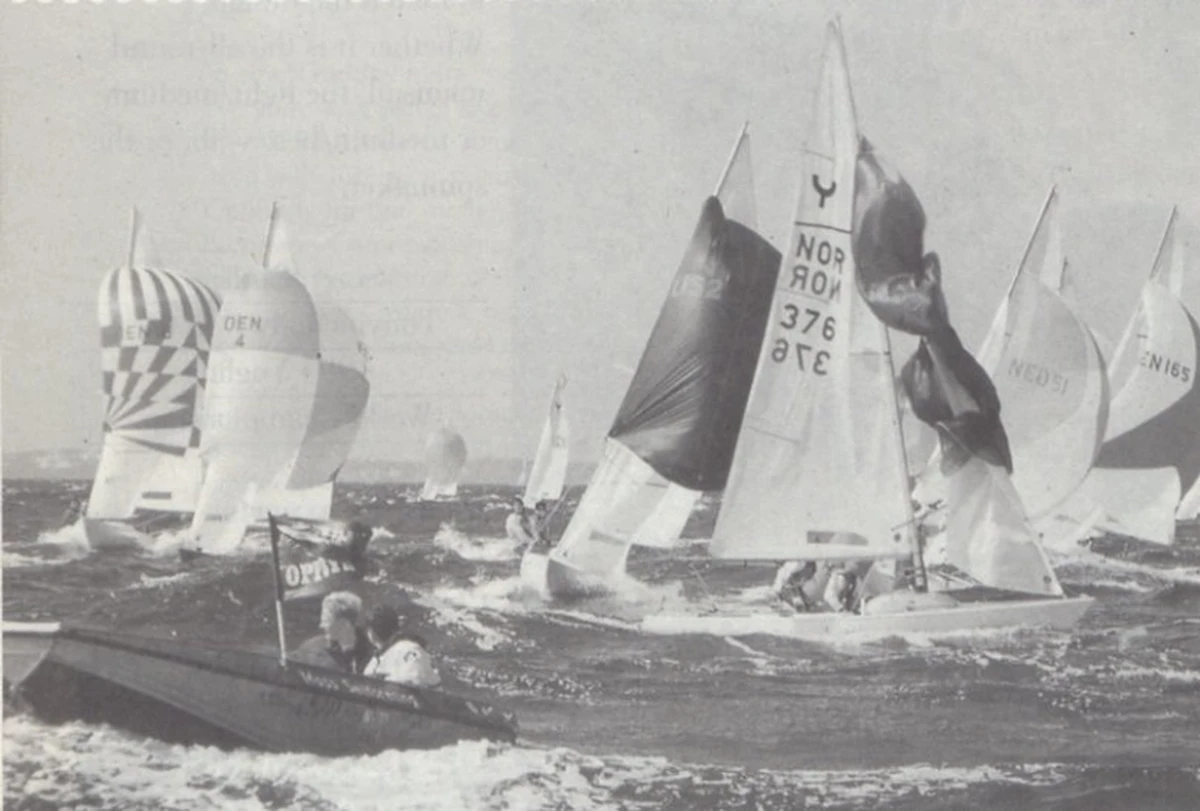
The O'Day Yngling is an American-built one-design racing keelboat designed by Norwegian naval architect Jan Herman Linge and first produced in 1967 by O'Day Corp. in Fall River, Massachusetts, as the U.S. iteration of the International Yngling class—selected for Olympic competition in 1972—prioritizing high-performance planing speed, responsive handling in varied winds, and simple trailerability for club racing or junior training by two- or three-person crews on protected bays or coastal waters. Constructed from fiberglass with a fixed fin keel and skeg-hung rudder for stable tracking and protection, it displaces 1,323 pounds with 551 pounds of lead ballast, measures 20.83 feet LOA, 15.42 feet LWL, 5.67 feet beam, and 3.44 feet draft, achieving a hull speed of about 5.7 knots and 156 square feet of sail area (main 95 sq ft, foretriangle 61 sq ft) under a masthead sloop rig with aluminum spars (I=18.70 ft, J=6.56 ft, P=22.31 ft, E=8.53 ft) and optional 180 sq ft spinnaker, typically without an auxiliary engine for pure racing focus. Renowned for its sleek, low-freeboard hull enabling easy planing, self-bailing cockpit seating up to three, minimalistic cuddy cabin with two berths and under-5-foot headroom for basic overnighting, plus a spooned bow for wave-piercing and forgiving stability from its moderate ballast ratio, the O'Day Yngling was produced through the early 1970s with several hundred units built (part of over 4,500 worldwide across builders), enduring as an affordable, low-maintenance classic for enthusiasts valuing Linge's balanced lines, one-design purity, and spirited agility in a sub-21-foot package over cruising comforts.