Description
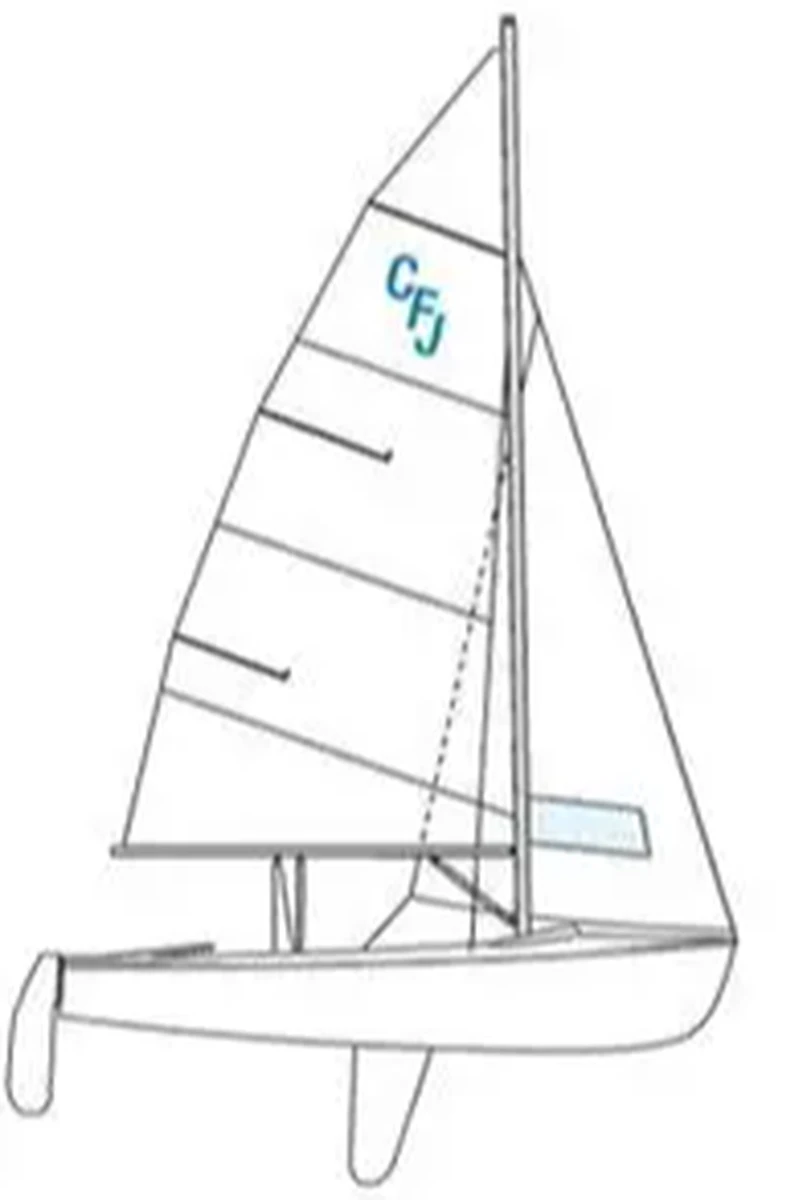
The Club Flying Junior (CFJ), a robust American adaptation of the International Flying Junior (FJ) sailboat, emerged in the 1960s as an ideal double-handed dinghy for youth, high school, and collegiate training programs, blending the nimble performance of the original 1955 Dutch design by Uus Van Essen and Conrad Gülcher—with its 13-foot 9-inch fiberglass hull, 4-foot-11-inch beam, 220-pound displacement, and Bermuda sloop rig totaling 100 square feet of sail—into a heavier, more durable fiberglass construction suited for rigorous institutional use on lakes, ponds, and coastal bays. Produced initially by W.D. Schock Corp. in California and later by builders like Vanguard, Laser Performance, and Zim Sailing, the CFJ prioritizes simplicity and responsiveness with a centerboard for shallow draft, optional spinnaker for racing (86 square feet), and no trapeze, enabling crews of 220-300 pounds to master tacking, crew work, and light-air planning while forgiving beginner errors; unlike the sleeker International 420, its tippy, maneuverable nature excels in team racing and windward legs, fostering vibrant West Coast fleets through the CFJ Class Association's regional regattas and national championships. With over 2,000 hulls in circulation today—distinguished by "CFJ" markings on mainsails and reinforced for longevity amid the C420's East Coast dominance—the Club Flying Junior endures as a rite-of-passage vessel, launching sailors into advanced classes like the 470 or college fleets, its unpretentious thrill and low-maintenance ethos capturing the pure joy of competitive double-handing for generations of agile young enthusiasts.